Posts Tagged With: Urban Homesteading

Winding Down for the Season

We’re playing catch up here as the harvest season comes to a close.  This is my favorite time of year, but it is one that works us the hardest.  As the weather cools off we find ourselves wanting to move inside.  We want to settle down with a cuppa and a warm blanket or cozy up to a nice bowl of hot soup.  Unfortunately, all that coziness will have to wait just a few more weeks.  Winter is the true sleepy season.  Fall is the season of work.

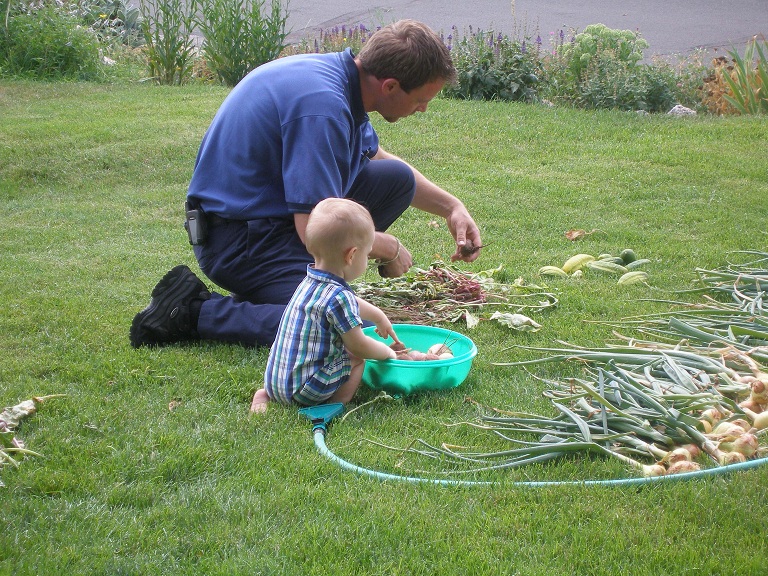
We have most of the harvest put away finally.  Sunflowers and corn are hanging to dry, onions and potatoes are stored, canning is finished, summer produce is put up in its various forms.  We have garlic to plant this week.  I am actually doing a little garden redesign as we are pulling plants when the freezes hit and kills them off one by one.  The tomatoes are still, unbelievably, hanging on.

I am hoping to get some of our kohlrabi to over-winter so I can get seed from it next fall.  The plants are from seed from Slovakia that was smuggled through the mail to my in-laws.  The variety is very large – 8 pounds or more without any woodiness.  Our plants are bulbing up nicely, and they might just be one of the few big successes this season, but the seed is hard to come by.

An Independence Days update is in order, I think.  I last did one in August.

Plant something – Planted a few hardy mums.  Garlic will hit the dirt this week – nothing else is on the docket though.

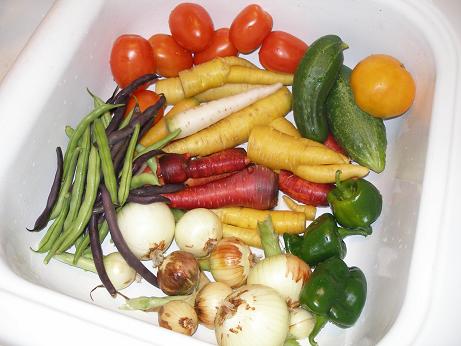
Harvest something – eggs, tomatoes, peppers, kale, chard, kohlrabi, over 60 gallons (maybe even 80) of compost.

Preserve something – tomatoes and corn frozen, a couple of ducks in the freezer (thanks to Rick!!), the above mentioned canning, drying, dehydrating and such.

Waste Not – compost and recycling, scraps to chickens, etc.  Reused old t-shirts for a Halloween costume.  Working on other sewing projects from the scrap box – including some napkins and even two quilts!  Been mending things, not throwing them out.

Want Not – My friend Annie gave us some cloth diapers, and I used an old flannel baby blanket to make some extra wipes.  Got some great hand-me-downs from some friends for the baby girl.

Build Community Food Systems – Participated in both the Denver Botanic Gardens and the Denver Urban Homesteading chicken coop tours.  Baby sat for some friends in exchange for a couple of pullets (we got the great end of that deal)!

Eat the Food – yes.  🙂

Although my summer garden was a huge flop this year, I am happy that I put down some bok choy seeds and some late season peas this summer.  I might get one more harvest before we put the garden to bed completely.  I actually planted some other things too, but the second round of kale, spinach and beets never came up and I didn’t get any replacements in the ground in time.  I feared for the bok choy after the chicken coop tour – it got somewhat trampled since a few people didn’t seem to realize they were standing in my garden on my baby brassicas.  But it has survived, and even if it doesn’t get huge, I might get some baby heads out of it yet.

Still, I find myself drawn indoors.  Completing sewing projects (mostly mending) that I’ve put off for months.  Starting other projects.  Getting my craft on.  A few moments of inspiration have led to some things getting done in the handiwork department.  Halloween is coming and costumes need making.

We had a family dinner last week.  I’ve been spending more time with my sister lately and I am enjoying this time with her.  We decorated sugar skulls for the Mexican Day of the Dead.  The holiday begins on November 1st, which is Henry’s birthday, and we are big Halloween fans around here, so we did our Dia de los Muertos early this year.  (More on this later, I promise).

Life these days is transitioning from the mad rush of summer to the slower pace of fall.  Rick’s big-game hunting will mark the last of the harvest here, and that is coming in the next few weeks.  In the mean time, we are quieting down.  The canning pot is back in it’s spot in the basement.  H is focusing more on indoor play and learning.  It’s funny how we naturally move in these rhythms.  From outside in the sun and mud to inside quiet games at the table.

Categories: Food, Garden, Independence Days, Simple Living, Urban Homesteading | Tags: , , , , , , , | 4 Comments

Boiled Weeds

Quick tip this morning before I get to peeling roasted chiles.  A few weeks ago Rick discovered something that should have been quite obvious.

Boiling water kills weeds.

In the past, when we’ve done some canning, Rick takes the boiling water out and dumps it on the weeds growing between the cracks of the sidewalk to kill them.  One day we realized this water would kill not just the weeds poking through the cement, but the weeds in the garden too!  (Duh!)

Be careful with this – boiling water will kill any plant, good or bad.  But if you need an easy, cheap, chemical free weed killer – boiling water will do the trick!

Any other obvious tricks out there that we don’t know yet?  I’m sure there are a billion.  Please share them here!!

Sometimes it’s the little things.

Categories: Garden, Thrift, Urban Homesteading | Tags: , | 5 Comments

The Hugelkultur Project

A while back, when we  decided to take on the project of cutting down our 70-foot tall (plus or minus) honey locust tree in the back yard, I began doing research on what in the world we’d do with all the wood.  As you may know, a lot of the smaller branches have become mulch for the garden.  But someone from the Take Back Urban-Homesteading(s) community on Facebook suggested to me to build a ‘hugelkultur.’  A hoogle-whater?  So, of course I Googled it.

I’ll try to save you some time.  A hugelkultur (pronounced “hoogle-culture” – I think), is basically a raised bed in which wood or other carbon-rich materials is buried.  Some people lay logs directly on the ground, use a tractor to dump a pile of dirt on it and then start planting on their new, hill-shaped bed.  (I like the info in this link).

The advantages of this method of gardening is that the wood, as it rots, acts as a sponge, making it so you don’t have to water much.  Additionally, it releases nutrients over time into the soil, making it so you don’t need to fertilize.  And, as it rots, it leaves plenty of air space in the soil, so you don’t need to till.  Basically, it is a no-maintenance, self-composting bed.  The first year or two, especially with green wood like ours, it will actually draw nitrogen from the soil in order to start decomposition.  But thereafter, it will supposedly do nothing but give back.

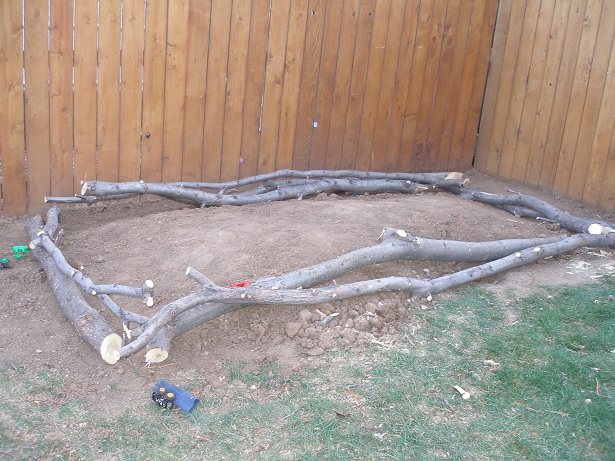
Sounds like a good plan to us!  So we decided to give it a try in the boys’ backyard garden bed.  We don’t have lots of spare topsoil just lying around everywhere, nor the desire to buy any, so we thought it would be a better use of what we do have to dig down into the ground and bury the wood with our own topsoil and subsoil.

We dug down a good 12-14 inches.  Then we laid in some of the branches that were too thick to go through the wood chipper.  Then we buried them.  This left us with basically an instant raised bed, as promised.  We used some of the bigger, straighter limbs from the tree to make an edging (not yet complete).  Otherwise the boys would truck that dirt all over the back yard before anything could be planted there.

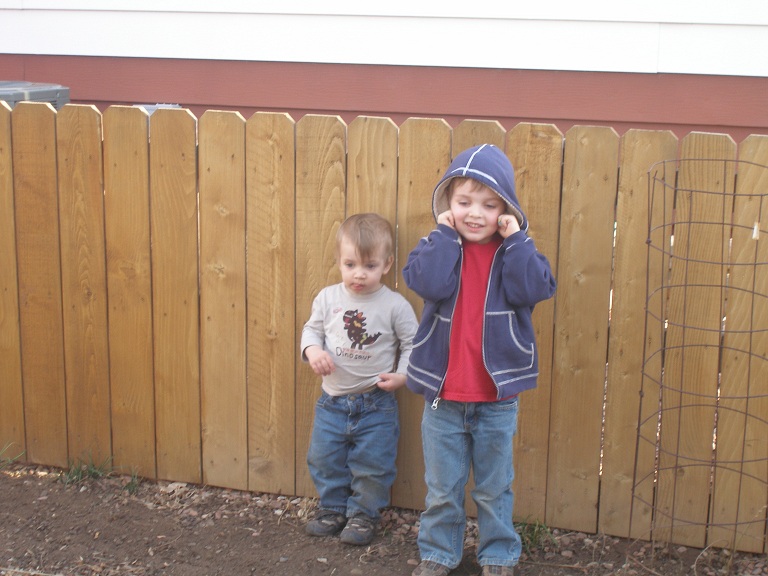
After an afternoon of being (unnecessarily) compacted by a 22 month old in a Tonka truck pushed by a 4 year old.

Fortunately for us, we have plenty of nitrogen-rich compost, thanks to the chickens.  We mixed a bit of that in to compensate for the initial anticipated nitrogen loss/Tonka truck compaction.  Henry wants carrots, tomatoes and watermelon in his bed this year.  We’ll keep track and let you know how it goes!

Does anyone out there have experience with a hugelkultur?  What about deterrents for little boys and their ride-on toys?  😉

Categories: Garden, Hugelkultur, Simple Living, Sustainability, Urban Homesteading | Tags: , , , , , , , | 6 Comments

Getting Ready to Unplug

I’m not crazy.  Really.  I’m not.  I just read a lot of green-type articles and blogs, and I think .  I think a lot.  When I mentioned my latest idea to Rick, he became very quiet.  You know, the kind of quiet where someone clearly thinks you’re off your rocker, but is trying to figure out how to say so and if it’s really true?

Perhaps it’s because he’s experienced with my “thinking episodes.”  He calls it a ‘wild hair,’ or my ‘latest project.’  But I know he hasn’t forgotten how those nagging little thoughts of mine plague me until I drag him and the rest of my family into some project or other that the rest of society at large would consider crazy.

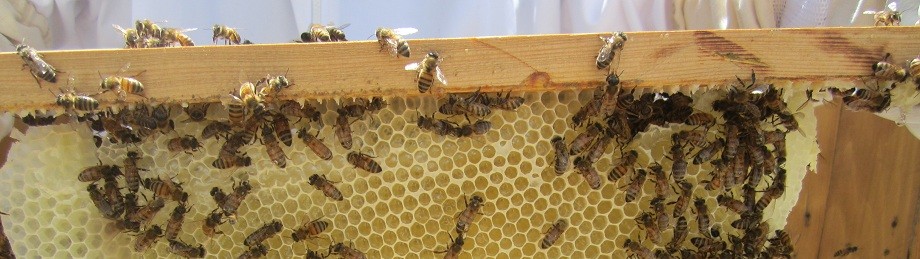
Consider for example when I started thinking about chickens.  In our back yard.  In the city.  Or when I started thinking about bees.  BEES!  Now we have a coop, eight hens, and an empty bee hive waiting for a second try with a new swarm.

Then there was the time I started thinking about the microwave.  I’m pretty sure this is what Rick’s mind flashed to when I mentioned to him this latest “wild hair.”  You see, lately I’ve been thinking about our fridge.  I’ve I’ve thought about it a lot actually over the last few years.  Our fridge was here in our house when we moved in.  So we knew it was at least 8 years old… and recently, I can’t seem to stop thinking about how much energy it’s using.  As the appliance that consumes the most energy in American homes, the refrigerator, running 24/7, I have been concerned about all the kilowatts leaching out of our meter.

I called the manufacturer of our refrigerator, model and serial numbers in hand.  I was surprised to learn that our fridge was not as old as I thought.  Made in June of 2001.  But I was dismayed at the big 863 kWh that it was consuming.  New refrigerators of the same size and style are consuming less than half than that.  Ours is consuming more than the old 15 cubic foot chest freezer from 1984 in the garage – that consumes a whopping 601 kWh, nearly fifty-percent more than what a similar modern freezer consumes.  This seems like a big problem to me.

Initially I thought the solution to this problem would be for us to get a new fridge and a new freezer.  See that was my first thought (i.e. not crazy!!).  But we don’t really have the $600 to shell out for a new freezer, let alone $800-1400 for a new fridge.  Then I started paying attention to what our fridge was actually doing.  The freezer on top usually stores the frozen CSA veggies and random meats brought in from the chest freezer for the current week’s dinners.  The refrigerator only really contains our eggs, dairy, condiments, and an excess of greens and celery.  Sometimes there are left-overs in there for a day or two (max, we’re good left-over-eaters around here).  I defrost foods on the counter the day I need them.

In other words, we’re not really using much space in the fridge, and some of the things we have in there don’t really even need refrigeration.  Eggs are shelf stable for quite a long time, and in Europe, they are even sold on the grocery shelves unrefrigerated.  Many condiments are shelf stable as well, despite warnings to “refrigerate after opening.”   And, around our home, lots of them get used up way before they’d ever spoil in the cabinet (peanut butter and jelly, soy sauce or sesame oil, for example).  So my second thought was to look for a smaller fridge.  An apartment-sized or even a dorm-sized fridge.  But I found out that they consume a lot of energy as well.  Nearly what a large fridge consumes.  And they have a pretty hefty price tag, even on craigslist.

Now I was questioning what we really needed.  For basically just storing our milk, yogurt, half and half, and the occasional bowl of left-over noodles or extra head of kale, what did we need?  Do you see where I’m going here?

I’m thinking about going without a fridge.  Let me say it again, so you know it’s not a typo… I’m thinking about going without a fridge.

So you can see why I was surprised that Rick didn’t immediately pass out when I mentioned to him a few weeks ago that I’ve been thinking about the fridge.  I have to give him a lot of credit.  He silently listened to my idea.  I explained my idea, talking fast because I could hear the doubt oozing through his silence.  We have coolers and I had an idea about using the top freezer portion of the fridge as sort of an ice box.  His next question, an incredulous statement really, was “you really expect me to run out to the freezer during the freezing-cold winter to swap-out ice packs because you don’t want to use the fridge?”  but he had answered his own question.  In the winter it would be cold.  We could keep things outside the back door on the patio.

As what I was suggesting started to sink it, I think I heard a muttering or two of “my wife really is crazy” and a sort of stifled laugh.  But there was some weird resignation coming through the phone.  I broke the news to him while he was at work, you see.  Safer that way, I figured, and it would give the idea a little time to stew in his head before he got home and could really talk about it. I was afraid he’d dismiss the idea out of hand.

When he got home I had my argument all ready.  It would be an experiment.  For just a month.  One month.  And we’d keep the freezers.  And it wasn’t as if we couldn’t use refrigeration… the ice box idea was just a old-fashioned, lower energy form of that.  I promised that we’d only unplug the frige for now, and if it wasn’t working we could just plug it back in and bag the whole thing.  Rick asked surprisingly few questions.  He sort of shrugged.  I asked if he told his co-worker of my idea, and when he admitted that he had, he told me his coworker’s response was, “Do you encourage her?”  I think he must have confessed that he does, so he really didn’t have a lot of argument against it.

After a few minutes, he asked about the summer, when the CSA is in full force and we have more veggies than we know what to do with.  Won’t they all just wilt and go to waste without a fridge to keep them in?  I had thought about this and confessed I didn’t have a total solution… yet.  But my tentative plan was that since I wasn’t going to be working on the farm this year or driving an hour each way every week, I’d have six extra hours and a lot more energy on farm day to get veggies washed and put up properly before anything wilted.  We’d put the things we were going to save for the winter in the freezer the day they came into the house instead of waiting a day or two, and we could use coolers for the melons.  Rick eyed me suspiciously.  But he said I could try it in May if I wanted.  We’d tackle the summer if we decided to continue the experiment.

I have read a bit about going without a fridge in the past, and since deciding to embark on this project.  Proponents like Sharon Astyk and Greenpa give me a lot of hope.  I’ve read the arguments that Deanna at the Crunchy Chicken makes against unplugging the fridge too.  But I think that this really can work for us.  Sharon Astyk has a fairly simple system going that I plan to emulate.  No, we won’t be drinking gallons of milk in a single day.  We’re not the first to try something like this.  And if things work, we’ll probably unplug the fridge for good.  We’ll turn that space into a pantry area to store our canned goods, and we’ll save money for a new, energy-efficient freezer.

Crunchy asks if it’s cheating to use a freezer in your effort to not use a fridge, but the truth of it, at least in my eyes, is that it’s not.  I see them as two different tools.  (You really should read  all the comments on that thread, by the way – you might just get converted by Sharon & Greenpa).  Rick hunts and that is the greenest, healthiest, most organic and humane way to get meat.  Not to mention most economical.  But it would be a waste if we couldn’t freeze it.  The CSA share provides more local, organic veggies than we can eat in a summer.  But local fresh veggies are a rarity here during Colorado winters, and what ever you can find is usually very expensive.  So canning, drying and freezing summer’s excess is another economical, practical, and efficient way to eat well all winter.   And, sadly, even our very out-of-date freezer is running more efficiently than our less out-of-date fridge.

So, let the experiment begin.  I hope you follow along with me in May as we try unplugging the fridge.  If anyone out there has done something like this in the past I’d love to hear your experiences.
Categories: Food, Independence Days, Simple Living, Sustainability, Unplugging the Fridge, Urban Homesteading | Tags: , , , , , , , | 16 Comments

End of April Inventory

I’ve been meaning to do this for a few weeks now, but last week I officially came down with a case of S1F1.  It turns out that I’ve had the disease before, but this weekend it hit hard.  S1F1, or Spring Fever, symptoms include among other things: restlessness; incessant wandering from the back yard to the front yard, and then back again; lots of projects started but none completed; regular spurts of cleaning followed by periods of listlessness; planning without follow through; mood swings.  If you have any of these symptoms, make sure to get checked out for Spring Fever right away.

Here’s what’s going on at the ol’ homestead:

In the vegetable department we have:
-spinach for the taking
-lettuces (two kinds) up
-peas growing
-radishes thinned
-kale, chard and potatoes planted
-garlic about 10 inches tall
-leeks started inside

Fruit wise:
-raspberries are leafing out
-strawberries are looking promising (which would be a surprise, since they never seem to produce fruit).
-one grape vine that might be dead  😦
-no sign of the rhubarb I planted last year  😦

Herbs – unfortunately, not everything made it to the spring this year:
-four little basil plants are inside waiting for the danger of frost to pass
-mint is out and up and tasty
-the stray raspberry canes to be turned into raspberry leaf tea
-a bay leaf plant is on my counter and has been alive since Christmas – this is an accomplishment for me!

Animals:
-the three pullets are growing and living in a bumper box in the garage.  They are pretty funny and good at chasing bugs so far.
-the five hens are ever-so-reluctantly using the new nest boxes.  Not sure why they are so unhappy with the change, but it’s made for lower egg numbers than usual.
-still have yet to identify the egg-eater.  I think I’ve narrowed it down to two possible suspects.  We may be offing them both if I can’t figure it out.
-the beehive is ready and waiting for a swarm so we can try again this spring

Free materials collected:
-pallets for compost bins
-stone for patio
-bricks for bed edging
-chipper
-80 pounds +/- of compost
-we’ve also been promised a free yard of manure, but it hasn’t come yet

Completed spring projects:
-the nest boxes
-two compost bins built, one filled
-early spring planting
-garden layout done
-neighbor’s beds made and ready

Started but incomplete projects:
-painting the hen house
-cutting down the tree
-mulching tree branches with the wood chipper
-building permanent beds in the main garden (they are laid out with stakes and string and some have plants in them already though)
-more tomato cages
-edging the front beds with brick
-building the patio
-Henry & Emmett’s backyard veggie bed

There are some big things on the future to-do list as well, but a lot of them depend on other projects getting completed first.  The biggies for me this year will be getting the new fence up on the north side of our property so we can make an asparagus bed there and replacing the clothes line I lost when we started cutting down the tree.  We eventually want a pergola with grapes over the future patio, but I think the tree cutting, patio building and baby having will take up most of our attention this summer, meaning we will probably not see that until next summer.

This of course is just what’s going on outside.  I still have my crazy inside to-do list running.  Oy.  What is wrong with us??  😉

What is going on in your garden so far?

Categories: Garden | Tags: , , , , | 1 Comment

New Nest Boxes

Lately we’ve been getting a lot of broken eggs in the nest box.  We have five hens sharing one box and I think it was just too crowded.  At least we hope that’s what’s going on and not that we have an egg eater.

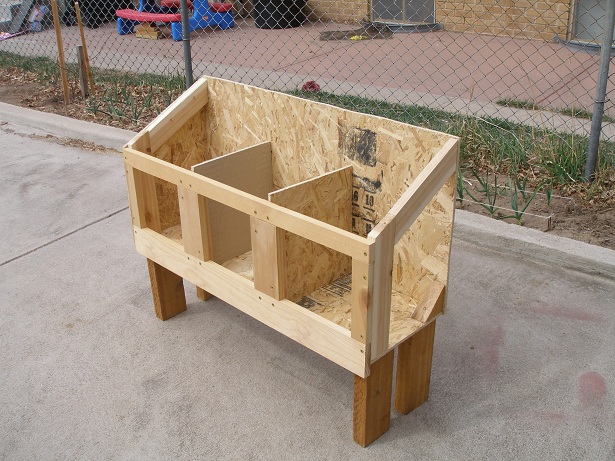
We decided to build a new nest box for them.  It’s a free-standing box that holds three nests.  It took me most of Saturday to build with Rick’s help, but I think it turned out pretty well.

I started with a 1x3x8, a 4′ x 8′ piece of plywood that had an exterior finish on one side, some scrap lumber we had around the garage.

Rick was picking up more stone, so I drew the pieces I needed up on the plywood and cut them out with the jigsaw.  We miraculously got the camera to work, but no one was around to take pictures of me with the jigsaw.  My lines weren’t perfectly straight, but I figured the chickens wouldn’t notice.

I used some scrap pieces of 2×4 for the legs and attached them to the base.

By then the boys and I needed lunch and Rick came back with a load of stone, so I took a break.  After the stone was on the ground and everyone had been fed I went back to work cutting the pieces for the interior of the box.

I was glad to have Rick around for the assembly.  Some things would have been really difficult to manage by myself.  Here’s the basic construction nearly complete.  Just needs the last side and the roof.

I really tried hard not to over-engineer this project, as I tend to usually do.  When we took down the old nest box from the side of the coop, Rick commented that it was a virtual bomb shelter for the hens.  Haha.  Well, this one  is sturdy and I hope will be functional. See my sketch?  Not too over-engineered, right?

When we originally built the coop, we placed it next to the house.  And since our house is white with cream-colored trim, we left it cream-colored.  But since we were remodeling the coop a bit and it’s been moved to another part of the yard now, I really wanted to paint the nest box and the chicken coop some cute colors.

While I was painting the roof and in between coats on the nest box, Rick went after some too-long screws along the inside of the box with his Dremel tool.

After the roof was attached and the second coat of paint was drying, our neighbors came home.  They had left in the morning as I was setting out the plywood on the saw horses.  They were amazed that I had built the box!

We set the box in the chicken yard and immediately one of the hens took notice.  She tried to jump up and hit her head on the roof, which was overhanging a bit too far.  Rick trimmed it back a bit and then they were able to get in without much trouble.

We intentionally made it lower to the ground so the boys could help collect eggs. The chickens are getting used to it.  I was afraid at first that we’d have a revolt or that I made it entirely too small (the boxes are a cozy 11″ x 12″), but on Sunday they all hopped in (for some it took a couple tries) and took a turn.  We are probably going to locate it a bit differently than it is in the picture so they can have a bit more privacy, but so far so good.  Now I’m chomping at the bit to repaint the coop to match.

Did you complete any projects this weekend?


This post was part of the Food Soil Thread blog party!

Categories: Chickens, DIY | Tags: , , , , , | 9 Comments

Why I Blog and How I Became an Urban Homesteader

Four years ago, at the beginning of March, I started this blog.  At first I began tentatively, not sure who would ever read what I had to say, unsure of if I even had anything to say at all.  Unsure of what my blog was about (I hadn’t even really read other blogs), I titled it “Journeys and Adventures” and just sort of typed whatever came to mind, the latest happenings in our lives, reviews of articles I read or documentaries I watched.

I quickly noticed a theme.  I wanted to be a farmer.  But I lived (live!) in a city.  During my first month of writing I covered the garden or buying our first chicks in at least every-other post.  I did not know anything about “urban homesteading” or that people called themselves this or that other people we like me at all – playing farmer on little patches of earth, where ever their feet had landed them in life.

There were lots of Monday morning posts chronicling the progress of our garden over the weekend or the construction of our chicken coop.  And I began to understand that this was therapy – the gardening, the chickens, and the writing about it.  I took more pictures, I squeezed more into the dirt we had.  I found more dirt and eeked out more spaces to grow things.  I dreamed of a bee hive.  But this space remained a sort or personal journal.

One day, as Rick was reading, he asked why I didn’t make the blog public, since only friends and family had access to it at this point.  I thought about it for a while and decided I was afraid to put myself out in the open to any and everyone.  But he encouraged me to do it, convinced that people would like what I had to say, and enjoy reading about our crazy adventures in playing at urban farming.  So I did, and I decided to change the name of the blog too, so that it would reflect more of what it was now about.

I thought about the name change for a long time, mulling over terms like green, dirt, crunchy, city, suburbs, farming, etc.  Through lots of reading, I discovered the term urban homesteading and found it described what we were doing.  I still thought we virtually were alone in doing it, but I knew the phrase was the right one for our family and our journey.

A search engine led a writer for the Denver Post to my blog, and he contacted me, wanting an interview for a story he was doing on urban homesteaders.  Because I was skeptical (hey! I didn’t know this guy), I refused to be interviewed without Rick home, so I missed my chance.  Timing was off and he couldn’t come on the day Rick could be here.  But I was so excited when the article came out.  I discovered we were NOT alone.  There were people in my own neighborhood doing this.  People all over Denver!

Now look:

There is a reason I’m taking the time to write this trip down memory lane.  It’s not because it was my blog-iversary. It’s because today is the third Day of Action for Urban Homesteaders across the internet.

Back in February of this year the Dervaes family of Pasadena, CA trademarked the terms “urban homestead” and “urban homesteading.”  I am not linking to who the Dervaes family is, but in short, they are a father and three grown children growing lots of food in a small area in California.  They are a family church, with the father being the pastor and to my knowledge, the children are the members.  A church of what is pretty unclear.  From what little I know of them, they’ve done a lot with their space and many in the urban homesteading community admired them.  I never really read much about them until now.

So the big deal?  They sent out cease and desist letters to bloggers, businesses and organizations (even a library) who were using the two trademarked terms.  They want credit with links every time the phrases are typed.  I’ve seen the letters.  They sent one to Denver Urban Homesteading, our local indoor farmers market, and had their Facebook page (and main marketing tool) shut down.  Problem is they don’t have the legal grounds to do this.  They didn’t invent the phrases, nor were they the first to use them.  And their trademark does not give them the right to restrict the use of the English language in the way they claim.  I know this because I know the owner of Denver Urban Homesteading.  James, the person I worked with on Denver’s inaugural chicken coop tour (with the Denver Botanic Garden’s) last year, and the one I helped to make the Free the Chickens video with, also just happens to be a lawyer.  Apparently the Derveas picked on the wrong homesteader.

Bloggers and urban homesteaders across the country have been outraged by the actions of people who were supposed to be leaders within our community.  A Facebook page was created and quickly grew to over 6000 fans supporting the canceling of the trademarks and begging the Dervaes family to, at the very least, help us understand.  There have even been claims that the Dervaes’ are plagiarizing others‘ work (some of it used to support their claim to the trademarked phrases?).  But the D-family closed all the comments on their many blogs.  They temporarily took down their facebook page.  They refused to answer email and letters.  The only communication was denial of any wrong doing and to claim they were being persecuted, they were under attack.  They did not (and still don’t) approve of the fact their letters were put out in the open.  A quick Google search will lead you to the letter if you want to read it.

Through all of this, over the last month-plus, I’ve stayed silent.  All this uproar literally struck fear into my heart.  I called my mom, nearly in tears.  I told my BFF.  I temporarily changed my blog name.  I followed fellow bloggers as they posted and united in two previous Days of Action (read my favorite post on all of this here, from Northwest Edible Life).  But I was afraid.  This blog holds my heart.  Like I said it is my therapy.  And it’s my personal journal.  And it holds videos of my boys’ first steps and first words.  I don’t want to loose any of it.  Not over words.

But I’ve collected my thoughts.  I’ve decided I can’t be silent because all of this is too important to me.

So, today, on this Urban Homesteader’s third Day of Action, I’m asking for your help.  Please go to Change.org and sign the online petition to Cancel Trademarks on Urban Homestead and Urban Homesteading.

This petition is addressed to Jules Dervaes, and despite fears that he won’t listen to this community, the petition can be used to help support our cause in other ways.  It is a petition, a protest, and a plea to the Dervaes family.  Whether or not they listen, legal actions are also being taken.  Because like all the others, I too, am an Urban Homesteader.  Thanks.

Categories: Beekeeping, Chickens, Community, Food, Garden, Independence Days, Simple Living, Sustainability, Urban Homesteading | Tags: , , , , , , | 5 Comments

Three Cheers for Volunteers!

Last week we went out to the garden and found THIS!  Volunteer spinach!  Hooray!

We decided to take advantage of the nice weather by getting a bit of garden prep done and putting a few seeds into the ground.  Rick also helped the neighbor get more ready on his garden by digging out three tree stumps and getting some major tilling and composting into the beds.

Our neighbor is cracking me up.  When he first wanted to do the garden he gave me free license for garden design as long as it included corn and potatoes.  Now he’s got definite ideas about what he wants and doesn’t want, so we are modifying the plans I made all winter a bit.  I’m actually really glad, since it tells me he’s a lot more excited about his space than he is letting on.  We’re adding carrots and onions.  He’s from Indiana and missed the corn fields, so we are planting four long rows for him to walk through.  I talked him into beans with the corn, though he thinks he “won’t like how it looks,” he’s willing to let me try it since I keep telling him the beans will help feed the corn.  But corn and beans are still a few month off.  This is what we actually planted this weekend:

Plant something – spinach, lettuce (four kinds), radishes, and peas.

Harvest something – eggs, compost and a leaf or two of that volunteer spinach.

Preserve something – Ah – TAMALES!  My friend, Jen, came over on Saturday and while Rick and the boys kept busy digging out tree stumps, we made a triple batch of corn and poblano tamales.  We ended up with 90!  Jen took about 30 of them home and let me keep the rest.  She was super generous and I’m very grateful!  We put away enough for five meals in the freezer, and kept out enough for Saturday’s dinner and lunch on Sunday.  And – OH were they delicious.

We also learned about making lard – we rendered pork fat both last year and this year.  But we learned a bit more this time around.  We ended up coming up short, so we added bacon grease.  I knew I was keeping that around for something!

Waste Not – compost and recycling

Want Not – Sunday we bought a few new baby chicks.  I really want a hen that will go broody so we can have her raise future chicken generations, so we’re hoping the Buff Orpington will provide on that front.  We added another Araucana, because I really love getting colored eggs,  and I’ve been thinking of actually, finally, selling some eggs, just to recover the cost of the feed, so we added a third – a Black Star.  Wouldn’t it be great if one of them liked to lay double-yolked eggs?  We had one pullet in the last batch that laid them nearly every day like a champ, but she was killed by a fox attack.

Build Community Food Systems – Well – already mentioned the tamales and the neighbor’s garden.  That’s it for this week.

Eat the Food – lots of items from the pantry.  Nothing special.

Categories: Chickens, Food, Garden, Independence Days, Recipes, Urban Homesteading | Tags: , , , , , | 2 Comments

Create a free website or blog at WordPress.com.