Food

Top Five Reasons We Hunt

Rick is home from 10 days straight of hunting in the Uncompahgre national forest, north of the San Juan mountains with his uncle.  When he planned this trip, I sort of imagined that since I’d be alone in the evenings, after the kids went to bed, I’d have plenty of quiet, uninterrupted time to sit and write blog posts.  Boy was I wrong.  By the time I got dinner made (and to tell the truth I ordered both a pizza and Chinese take-out this week), got the boys in bed and the dishes done each night, I was wiped out.  I played single mom to three kids, and I don’t know how the military wives and real single mothers do it.  Hats off to all of you!

I had started this post before Rick left, and since this trip concludes four straight weekends of hunting for our family, I had planned to do some hunting themed posts.  I wanted to give updates on Rick’s trip as it happened, our hopes for the year’s meat and what strategies he used on the mountain.  But in all honesty I didn’t have the gumption to get on the computer and type.

Now that Rick’s home, I hope to get back on track.  You might even get some hunting morsels here and there as we process the game this week, if I can organize my thoughts to type it.  In the mean time, here are the top five reasons (in no particular order) our family chooses game meat.

  1. Sustainability.  In comparison to conventionally raised meat, wild game and the way it is harvested has very little impact on the earth.  You don’t get venison or elk from a CAFO.  Game is not polluting the land and waterways.  It is unlawful to hunt with lead bullets, so there is not a concern of lead in the meat or on the land from hunters.  Of course, it uses some gasoline to get up in the mountains, and we use plastic and paper or aluminum foil to package the meat in the freezer, but all of this is pretty much nothing compared to what it takes in those resources to get the same amount of commercially raised meat.
  2. Health.  Game meat is lean and high in protein.  It is antibiotic and hormone free.  It’s organic and needs no certification.  We know where it came from, how it was processed, what went into the sausage.  Plus it’s tasty.
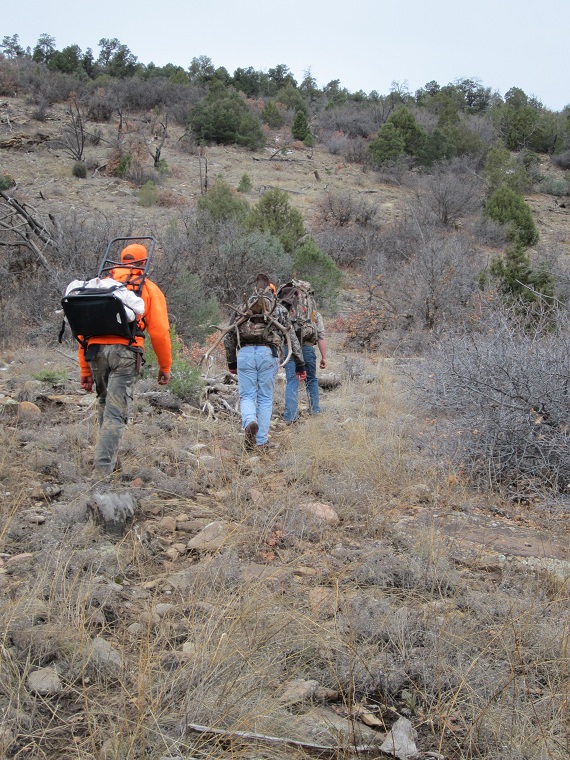
  3. Cost.  Where else can you get 400 – 600 pounds of organic, grass-fed meat for the cost of a license, a tank of gas and two .30/06 bullets?  We can eat very well for a year from one successful hunting trip.  Butchering the meat ourselves saves us even more, and we get the cuts we want.
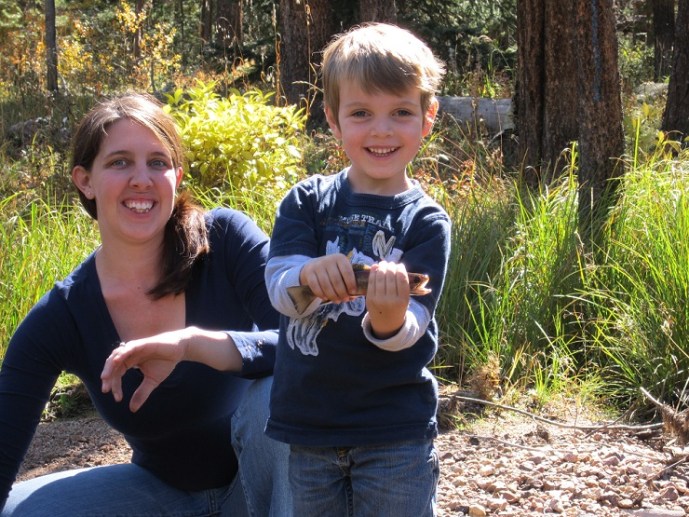
  4. Tradition.  Rick and his brothers were taught to hunt by his grandfather and his uncles.  He learned how to walk in the woods.  How to track a deer.  How to handle is gun safely.  How to shoot an animal so he wouldn’t ruin the meat.  How to skin it and butcher it.  And he is teaching these things to his own sons.
  5. Connection.  With the animal we’re consuming, the food chain, the earth, our creator, and each other. When we hike in the mountains, we feel a spiritual connection to the earth and God.  As we walk logging roads looking for Dusky grouse with our boys, or when they watch us cut an elk into steaks, they understand where our food comes from.  When Rick sits in a duck blind with his uncle or hikes a mountain with his brother, they grow closer. 

There are more reasons.  Rick would probably modify this list, but this is what is important to me.  Do you hunt?  Why or why not?  What value do you see in it?

Categories: Food, Hunting, Top 5 | Tags: , , , | 11 Comments

reCAP Mason Jar Caps

Sorry for the lack of posts this week and only minimal last week.  We’ve been ridiculously busy between hunting and H’s birthday and such.  I’ve got a couple of posts in the works that should hopefully be up soon.  But in the mean time, I had to share this.  Thanks to Erica for pointing me in this direction.

I had to share about this project – the reCAP Mason Jar Cap and the cool site, kickstarter.com, that is helping the reCAP’s inventor get funding.

The reCAP is a BPA free, recyclable, reusable plastic screw top cap to fit regular mason jars.  It’s a one piece design, great for pouring.  And it’s inventor is getting funding through people’s online donations on the site kickstarter.com.  I believe she has already reached her funding goal of $10,000 by November 8th, but people can still back her project  (as little as a dollar or up to $350) if they are interested.  I did, and in return I’ll get to try one of the reCAPs as soon as they are made (projected to be January).

I had to share this because I think both the reCAP and the kickstarter site are great ideas.

Check them out here:  http://www.kickstarter.com/projects/1917107415/recap-mason-jar-caps

If you are an entrepreneur, check out the kickstart site.  The site collects pledges for you and if your goal is not met, nobody looses out, but if it is, you get the money you need to get started.  Fabulous!  So much better than a loan!

I can’t wait to try my reCAP!

Categories: Canning and Food Preservation, Community, Recommended Reading | Tags: | 6 Comments

Winding Down for the Season

We’re playing catch up here as the harvest season comes to a close.  This is my favorite time of year, but it is one that works us the hardest.  As the weather cools off we find ourselves wanting to move inside.  We want to settle down with a cuppa and a warm blanket or cozy up to a nice bowl of hot soup.  Unfortunately, all that coziness will have to wait just a few more weeks.  Winter is the true sleepy season.  Fall is the season of work.

We have most of the harvest put away finally.  Sunflowers and corn are hanging to dry, onions and potatoes are stored, canning is finished, summer produce is put up in its various forms.  We have garlic to plant this week.  I am actually doing a little garden redesign as we are pulling plants when the freezes hit and kills them off one by one.  The tomatoes are still, unbelievably, hanging on.

I am hoping to get some of our kohlrabi to over-winter so I can get seed from it next fall.  The plants are from seed from Slovakia that was smuggled through the mail to my in-laws.  The variety is very large – 8 pounds or more without any woodiness.  Our plants are bulbing up nicely, and they might just be one of the few big successes this season, but the seed is hard to come by.

An Independence Days update is in order, I think.  I last did one in August.

Plant something – Planted a few hardy mums.  Garlic will hit the dirt this week – nothing else is on the docket though.

Harvest something – eggs, tomatoes, peppers, kale, chard, kohlrabi, over 60 gallons (maybe even 80) of compost.

Preserve something – tomatoes and corn frozen, a couple of ducks in the freezer (thanks to Rick!!), the above mentioned canning, drying, dehydrating and such.

Waste Not – compost and recycling, scraps to chickens, etc.  Reused old t-shirts for a Halloween costume.  Working on other sewing projects from the scrap box – including some napkins and even two quilts!  Been mending things, not throwing them out.

Want Not – My friend Annie gave us some cloth diapers, and I used an old flannel baby blanket to make some extra wipes.  Got some great hand-me-downs from some friends for the baby girl.

Build Community Food Systems – Participated in both the Denver Botanic Gardens and the Denver Urban Homesteading chicken coop tours.  Baby sat for some friends in exchange for a couple of pullets (we got the great end of that deal)!

Eat the Food – yes.  🙂

Although my summer garden was a huge flop this year, I am happy that I put down some bok choy seeds and some late season peas this summer.  I might get one more harvest before we put the garden to bed completely.  I actually planted some other things too, but the second round of kale, spinach and beets never came up and I didn’t get any replacements in the ground in time.  I feared for the bok choy after the chicken coop tour – it got somewhat trampled since a few people didn’t seem to realize they were standing in my garden on my baby brassicas.  But it has survived, and even if it doesn’t get huge, I might get some baby heads out of it yet.

Still, I find myself drawn indoors.  Completing sewing projects (mostly mending) that I’ve put off for months.  Starting other projects.  Getting my craft on.  A few moments of inspiration have led to some things getting done in the handiwork department.  Halloween is coming and costumes need making.

We had a family dinner last week.  I’ve been spending more time with my sister lately and I am enjoying this time with her.  We decorated sugar skulls for the Mexican Day of the Dead.  The holiday begins on November 1st, which is Henry’s birthday, and we are big Halloween fans around here, so we did our Dia de los Muertos early this year.  (More on this later, I promise).

Life these days is transitioning from the mad rush of summer to the slower pace of fall.  Rick’s big-game hunting will mark the last of the harvest here, and that is coming in the next few weeks.  In the mean time, we are quieting down.  The canning pot is back in it’s spot in the basement.  H is focusing more on indoor play and learning.  It’s funny how we naturally move in these rhythms.  From outside in the sun and mud to inside quiet games at the table.

Categories: Food, Garden, Independence Days, Simple Living, Urban Homesteading | Tags: , , , , , , , | 4 Comments

How to Peel an Acorn Squash

Each fall I can’t wait for winter squash.  It’s so yummy and delicious.  Butternut is my favorite, but only because it’s much easier to prepare than acorn squash.  Until last night.

Last night I made this delicious recipe.  I substituted acorn squash for the pumpkin, and was once again faced with the challenge of peeling the squash.  And I finally figured this out.

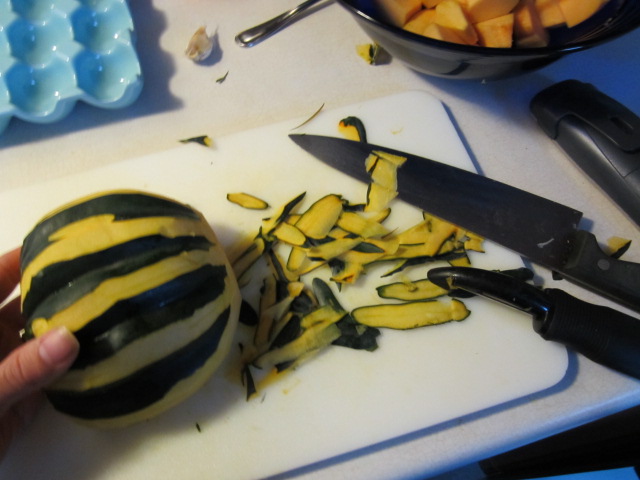
First halve the squash and remove the seeds.  Cut a small slice off the bottom of the squash so it can sit on your cutting board.  Use a vegetable peeler to remove the peel from the ridges.

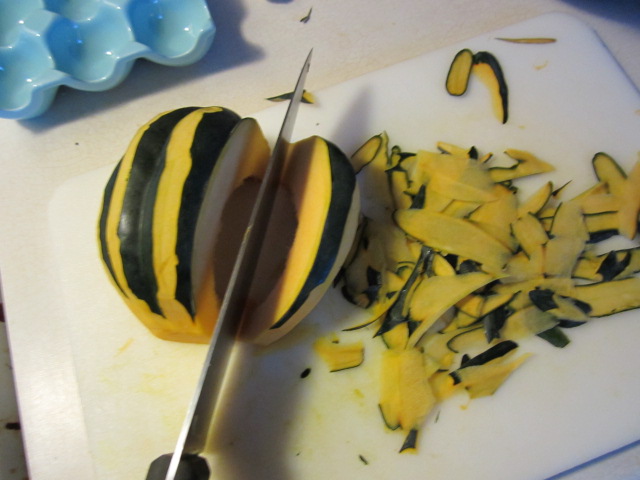
Cut a wedge off the squash, slicing through the, um… valley?  Crease?  Valley – we’ll go with valley.

Now you have a nice wedge that you can turn and finish peeling.

Before slicing off another wedge, peel the exposed edge that was left on the half-squash.  Then, slice through the valley again and repeat on the next wedge.

I can’t believe it’s taken me all these years to figure this out.  But now that I have, acorn squash just moved up a notch in the favorite winter squash category.

Categories: Food, Recipes | Tags: | 16 Comments

Tomatoes Three Ways

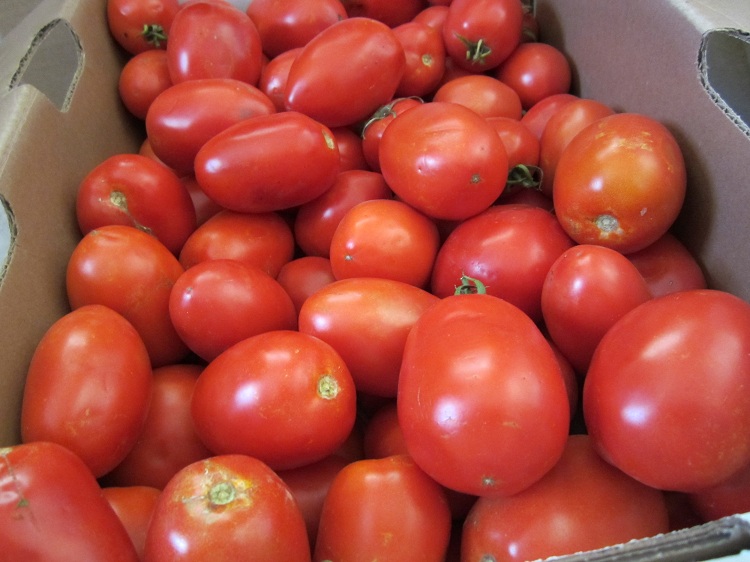
Last week I shared my simple salsa recipe as a way to use up some of that end of summer tomato glut.  Well, we’re still deep in the red around here, as I went up to the CSA this weekend and picked another 50+ pounds.  Here are the ways we are putting away the toms for use over the winter.

We mainly picked Roma tomatoes.  But Rick wanted a few sweet slicers to save.  Since slicing tomatoes don’t hold up as well to other preservation methods, and since it’s the easiest method to do, I put up those first…

Freezing
This is the simplest thing.  If you have the space, you might even be tempted to use this as your only tomato preservation method (we did for the last two years).  First, wash and dry the tomatoes.  Next, label your gallon size freezer bags.  Finally, place as many tomatoes in the bag as it will hold, zip it up, and put it in the freezer.  Done.

The tomatoes should not stick together, so you can take them out one or two or three at a time and set them in a bowl on your counter to defrost.  As they warm up, the skins will just slip off.  They will make great sauce or soup, and be as sweet as the summer time.  They will be soft, so I usually dice them when they are still half-frozen and toss them straight into my pan to finish defrosting as they cook.  Yum.

Canning
This is the main method we are using this year.  Most of those Romas are getting diced and put into jars.  There are lots and lots of posts out there talking about canned tomatoes and how the process works, so I’m not going to retype that here.  Instead, here is a link to a great tutorial.  The only thing I do differently is I chop those suckers up so I don’t have to do it on the cooking end when I open the cans.  -Note that I’m experimenting right now with whether or not it’s worth it to dice them, or if it just as good crushing the tomatoes.  I’ll let you know. –   And please, please ignore anyone who tells you to seed your tomatoes.  WHY?  Seriously.  If you don’t like tomato seeds, you probably don’t like tomatoes, so why are you even bothering.  These are the same people who always peel their potatoes.  To me, this is a total waste of time and energy.  But whatever.  Maybe I’m just lazy.  😉

No matter the recipe you use, make sure to adjust processing time for altitude if you live here in Denver.  Last week I put up just over ten quarts of canned tomatoes (some diced and some crushed).  Looking to get another 15-20 quarts out of these.

Drying
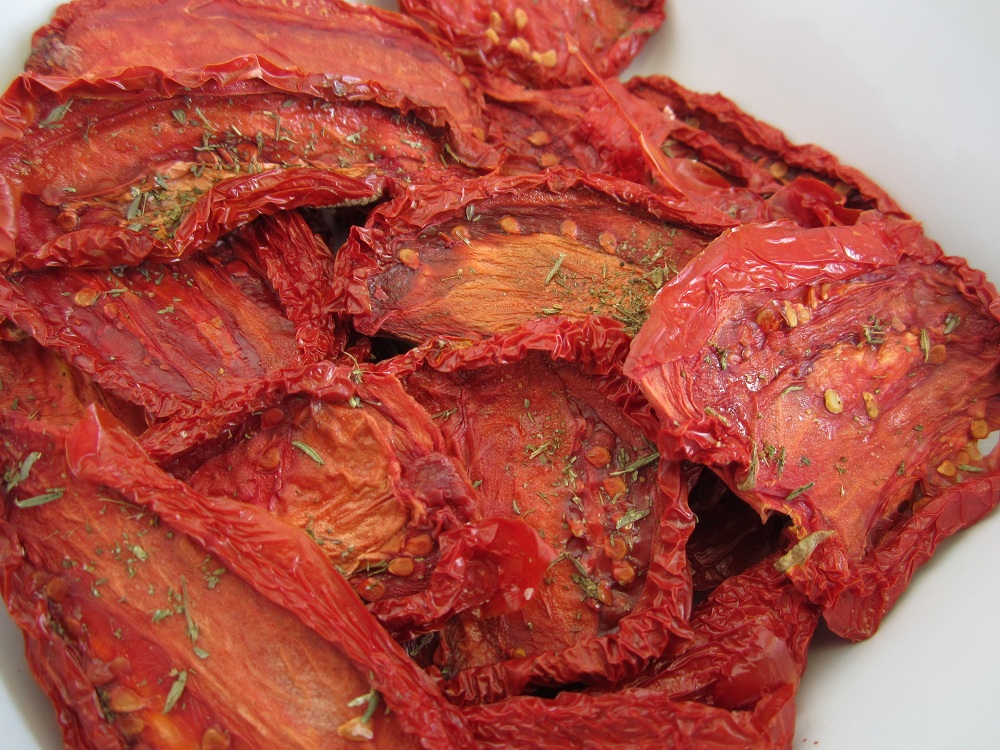
Mmmmm… sun-dried tomatoes.  But without the sun.  I totally use the dehydrator.  It’s faster and I have two little boys in the yard, not to mention the chickens.  All of them, tomato hounds and dirt-flingers to boot.  Dehydrator is much safer – I might actually get dirt-free, uneaten tomatoes this way.

I picked through my boxes of Romas to find the small and the weird.  These tomatoes tend to be labor intensive to peel, which is awful for canning, but makes them perfect candidates for drying.  You don’t peel your dried tomatoes, and you can just cut out the really weird spots.

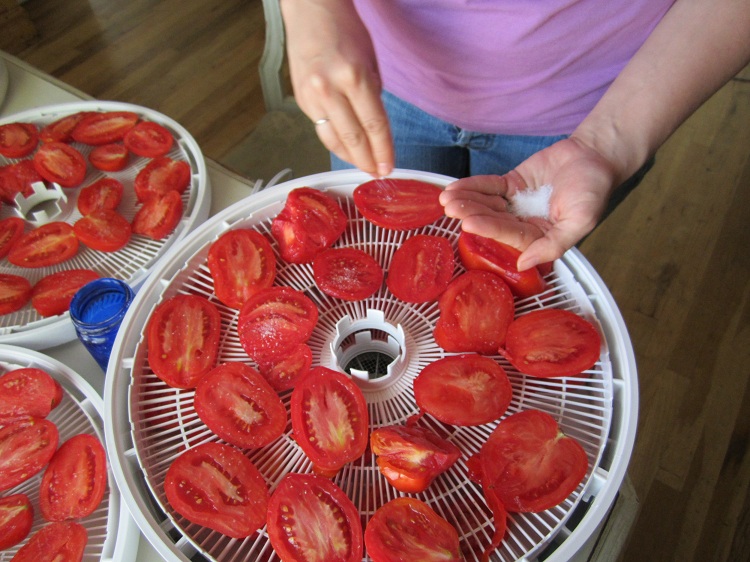
So wash them, slice them, arrange them, season them and you are good to go.

Some of the bigger weirdos had to be sliced long-ways into thirds to fit in my dehydrator trays.  I sprinkle mine with salt and thyme.  I don’t seed these tomatoes either.  That might make the drying time faster, or possibly make the trays easier to clean afterwards, but I don’t care.  I just want to get the tomatoes off the counter and into the pantry as quickly as possible.

My dehydrator will take 12 hours on 135° to dry them all out.  For those that will tell me to use my oven, sorry, that’s a no go.  I run my dehydrator outside so I don’t have to heat up my kitchen.  We have no a/c around here and I can actually fit more into the dehydrator anyway.  If you don’t have a dehydrator though, that is a viable option.

There you have it.  What are your favorite ways to save summer’s favorite fruit for the dark days of winter?

Categories: Canning and Food Preservation, Food, Recipes | Tags: , , , , , | 11 Comments

Essentials Every Kitchen Needs

When we got married, Rick had a lot of the kitchen basics covered, or so I thought.  When my mom offered to buy us cook ware or dishes I declined.  I’m the practical type.  I figured his dishes and pots and pans were working and that was good enough for me.  I didn’t realize the value of good quality kitchen items and that this was the one big opportunity to get these big-ticket items given to us!  Instead, I registered for pillowcases and a shower curtain.  A SHOWER CURTAIN!?

Fast forward eight and a half years.  Rick’s pathetic cheap-o non-stick pans are long gone.  I’ve inherited my grandpa’s awesome cast iron, and I’m slowly building up my collection of stainless steel to replace the mid-range non-stick stuff I bought, oh, seven years back.  And Rick and I know what we’ll buy our kids when they leave the house or get married, even if they think whatever they have is “just fine.”  There are just some things that every kitchen should have.

Here are my top five items that are truly essential to a kitchen:

1.  A sharp knife.  Ideally, you need a good chef’s knife and a sharp paring knife at minimum. More is better.  If you could only have one, though I’d go with the chef’s knife.  At least that way you can chop an onion, which is the base for nearly everything else you’d need a knife for.

2.  Cast iron skillet.  It can brown up meat perfectly, bake corn bread or cobbler, fry an egg or make a frittata.  It’s not hard to clean at all (despite the rumors you’ve heard).  I honestly can’t think of a pan I use more unless it’s my dutch oven.

3.  A sizable dutch oven or a heavy, oven-proof stock pot with a lid.  Soups and stews, braising, roasting, chili or mac and cheese.  This is a kitchen work horse.  My dutch oven is enamel-coated cast iron and can roast a chicken just as beautifully as it fries one on the stove top.  It makes one-pot meals far tastier than any crock pot.  Soups it can do in its sleep.  In a pinch, your stock pot can do most of these things too.  I never look at wedding registries any more.  This and a dutch oven one-pot meal cookbook is my go-to gift.

4.  A wooden spoon.  Ok, I know this seems simple, but try managing a meal without one.  I’ve been in kitchens with no good cooking utensils and found myself wishing desperately for a plain ole wooden spoon.  They don’t scratch any surfaces, are strong and sturdy and generally can’t be beat by anything plastic or metal.

5.  A stainless steel saucepan.  With a lid.  Besides the obvious (sauce), you can boil noodles, steam veggies, make popcorn or no-bake cookies in it.  And it’s easy to clean.

I almost added a garlic press to the list.  I can’t believe how much we use ours, though a good chef’s knife can do a comparable job.

What about you?  Can you not live without your funnel or food processor?  A good baking sheet or pizza stone?  What are your kitchen essentials?

Categories: Food, Top 5 | Tags: , , | 10 Comments

Fall at the Homestead

The first day of fall was last week, and we are entering one of the busiest times of the year around here.  Of course it’s harvest time – which means much of our work moves from the garden to the kitchen.  You’ve seen all my posts on jam lately, but I’ve been canning too.  A little over ten quarts of tomatoes so far, and we’re going Sunday to our CSA farm to help pick more toms and to pick and roast green chiles as well.  The tomatoes will also be canned and the chiles peeled and frozen.

I’m glad we had the CSA to fall back on this year as my tomatoes were so sad.  I was actually a bit worried.  It sure is nice to see the pantry shaping up after all.

Lots of Christmas gifts here too.

This coming weekend is the second annual chicken coop tour.  Locals can purchase tickets here or here.  We participated last year as well, and we are excited to show off again this year.  The coop had a couple of improvements this spring and summer and I really wanted everything in place for the tour. Rick bought me two galvanized garbage cans – one for the chicken food and one for finished compost, but when I started harvesting the compost, I had enough to fill both, plus half a wheel-barrow-full that I pawned off on the neighbor (it was a hard sell, trust me).  The chicken food is still in the garage for now, and there are almost two bales of straw under a tarp out there.

The hens seem excited to have straw in the coop for the first time.  We’ve always used dead leaves or pine shavings in their coop, but the “fall” part of the season has yet to happen here and we wanted to coop cleaned up for the tour.  We were hoping for some wood chips to spread over the ground before the tour too, but it looks like we’ll have to go with out.  Despite that, the chicken area looks nice.

The extra straw, not for the coop, will be used to mulch the garlic that we ordered and saved for seed.  I ordered two varieties this year and saved ten bulbs from a third.  We hope to plant around 125 cloves after the first frost hits.  That should yield us enough garlic for the year next year, including some to save for seed in 2012.

A couple of weekends ago, Rick and H put up my clothesline for me.  I was so excited to get the line that Rick’s mom had promised me.  But once we got it home, we actually couldn’t manage to get it into working order.  After fighting with it for a couple of weeks, we ended up buying a new one, and I love it!  I’ve used it everyday, but I’ve realized I need more clothes pins.  The line holds a lot, and C’s diapers (and inserts and wipes) take up all the pins I have.


We harvested our concord grapes – one whole bunch!  There would have been two bunches, but I accidentally knocked off the second bunch early on in the summer  when I was trying to get the vine on the trellis.  Not too bad for it being the vine’s first real season – we just planted the cutting last spring.  We hope to use this vine to make a few more cuttings when the pergola is done.

Speaking of the pergola, Rick’s uncle brought us down our first pieces from the mountains.  The posts are here!  We will be setting them on poured concrete footers this fall and we’ll begin laying the patio in the spring.  This was the goal of the tree removal project.  I had hoped to have it done all in one summer, but it really was a huge undertaking to manage on our own.  Not to mention having a baby this summer too.  (There’s that old excuse again!).  😉

There is a huge amount of beetle-kill pine in our forests here right now (a heart-breaking 4 million acres in Colorado and Wyoming), so we plan to build the whole pergola out of salvaged logs.  Once it’s constructed, we will plant and train grape vines over it.  I am very excited about it, but it’s been slow going.

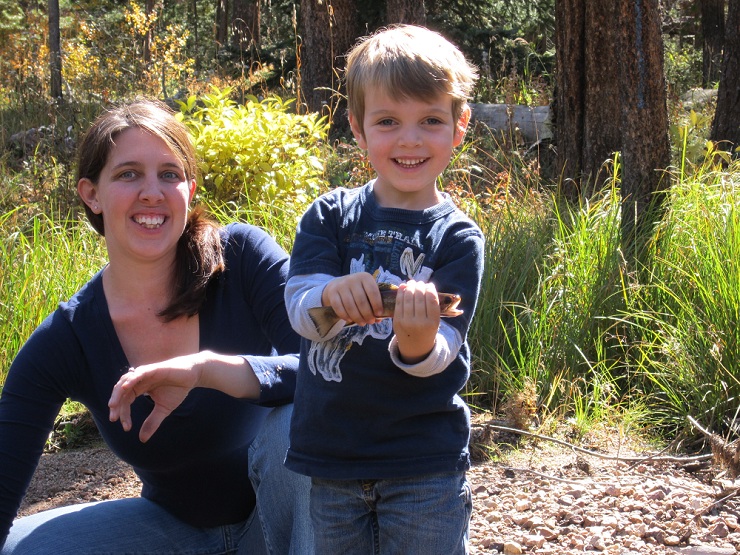
Fall is also the time when we start filling the freezer back up with meat.  We actually got a good look at the forests this year as we did some prep work for hunting season.  Rick sighted in his rifles at the range up on Highway 40, and we did a little grouse hunting and some fishing.  We were skunked on the grouse, but Henry did catch his first fish!  He let it go so it could grow up a bit.  Nothing was added to the freezer yet, but the trip was great fun anyway, and we’ve ready for big game in a couple of weeks.

So that’s what we’ve been up to lately – I’m hoping the tour participants will give us grace on the yard still being half done.  Oh well, they’re coming to see the coop, right?  😉

Categories: Canning and Food Preservation, Chickens, DIY, Garden | Tags: , , , , , , | 15 Comments

Lazy Tasty Salsa

Yum yum!  We’ve been getting wonderful tomatoes and jalapenos from the CSA lately.  Here’s an easy, tasty salsa using all local ingredients (unless you need a little lime juice thrown in).

1 large white onion (or two smaller ones)
2-3 jalapenos
6-8 cloves garlic
4 ripe red tomatoes

Remove the peels from the onions and garlic, and the tops from the jalapenos.  Cut onion into fourths and place into a food processor with the garlic and jalapenos.  Pulse a few times to get the onion pieces roughly chopped.  Quarter your tomatoes and add to the food processor.  Pulse until tomatoes are chopped and thoroughly combined.  Be careful not to over-process.  Stir in salt to taste (you can add the juice of one lime too at his point if you like).  Generally, this is good with cilantro in it as well, if you like that sort of thing.  Just add it, leaves not stems, with the tomatoes.

I made two batches like this and froze in 2-cup packages.  That way we can enjoy the taste of a summer fiesta in February, when mealy tomatoes rule the grocery store shelves.  Do you have a simple salsa recipe you love?

Categories: CSA, Food, Recipes | Tags: , , | 3 Comments

Create a free website or blog at WordPress.com.