Food

Independence Days: Week 31

Plant something – nothing

Harvest something – eggs, tomatoes, kohlrabi, zucchini, eggplant (!), pumpkins.  The chickens are really slowing down with their eggs.  In fact we had to buy some this past week.  😦  I harvested three of our eggplants.  They were a bit on the small side, but I didn’t want to take the chance of them getting a frost without us even getting one.  They were delicious.  There are a few more still out there.  We’re going to let them grow as long as the weather holds out.

Preserve something – dried more tomatoes on the dehydrator, froze some winter squash puree.

Waste Not – compost and recycling, scraps to chickens, etc.

Want Not – nothing.

Build Community Food Systems – started working up a plan for my neighbor’s garden.  After six years of watching us, he’s announced that he’d like a space in his yard (next to our garden) where he’d like to grow corn and potatoes.  He asked for help and we are HAPPY to give it!  Yay!

Eat the Food – made a couple yummy things this week.

Orecchiette with Butternut Squash Cream Sauce

Cook 2 cups orecchiette pasta in salted water until al dente.  In the mean time, saute 1/2 a diced onion in olive oil until soft.  Add 1 tsp dried sage and saute until fragrant.  Drain pasta reserving 2 TBS of the cooking water.  Return the pasta to pot.  Add the onions and 1/2 a butternut squash that has been roasted until tender and smashed slightly to the pot.  Stir in reserved pasta water and about 1/4 cup half and half.  When all is well combined stir in 1/2 cup grated Parmesan cheese.  Serves 2.

Double Chocolate Jalapeno Muffins (pictured above)

So I took the original recipe found here, and substituted three fresh jalapenos that had turned red (therefore a bit sweeter than the green ones).  So delicious!
Categories: Food, Garden, Independence Days, Recipes | Tags: | 3 Comments

Coop Tour Recap & Fall Planting

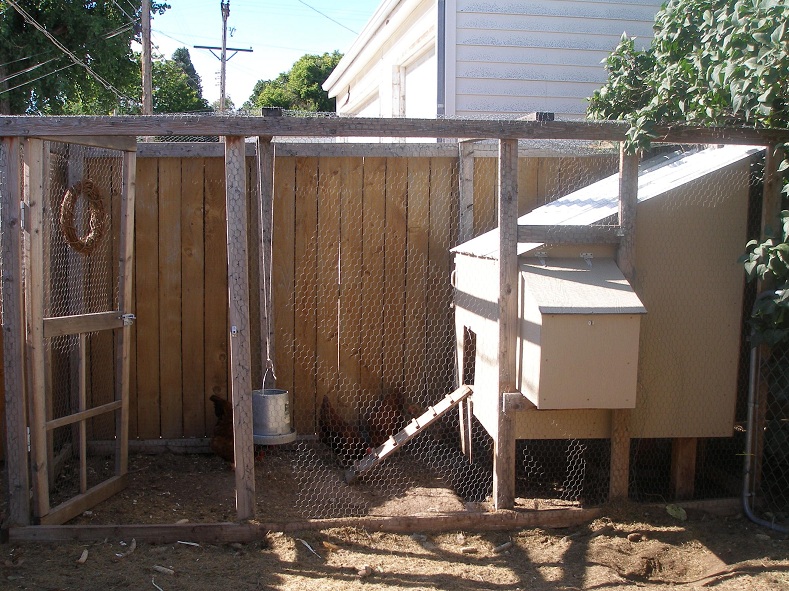
Last weekend was the first Denver Chicken Coop Tour, which was fantastic!  The Botanic Gardens sold out all 120 tickets for the tour, and each ticket was good for up to 4 people.  We tried to count how many people came to view our coop and bee hive, but it seemed like they came in gushes and spurts instead of a steady stream, and I lost count at just over 80.  I’m not certain on the exact number, but it we’re sure it was well over 100 people.

Most of the questions were about how the coop was constructed, what we did on vacation, and how difficult the maintenance was for our five hens.  A few predator questions as well.  It was really enjoyable.  We talked to people who lived in the country with chickens and wanted to see other people coops, people who wanted chickens in their own back yards and people who thought it was great fun that someone in an urban area would keep chickens.

I actually had a wonderful time, and am really looking forward to next year’s tour.

Here’s the update for weeks 29 and 30…

Plant something – mums, asters, irises (again), garlic, chard, spinach, kale, rhubarb, snapdragons, cosmos.

Harvest something – eggs, tomatoes, kohlrabi, zucchini, pumpkins.  Rick harvested two ducks this weekend as well.

Preserve something – tomatoes frozen, spicy kale and potato soup made and frozen, chicken and some chiles in the freezer, more jalapenos and a few experimental tomatoes on the dehydrator.

Waste Not – compost and recycling, scraps to chickens, etc.  Tried and failed at making cheese – twice.  But the chickens thought both the weird, over-cooked curds and the whey were great – hahaha!  I actually started planning meals again, something I’ve neglected all spring and summer.  Planning saves a lot of time, money and food!

Want Not – Got cast iron skillets, a large food scale, and a giant awesome stockpot from my grandpa!!!!!!

Build Community Food Systems – The Denver Botanic Gardens/Denver Urban Homesteading Chicken Coop Tour!  We actually got a thank you note from a tour participant in the mail this week!!  Asked the waiter at a restaurant if their organic produce came from local farmers.  😉  It’s a small step, but an important one.  We actually ate at two restaurants lately that get their produce and bread locally.

Eat the Food – lots of good stuff.  Not sure what recipe to post here.  But I can tell you that dehydrating tomatoes is super easy and they end up packed with flavor.  The romas we just cut in half and the sweets we cut into thick slices.  Salted them all, sprinkled on some thyme and stuck them in to dry.  They have turned out great!

Categories: Chickens, Food, Independence Days | 4 Comments

Inaugural Chicken Coop Tour

This weekend is a kick-off for the first annual Denver Botanic Gardens/Denver Urban Homesteading Chicken Coop Tour.  Think Parade of Homes, but for chicken coops.  There are 15 coops throughout Denver and the metro area participating in the tour.  We are coop number seven.

We are so excited to be participating.  By “we” of course I mean me and the chickens, since Rick is not really excited about 100 + people tromping through our yard and garden to see the digs.  😉  But it’s all in the name of raising awareness about urban agriculture.  And besides that, they wrote some nice stuff about us on the tour map…

“A coop from original design by Anisa, five chickens, bees, and a gorgeous front yard garden that the family has had for the last seven years is what makes this site a perfect example of backyard agriculture and livestock keeping.  Little Henry will show with pride his tomato plants, chickens and eggs.”

Seriously!?!?  How cool is that!  There has been a bit of media promoting the tour in the last few days.  Check out the piece FOX 31 did about the tour.  James Bertini with Denver Urban Homesteading is featured in the story.

ABC 7 News also reported on the tour, as well as making it into the Denver Post’s September 29th Food Calendar.  The WestWord comic section even poked a bit of fun at us.

Tho tour is tomorrow, October 2nd, from 11am to 4pm.  Maps can be purchased in person at the Botanic Gardens for $20 per group of four.  There is still time to purchase a map for the tour.  Contact Denver Botanic Gardens or Denver Urban Homesteading for details!

Categories: Beekeeping, Chickens, Community, Food, Sustainability | 6 Comments

Independence Days: Week 28?

Wow – I think it’s twenty-eight.  I have sort of lost count.  So we’ll go with it.

This week I’ve been playing catch up with the house and laundry and trying not to let any of the food go bad.  I don’t yet have all the green chiles peeled and in the freezer yet.  I’m hoping they will make it a couple more days, but I’m afraid they might not.

I’ve also been trying to get a lot done around the yard.  This weekend is Denver’s chicken coop tour, which we’re participating in.  So of course, I want our yard in an unnaturally clean and perfect manner.  😉  Ha!

Back when we picked peaches, we got a few apples as well.  they’ve been yummy and lasting quite a while on the counter, but our time is about to run out with them, so I decided this morning to dry them.  I’ve never dehydrated apples before, so wish me luck!

Here’s the update this week.

Plant something – some more flowers and bulbs.  No food, but I am hoping to get a few seeds in the ground to over winter (garlic if it’s not too late).

Harvest something – eggs, tomatoes, kohlrabi.

Preserve something – tomatoes frozen, French onion soup made and frozen, some chiles in the freezer.  Put apples on the dehydrator this morning.

Waste Not – compost and recycling, scraps to chickens, etc.

Want Not – nothing.

Build Community Food Systems – I just realized that I never told you that H, E and I helped with a film that Denver Urban Homesteading is making to get the city of Denver to lift the law preventing chickens inside city limits without a permit.  I am excited to see the video (I think it will be on youtube), and I will certainly share when it’s finished!

Eat the Food – made a big pot of veggie soup just to use some things up!  I also made this eggplant lasagna that was a bit of an experiment – the original recipe was a bit different, and I didn’t have what was called for so I made some substitutions.  It turned out really yummy.  Here’s the recipe – it sounds so weird, but it tasted great!

1 ½ pounds eggplant sliced ¼” thick
3 Tbs olive oil
coarse salt and ground pepper
4-6 slices bacon cooked until crisp and crumbled
¼ tsp ground all spice
1/3 cup chopped fresh mint
1½ tsp dried oregano
5 cups Bechamel Sauce (I would increase the milk in the recipe to 5 cups, the flour to 1/3 cup, and add 2-3 cloves of garlic)
8-12 no-boil lasagna noodles
1 cup shredded swiss cheese
¼ cup grated Parmesan cheese

Toss eggplant with 2 Tbs olive oil, salt and pepper and put on a baking sheet.  Roast eggplant in 400 degree oven for about twenty minutes.  Meanwhile, make your Bachamel sauce and cook your bacon.

When the bacon is crisp, remove from pan and drain off most to all of the drippings.  Add 1 Tbs olive oil to bacon pan and all of the herbs and spices.  Saute about three minutes, and add crumbled bacon back to pan.

Spread 1 cup sauce in the bottom of an 8×8 pan (I use a pan that is about 8×10).  Place two or three noodles over sauce.  Layer with half of the eggplant.  Then 1 cup more of sauce and ¼ cup of Swiss cheese.  Layer two or three more noodles.  Layer on all of the bacon-herb mixture.  Top with another cup of sauce and another ¼ cup of Swiss cheese.  Top with two or three more noodles and repeat eggplant layer with remaining ingredients, reserving the Parmesan.

Cover with foil and bake for 35 minutes.  Remove foil, top with reserved cheese and continue to bake 5 -10 minutes more until the cheese is bubbly.  Remove from oven, let cool 15-20 minutes and serve.

Categories: Canning and Food Preservation, Food, Independence Days, Recipes | Tags: | 1 Comment

The Impact of Eating Organic

A sustainable dinner - organic beans and squash, bakery made bread with organic butter, organic meat raised on pasture and wild brush - all local within 100 miles.

This past Tuesday, I came across a video interview of Michael Pollan with MSNBC, talking about eating organically as an investment (you can watch the video here).  He included some great tips for getting affordable sustainable meat, keeping hormones out of your diet and reasons to eat organically/sustainably.  Additionally he talked about the difference between animal products from grass-fed or pastured animals, and ones that are fed on a feed lot, even an organic feed lot.

Then, this morning, I noticed on the side of my Organic Valley half and half a note stating that by “using a quart of organic half and half [in lieu of conventional], every week for a year, you help to keep 6.2 lbs. of synthetic nitrogen fertilizer and 1.3 oz. of toxic pesticides from being used.”  They said they offered a calculator on their website so you could see the impact you are having by consuming their organic dairy products.

I don’t eat strictly from this brand, but I wanted to see what impact my dairy dollars are having on the environment each year.  In a typical week our family consumes two gallons of milk, one quart of half and half, one and a half pounds of butter and one pound of cheese.  They calculate that buying these items organically instead of conventionally saves the environment from 65.9 lbs. of synthetic nitrogen fertilizer and 14.3 ounces toxic pesticides and herbicides per year. That’s just our family’s dairy purchases, let alone meat and produce!

Additionally, the Organic Valley site states that  “public health costs associated with pesticide-related acute poisonings and cancer alone add up to an estimated $1.1 billion dollars per year.*”  Below are listed some of the other impacts of pesticides on children.

“Impacts on Children

Pesticide exposure poses special concerns for children because of their high metabolisms and low body weights.

  • More than 1 million children between the ages of 1 and 5 ingest at least 15 pesticides every day from fruits and vegetables.
  • More than 600,000 of these children eat a dose of organophosphate insecticides that the federal government considers unsafe.
  • 61,000 eat doses that exceed “unsafe” levels by a factor of 10 or more.5

“Prenatal Exposure

Most babies today are born with persistent pesticides and other chemicals already in their bodies, passed from mother to child during fetal development. 21 different pesticides have been found in umbilical cord blood, suggesting tremendous potential damage at a critical developmental time. Since a baby’s organs and systems are rapidly developing, they are often more vulnerable to damage from chemical exposure.  The immature, porous blood-brain barrier allows greater chemical exposures to the developing brain.6″

Wow – that’s pretty huge motivation to eat organic foods!  But they can be a bit more expensive.  Which brings me back to the Michael Pollan interview.

Organic foods are more expensive because there is a greater demand for them than there is supply.  In America, we vote with our dollars.  The more we demand organically grown and produced foods, the more farmers and companies out there will be motivated to switch to using organic practices, adding more organic foods to the supply chain.  the more food suppliers producing organic products, the more competition.  The more competition, the lower the prices.  the way we demand products is to buy them.  So, if you want organic food at competitive prices, start buying it and watch the price drop.

There are a lot of options out there.  Buying locally will be the least expensive and have the biggest impact on protecting the environment and the local economy.  Check out http://www.localharvest.org/ for local farmers, markets and CSAs near you.  There you can find not only produce, but local meat processors and restaurants who use local and organic products (you are still effecting the supply and demand of how food is produced when you eat out).

To read more about the impacts of synthetic pesticides, synthetic fertilizers, GMOs, hormones and antibiotics, check out Organic Valley’s website.

* “Promoting Sustainable Food Systems through Organic Agriculture: Past, Present and Future,” Christine McCullum-Gomez, C., and Riddle, J. HEN Post: Hunger and Environmental Nutrition Practice Group of the American Dietetic Association, Spring 2009. www.hendpg.org

Categories: CSA, Food, Sustainability | Tags: , , | 5 Comments

Independence Days: Season of Work!

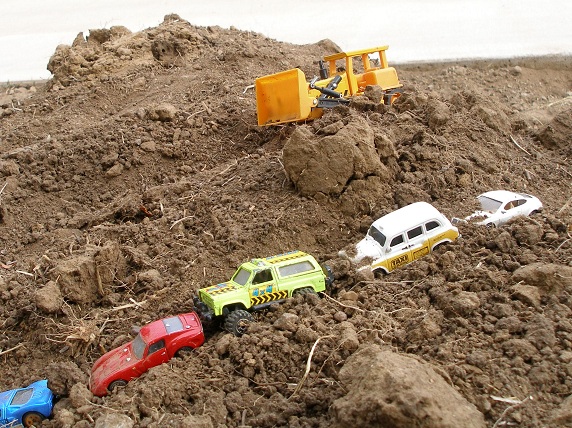
Yes, the harvest season is here, and it feels like we are working non-stop putting up food!  Last week, we made grape jam, finished putting away the peaches, and worked on the yard for a bit.  Rick dug out an area for a new flower bed for me in the back yard, and after we removed all the grass, we were disappointed to find concrete about six inches under the surface of the dirt.  So that turned into a week long project of digging out the concrete, but while it was in progress, H had a great time playing in the piles of dirt.

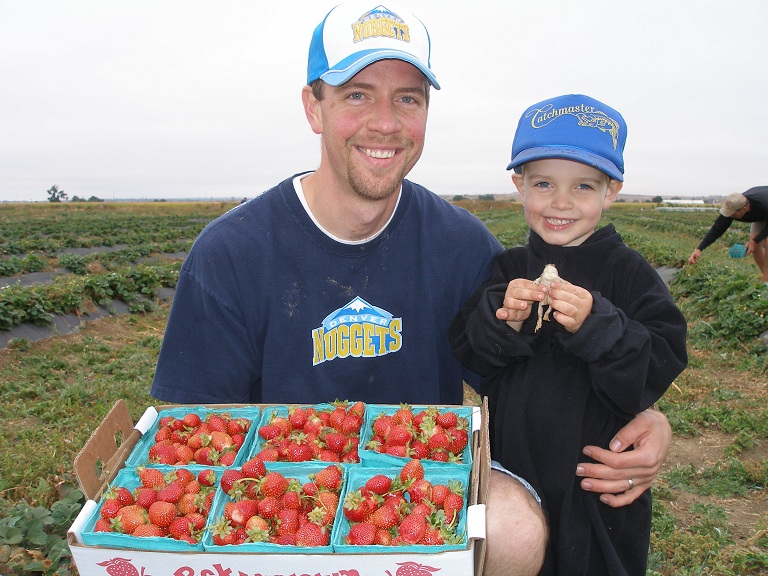
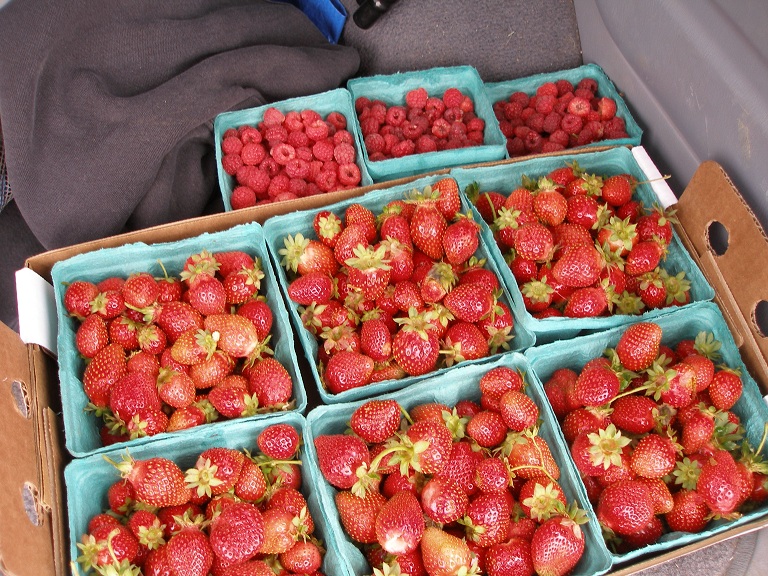
Thursday, the boys and I went to Berry Patch Farms with a friend who used to be a member of the CSA.  We picked raspberries and had lunch together and talked farms and home schooling.  They did not have strawberries at Berry Patch when we went, so Rick and I took the boys back to pick strawberries on Saturday.  It was cold and rainy, but we had a great time.  H found a toad while we were there and enjoyed carrying it around for a bit before letting it go.

When we got home it was too wet to make jam, so we froze most of the berries, and started in on freezing the plums.  I really wanted plum jam, but it’s been a pretty overcast week so far, so they will have to sit in the freezer until another hot, dry, jam day.  We finally measured out the plums and ended up freezing nearly 70 pounds.  There were probably another ten pounds we ended up tossing to the chickens or composting.  We are hoping to trade some with friends who are making lots of apple sauce this year.  😉

Yesterday at the farm, we were allowed to pick an extra bushel each of peppers and tomatoes.  The tomatoes are destined for the freezer.  We were able to roast the Anaheims, and once peeled, we’ll be set for the winter in the green chile department.  Hooray!  Of course, that means I still have lots of work to do this week.  I hope you can understand why the blog’s be so far behind these days!

Here’s the update:

Plant something – quite a few flowers, a pink pampas grass, but no food..

Harvest something – eggs, tomatoes, zucchini, kohlrabi, cukes, raspberries and strawberries, Anaheim peppers.

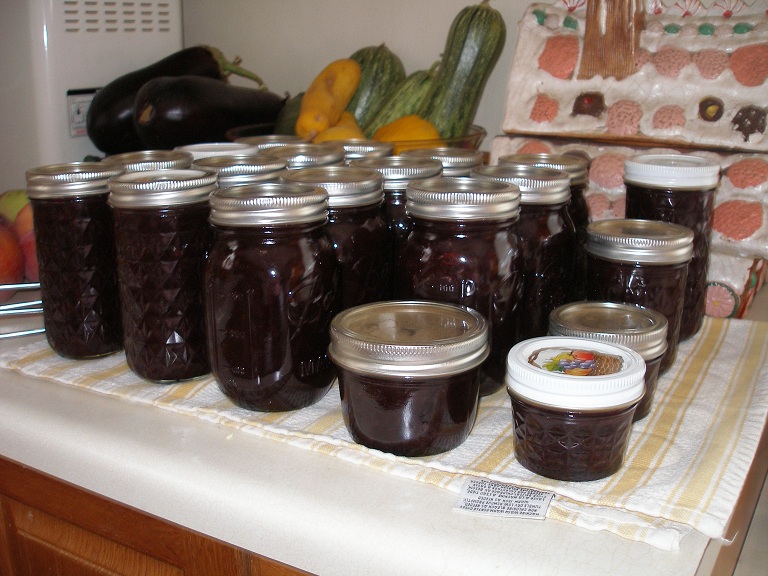
Preserve something – 15.25 pints grape jam, the rest of the peaches sliced and frozen (except a few I reserved to eat fresh and some set aside for making preserves with strawberries), strawberries and raspberries in the freezer, a few more gallons of tomatoes in the freezer, 67.5 pounds of plums, some corn and some beans to the freezer as well.  Dehydrated jalapenos.

Waste Not – compost and recycling, scraps to chickens, etc.

Want Not – nothing that I can think of right now.

Categories: Canning and Food Preservation, Chickens, Food, Garden, Independence Days | 3 Comments

How to Make Grape Jam – In Pictures

How to Make Grape Jam in Pictures on Punk DomesticsWhen the concord grapes get ripe, we like to make jam!  Here’s how we do it.

You’ll need two quarts of concord grapes, six cups of sugar, two small saucepans, a strainer, a canning pot and accessories, and three pint jars with lids and bands.

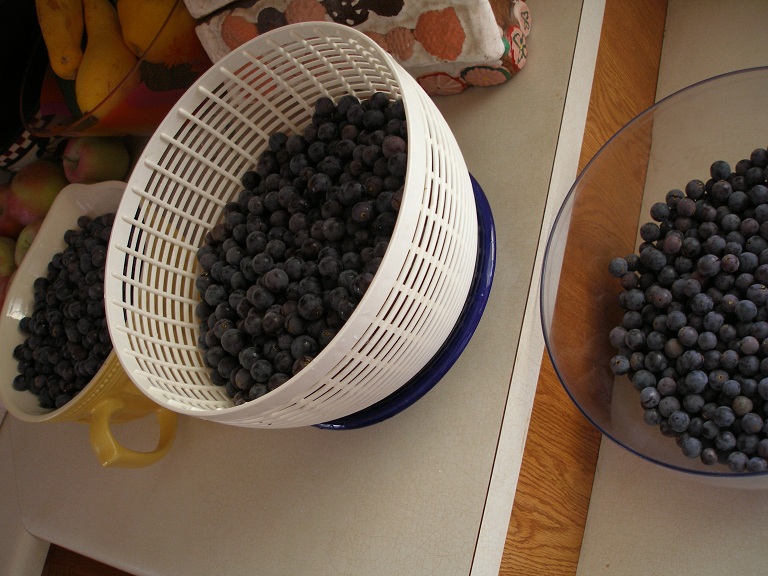
Wash the grapes and measure out two quarts.  In this picture, there are enough for three batches (six quarts).

Next, peel the grapes, putting grapes in one pot and peels in another.  When the grapes are ripe, you can just give them a squeeze and the grapes pop right out of their skins.

Cook the grapes without water and the peels with just a little water in separate pots for ten or fifteen minutes until the peels are soft and the grapes are separated from the seeds.

Combine the peels in a larger pot with sugar (3 cups per quart of grapes).  Strain out the seeds from the pulp, and add the pulp to the sugar mixture.  Bring to a boil until jam reaches the gelling point.  You can test this with a candy thermometer (211° in Denver), a spoon or by putting a plate in the freezer.

Ladle your hot jam into hot jars.  Process pints in a boiling water bath for 15 minutes here in Denver.  Process five minutes less if at sea-level or using half-pint jars.

Voilà – Grape jam!

Categories: Canning and Food Preservation, DIY | Tags: , , | 3 Comments

Fruit

This weekend was the weekend of fruit.  On Saturday morning we went to Palisade for the second time this summer, and we came home with 319 pounds of peaches.  150 pounds were for friends, and we kept the other half for ourselves.  Then, Sunday morning, before we had even gotten a peach into the freezer, my brother-in-law came by with over 1500 Italian plums.  Thankfully the plums are a bit green, as we didn’t really have much time to mess with the fruit on Sunday.

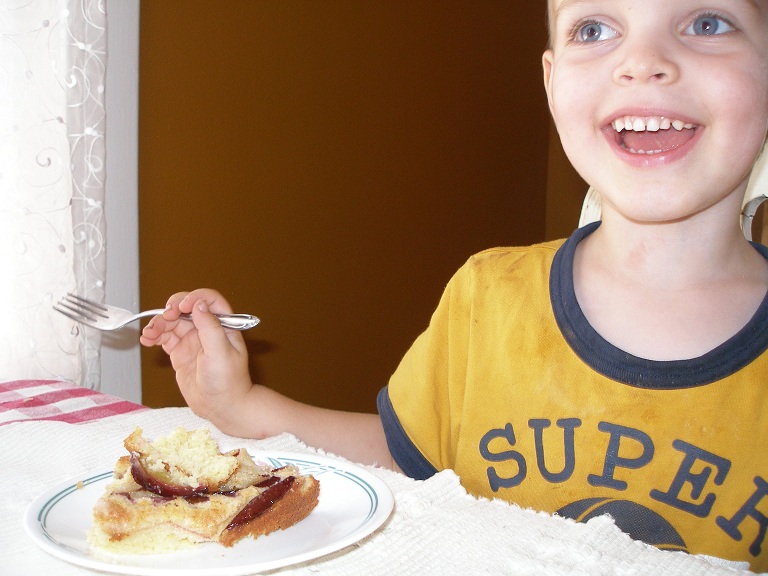
Monday, we ate some of the plums in a plum coffee cake, and then we went to our friend’s home outside of Allenspark.  Mike grilled and we gathered around the fire pit, and had a nice evening with friends (and peach cobbler), watching the smoke from the fire in Boulder county blow over the horizon.

On the way home we stopped outside of Longmont where we could see the fire above Boulder.  My pictures here don’t do it justice, but it was incredible.

Tuesday is farm day for me, when I go and work at the CSA.  I brought home our share, and had barely pulled into the drive when our friend, Rich drove up with twenty plus pounds of concord grapes!  These grapes are our favorite and they were very generous!

So we have a fruit filled week ahead of us.  I had actually planned to pick strawberries and raspberries this week too, but I am putting that off until next week in hopes that I can get somewhat caught up around here before adding more to it!

Here’s the update:

Plant something – nothing.

Harvest something – eggs, tomatoes, zucchini, peaches

Preserve something – three batches of peach preserves, two and a half boxes (approx. 30 lbs) of peaches sliced and frozen, 3½ pounds green beans frozen, 1 gallon bag of tomatoes frozen, 2 batches of carrot soup in the freezer.

Waste Not – compost and recycling, scraps to chickens, etc.  Lots and lots went to the goodwill over the last couple of weeks.

Want Not – nothing that I can think of right now.

Build Community Food Systems – all the fruit trading!  Yum!

Eat the Food – as mentioned, plum cake and peach cobbler.  Also eating all the yummy farm veggies.  Nothing out of the ordinary.  😉

Categories: Canning and Food Preservation, Chickens, Food, Garden, Independence Days, Recommended Reading | Tags: , , , , , , , , , | 1 Comment

Blog at WordPress.com.