Author Archives: Anisa

Unknown's avatar

About Anisa

Bustin' sod in the city, I spend my free time blogging and getting dirt under my nails along side my hard-working husband, three kiddos and urban chickens.

Deep Litter Method for the Lazy Chicken Keeper

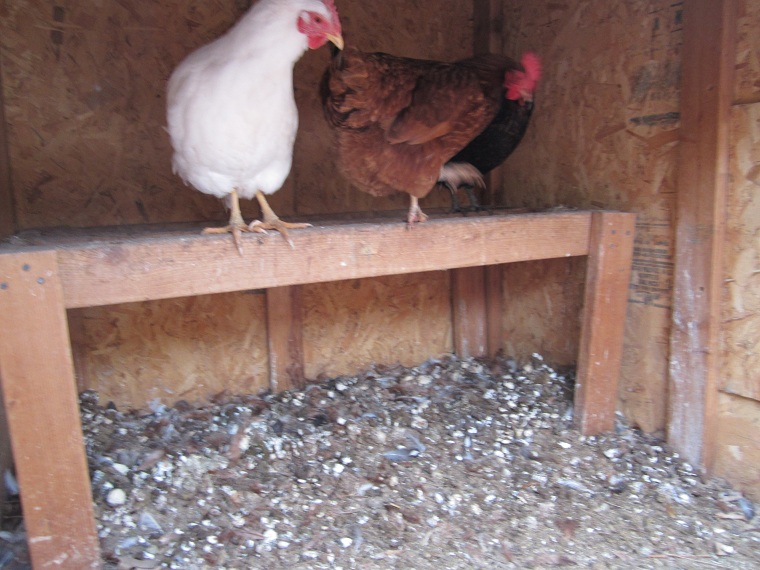
When we first researched keeping chickens, my only hesitation was the idea of having to clean a coop weekly.  I used to have a parakeet, and I hated changing his newspaper tray, and I hated cleaning my hamster’s cage too.  I was dreading having to clean a coop.  I envisioned this, happening weekly (by the way, she was cleaning a coop inherited when she moved to the property for the first time).  Then, I ran across something describing the deep litter method, and I knew I had found the solution.

We clean our chicken coop (specifically the hen-house) twice a year.  And no more.

And the coop does not smell.  In fact, when we participated in the Denver Botanic Gardens/Denver Urban Homesteading Chicken Coop tour, everyone remarked on how our coop did not smell.  I didn’t clean it before the tour, because I wanted to show what the method off and let people see what it looked like to have chickens in real life.

What we learned was that we were, at that time, the only chicken keepers on the tour using this method.  Every other owner had told the tourists that they cleaned their coops weekly.  We were surprised by this and actually started making a joke of it, calling ourselves the lazy chicken owners on the tour.  People laughed and that’s how I actually came to the name, the Lazy Homesteader.  😉

Here is how the method works in case you are like me; allergic to hard work involving poop.

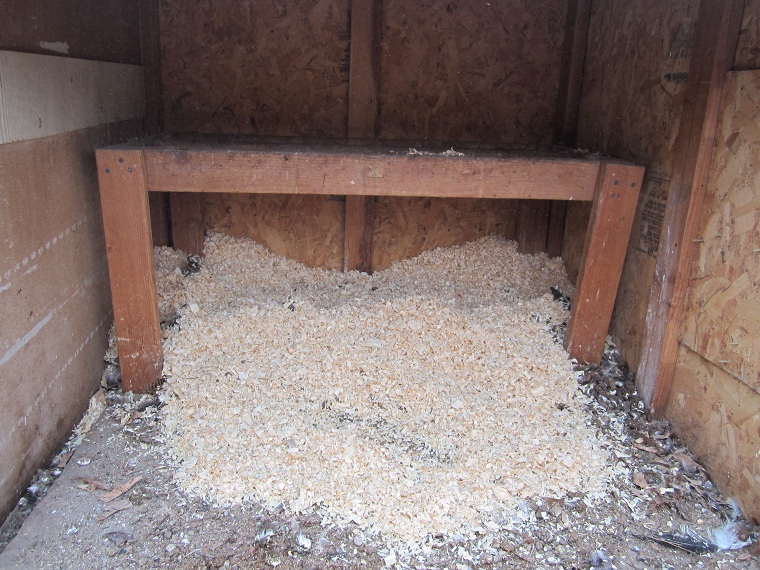
Clean your coop one fall day and then put down a layer of dried leaves or pine shavings or some other kind of litter (not straw – it’ll stink to high heaven).  Then you let the chickens poop on it.  Then when it’s thoroughly covered over in poop…

Put down more shavings or leaves. I just throw it in – I don’t spread it nicely or anything.  I’m not touching that crap.  😉  The chickens will dig through it and spread it around anyway.

Repeat until spring comes.  Note that I mainly just put litter down right under the roosts.  If it’s very rainy or snowy, we put their food and water inside the house (usually we keep them in the run) and we don’t want them to throw litter in the food and water.

Finally, on a nice day, when you feel like doing it, bring the wheel barrow over to the coop, scrape it all out, and dump the decomposed poop/leaves/shavings mixture into your compost bin.  It’ll be mostly all composted anyway.  Then clean out the coop and put down a fresh layer of shavings or leaves (if you have any more).

You are basically composting in the bottom of the hen-house.  And as you learned a couple weeks ago, compost generates heat, perfect for helping your flock stay warm during the winter.

And I can totally handle cleaning only twice a year.

Categories: Chickens, Compost, Urban Homesteading | Tags: , , , | 57 Comments

UH Basic Training: Chicken Keeping 101

Everyone in the household is seemingly well again, so urban homestead boot camp is back in session!

After a garden, when someone mentions “urban homestead” many people think of chickens.  To me, chickens are a bit of the country right here in the city.  They aren’t particularly noisy, they don’t take up much space, and it doesn’t cost much to feed them (ever heard the expression “chicken feed?”).

I have an awful lot to say about backyard chicken keeping.  Enough probably to fill a book.  It’s fun and the eggs are well worth the effort you put in.  In order to keep this post from becoming a novel, here are the down and dirty basics of urban chickens.  I am, of course, not an expert.  We’ve had chickens for five years now.  We’ve encountered a few problems and we’re continually learning as we go.  But if you’re looking at getting birds for the first time, here are some basic guidelines.

The Rules

First off, are chickens allowed where you live?  Check your city ordinances.  There are usually stipulations on the number of birds, the size of area required for them and in some municipalities, there may be a permitting process.  You can sometime skirt your HOA if they only stipulate the number of “pets” allowed and not what kinds.

Last month, The Crunchy Chicken had a guest post about what to do if your neighbors or HOA is not on board with your backyard flock.

Getting your neighbors on board is pretty important.  Luckily, it’s a pretty easy thing to do as well.  All of our neighbors love our hens.  The kids especially.  And the promise of fresh eggs are a great way to build some good will between neighbors.

You might be surprised where chickens actually are allowed.  Highlands Ranch, here in Colorado, for example is chock-full of HOAs, and they totally allow chickens.  So check it out.

This link has lots of city codes listed, but not every city.  A Google search will help if it doesn’t have your city.
The Birds

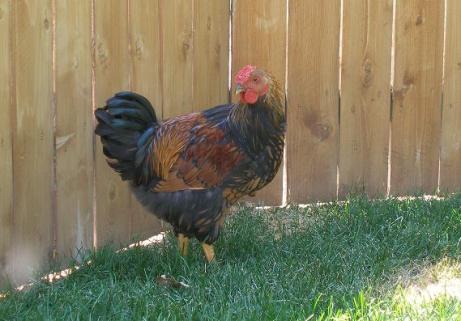
For most backyard flocks, you’ll want only female chickens.  Roosters are loud and crow all day, making it tough to stay on your neighbors’ good sides.  Plus they’re generally not very friendly.  Despite the fact that everyone wants to ask you how you plan to get eggs without a rooster, you don’t need one.  Without a rooster, all your eggs will be unfertilized and you’ll get to skip the 4:00 AM wake up calls (and at 11:33, and at 3:28, and at 6PM).

You can start your flock by getting chicks, started pullets, or hens.  Chicks are the least expensive, but you will need to raise them indoors under a heat lamp until they have grown all their feathers and can move outside, which will take a few months.  Pullets are female chickens that are less than a year old.  They will cost you more than chicks but you’ll get eggs sooner, since most chickens begin laying around six months old.  Or you can buy grown hens that are already laying.  They will be the most expensive since someone else has fed and housed them for a year with little benefit of getting eggs.  You probably don’t want to buy hens that over two years old if you want many eggs though.  Their peak laying years are the first two (from age 1-3 years).

You can order chicks in the mail or buy individuals at a feed store or from a local farmer.  There is only one site that I know of that will ship chicks in quantities less than 28.  We bought our chicks locally, so I can’t say how they do this.

Pullets and hens can also be bought from local farms, sometimes on craigslist, or at markets or poultry swaps.  Chickens are social, so you’ll probably want at least three or four.

There are lots of breeds of chickens.  If your climate is cold in the winter, you will want a heavy breed that can keep its self warm.  Bantams are miniature chickens and their eggs are about half the size of regular chicken eggs.

The Coop

Your birds need about two square feet apiece inside their hen-house.  It needs to have a roost and they’ll want a place to lay their eggs. The size, shape and style of your house and coop are limitless.  Check out some of these ideas for small backyard coops.

Coops are easy to build yourself if you are the handy type, or small ones can be bought locally or online for a few hundred dollars.  We built our coop ourselves and over the last five years have made only some minor modifications.  (Though I admit I have a few more in mind for this coming year).  I’ve seen people convert dog houses, old sheds and abandoned campers into chicken coops.

The original construction of our coop looked like this:  Coop Construction!

The main things to keep in mind are a place to rest, a place to nest, a place to get shelter and a way to keep predators out.  Many people advise using hardware cloth to keep raccoons out.  We have been successful with simply using chicken wire, which is much less expensive.  Although we’ve had chickens killed by foxes and raccoons, it was never due to a breach in the security of the coop, only due to the negligence of the chicken owners (we forgot to close the coop at night).

A chicken tractor is like a mini coop on wheels with a run attached that can be used to let your hens graze or catch bugs and then moved to a new spot so that they don’t eat the grass down to the dirt.  A great idea if you have the room for it.  Check out some neat ones here.

The Food

Chicken are omnivores.  I always sort of chuckle when I read “vegetarian fed hens” on a carton of eggs.  Now that’s good in commercial eggs, so that you know those poor birds weren’t fed other chickens.  But your chickens will certainly not be vegetarians.  They will eat bugs and worms, and I’ve heard they can catch and kill a mouse.

For the bulk of their diet, however, you’ll want to feed them something.  You can make your own food for them using a mix of grains and seeds.  A quick Google search will lend you many guides and recipes.  Depending on your resources this might be less expensive than buying pre-made food.  For some it is expensive if you’re in a big city far from where the grains are grown, and so it is easier to buy the bagged stuff.
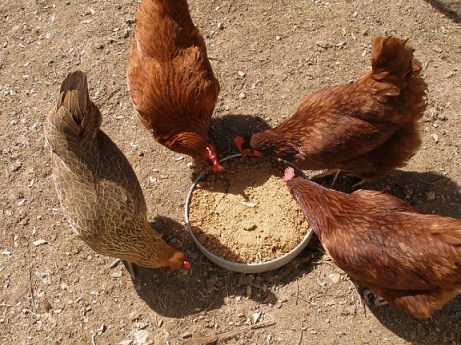
Pre-made choices include conventional, organic, medicated, pellets, crumbles, mash and if you’re lucky, whole grain.  Most backyard flocks don’t need medicated feed, even for chicks.  These feeds are made for large, commercial flocks, where chickens are kept in too-close quarters and make each other sick.  There is no need to dose your flock with antibiotics out of the gate with only three or four or twelve birds.

Pellets, crumbles and mash are different forms of the same feed.  The ingredients in the feed are ground up and then pressed into shape before being packaged.  The shapes are self descriptive.  These are a matter of personal preference since chickens will eat all three.  It comes down to what you prefer and how much the birds waste.  My birds have always flung feed out of the feeder, but if the feed is pellets, they still get eaten off of the ground.  All of these feeds are susceptible to moisture.  If they get wet, they will pretty much disintegrate.  So store it where it will stay dry, and keep a cover on your feeder if it is outdoors.

Conventional chicken feed is the least expensive but carries the risk of chemical pesticides, fertilizers and GMO ingredients.  Since here in the US, they don’t label those things on human food, they certainly won’t on chicken food.  If you want to avoid these (remember, your chicken is making eggs with that food, and you will eat the eggs), you should buy organic.  It can be more expensive than conventional feed, unless you can find a local source.  We have found a local farm co-op that offers us organic, whole grain layer feed for 43 cents/pound.

Your chickens are great garden disposals as well.  They love to eat greens, weeds, kitchen scraps.  I’ve often joked that they are like miniature pigs.  The only things I have not seen our hens devour are potato peels and mushrooms.  Otherwise, they will pick clean a ham bone as quickly as they will hork down mushy strawberries.  They stick their skinny necks through the fence to attack our Swiss chard on a regular basis, and they practically live in the compost pile during the winter.

They will eat eggs.  And if you cook them scrambled eggs, that’s fine.  They don’t identify an egg smashed flat on the ground as the same as an egg they just laid (they are not the brightest creatures).  But be cautious.  If they get a taste for raw eggs, soon they will be plundering their nests and eating more eggs than you.

Crushed eggshells are a good supplement for them to get calcium in their diet (to make strong shells).  You can also offer crushed oyster shell, whey, other dairy products and leafy greens.  They’ll chow down and thank you.

The Work

You know how my site is called The Lazy Homesteader?  Well, it’s because I really don’t like anything that is complicated, hard work, or lots of maintenance.  The main work in caring for chickens, I’ve found, is making sure they have fresh water everyday.  They need it replenished often in hot weather and they need the ice chipped off in the cold.  So every day, they need water.  That I can do, if Rick is helping me.  😉

Their feeder holds enough food for a few days, so I just check it when I’m giving them water to make sure it’s not empty yet.  And I collect eggs.

Your hens will eventually molt.  This is when  they lose and regrow feathers and take a break from laying, and typically happens in the winter.  The molt is dependent upon hours of daylight,  so if you want eggs year round, they need a light in their house to trick their bodies during the winter.  We’ve found that they don’t need it to keep warm (admittedly we don’t have ice storms here, so I can’t speak to that), but their feathers and group body heat seems to do the job.  We let them take a natural break from laying and don’t provide a light in the winter.

Cleaning the coop is the other main work of keeping chickens.  We use a deep litter method and only clean a couple of times a year.  We’ve found this doesn’t work that well with straw as the coop bedding.  It is great however with leaves or pine shavings.  During the first chicken coop tour, everyone remarked on how nice our coop was – that it didn’t smell at all.  But then one time we decided to try straw.  The coop stunk within the week.  It was a horrible stinky ammonia smell.  And messy.  They straw went everywhere.  A breeze blew it all over the yard.  It was slippery to walk on.  We switched back to dried leaves and pine shavings.  Later this week, I’ll explain the deep littler method in detail.    Others do use straw and change their hens bedding daily.  Still others use sand.  Find what works for you.

That is basically it.  This week, I’ll cover more chicken keeping things in detail.  This is a big topic, and I know this post is pretty general.  It may be elementary for old hands, but hopefully it answers some of the questions first timers might have.
Categories: Chickens, Urban Homesteading | Tags: , , | 13 Comments

20 Weeks: The Last Junk Drawer

Last summer, during my 20 Weeks of Organizing project, I organized two of my three junk drawers, with the promise to organize the third one the following week.  But the next week I had my hands full with this:

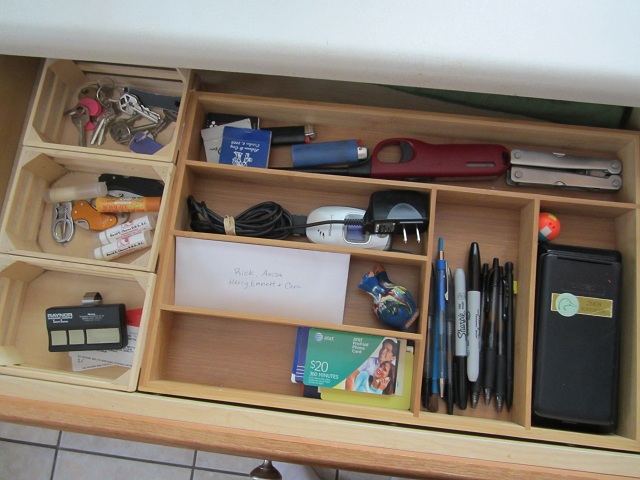
And it’s taken me a while to get the last few items crossed off of that original list.  But last weekend, I tackled the last and worst of the junk drawers in my house.  The one in the kitchen.  It’s a big drawer, 26.25″ x 16.5″.  Too big really.  It collected all kinds of things.  Things we needed, things we didn’t, useful stuff and… junk.

Something had to be done.  But it was overwhelming and one of the projects I put off the longest.  There was way too much in there.  The bottom of the drawer kept slipping out of its slots.  It nearly broke one day, so I finally took care of the problem.

First I took the drawer out and emptied and sorted its contents.

There were FOUR broken watches in there.  Four, people.  A dead cell phone.  Two empty calling cards.  A recorder flute and a bird whistle.  I’m not kidding.

And YES that little blue thing really is a bird whistle.  You put water inside of it and blow through the little spout and it makes a sound like a bird singing.  I know what it looks like, but it’s not that.  My mom always kept it in the junk drawer of our house when I was growing up and I loved it, so she passed it on to me (and my junk drawer).  Unfortunately it’s gotten a little chipped in the years of getting tossed around with all the junk in the drawer.  But it still works and I still love it.  

Anyway.

There was a lot of stuff in the drawer that didn’t belong in there.  And I wasn’t sure what to do with it either.  I emptied the drawer, and I grabbed some wood glue and started fixing the drawer.  I enlisted Rick’s help to reinforce its huge bottom, which he did with a scrap of wood from the garage.

And then I bought a drawer organizer – the biggest one that I could find that would fit inside.  It was $20 bucks.  And totally worth every penny.  I also used three little wooden baskets from the kids’ wooden play food set.

And I put the stuff we use back into the drawer.

The empty space is for Rick’s things, like his wallet.  Since the garage door-opener is in this drawer, it’s the last stop before leaving the house and the first stop when coming home.

Yes, I know there are still things in there that some people would not hang onto.  The flute is in the way back and the whistle is still in there.  And you never know when you’ll need a puzzle ball.  But it is mostly organized, and I’m really happy with it.  What I really need now is some of that non-slip stuff to keep the organizer thing from sliding around.

I still don’t know what the heck to do with the watches.  Do I just throw them out (not the guitar one)?  Can they be repaired?

There are only two items left on my 20 Weeks list.  I’m loving that this challenge is almost over, no matter how long it took me. Are you organizing anything in your life/home?

Categories: 20 Weeks of Organizing | Tags: , , | 3 Comments

Easy Roasted Asparagus Soup

Since spring is around the corner, we are making an effort to ensure we have room in the freezer for the coming crops.  The first thing in the freezer each year is asparagus.  When the asparagus comes on, we try to eat as much of it as we can, but we usually put some aside for the dark days of winter when we need a soup to warm us and remind us that yummy green things are just around the corner.

The other night, I used the last of the frozen asparagus in this simple soup.  It’s a variation on one I posted a couple of years ago.

First, cut three pounds of frozen asparagus into one to two-inch long pieces.  Peel and smash six to eight cloves of garlic.  Divide the asparagus and garlic between two baking sheets and toss with olive oil, salt, pepper and dried thyme.  Roast in the oven at 450° for about twenty minutes or so (keep an eye on it, I didn’t time it exactly), or until the asparagus starts getting nicely toasted.

The above picture isn’t quite done enough for me yet.  When you have roasted it long enough, transfer your roasted asparagus and garlic to a large pot.  Use a small amount of water in your baking sheets to get up all the brown bits from the roasting and pour that into the pot with your asparagus.

Add enough water to your pot to cover the asparagus and bring to a boil.  Make a slurry of 3 Tablespoons of flour and about half a cup of cold water.  Whisk into your soup.  Return it to a boil, reduce the heat and let it simmer for five or six minutes.  After it has thickened a bit, use an immersion blender to purée it smooth (or transfer to a regular blender in batches).

At this point you could actually cool and freeze the soup.  But if you are serving it right away (of course you are), ladle it into bowls and give each bowl a squeeze of lemon and a drizzle of heavy cream.  Serve with some cheesy toast and enjoy.

Categories: Recipes | Tags: , | 6 Comments

Composting Basics Part II: Hot, Cool, and Greens vs. Browns

If you read yesterday’s urban homestead boot camp post, Composting Basics Part I, you remember that I said I love compost.  Besides what it can do for you (you know turning “trash” into garden treasure, restoring and maintaining soil health, balance soil pH and neutralize chemicals, etc.), I love the way it does it.  I know it’s probably a little weird to love decomposition, but I do.

Yesterday, I told you that there are a lot of choices when it comes to bins, piles, and systems.  Worm bins and Bokashis are pretty specialized and self-contained systems.  I really don’t have much experience with either.   But I have used both a  pile and a bin.

A pile is best for “cool” composting.  It’s great if you aren’t in a rush for your finished compost, and if you don’t want to think much about it.  It doesn’t take a lot to build one.  And a pile probably won’t generate much heat, hence being “cool.”  Plan a year to two years for harvesting.  With this method, you basically just throw your kitchen scraps, yard waste and what-have-you into a big pile, and let it do its thing.  You can help it along by turning/stirring/forking it a couple of times a year, and by chopping up the browns you put into it.  Some people use a chipper or run over their browns with their lawn mowers before adding them to their piles.

You can cool compost in a bin too.  A bin will speed things up for you a bit more.  You will get more heat with a bin, and more heat means faster decomposition.

Right now, our family is “hot” composting.  A hot compost bin decomposes things very fast.  One pallet bin gave us over 80 gallons of finished compost in about 8 months last year.  For hot compost, you layer in your organic waste, give it a good soaking with the hose, and cover it (we use thick black plastic).  As it rots it generates heat, cooking the organic waste.  The heat actually comes from micro-organisms digesting everything. It can get hot enough to kill weed seeds.

The key here is you don’t want it to get too hot.  You want it to rot quickly and kill the bad stuff, but you don’t want to  kill off the good guys.  So you need to rotate it.  Or maybe aerate it is a good word.  Two bins make this nice as you can flip it from one bin to the other.  Sometimes, during the summer, we open it up, put out the half-finished compost, let the chickens scratch through it for a day or two and then scoop it all back in, water and cover again.  If you have a tumbler, there’s no need to use a pitch fork at all, just spin it.

So exactly what do you put in your compost bin?

“The greens” vs. “the browns.”  General advice is that for cool composting you need a 40/60 mix of the two, with more browns.  For hot composting, the ratio is even greater, closer to a 5 to 1 ratio or more of browns to greens. But what are they?

Greens include:

  • fruits and vegetables, whole, pieces, peelings and scraps 
  • moldy food
  • chicken, rabbit, goat poop and other manure from herbivores
  • alfalfa pellets
  • coffee grounds and used tea leaves
  • green leaves or grass clippings
  • hair
  • weeds (if they have mature seeds, make sure they are hot composted, otherwise not)
  • algae and water from fish tanks
  • urine

Browns include:

  • egg shells
  • dried leaves and grass clippings
  • straw
  • wood chips
  • saw dust
  • dryer lint
  • paper, including shredded paper, newspaper, tissue and paper towels
  • cardboard
  • coffee filters and tea bags
  • cotton fabric or string, wool
  • cotton balls and swabs (the kind with cardboard sticks)
  • any plant with woody stalks or stems, including corn cobs
  • nut shells
  • end of season plants

The greens provide nitrogen and the browns give carbon.  The only things I don’t compost are dog/cat poop, human feces, and bones.  All of them can be composted but they can make your pile smelly and attract animals to your pile.

The problem a lot of people have is that the ratios are talking about weight, not volume.  The browns are generally dry and weigh a lot less than the soggy wet greens, so you need a lot more of them.  I have to admit that I don’t really pay close attention to the exact ratios.  I tend to think of the greens as “wet” and the browns as “dry.”  Sort of like the browns are a sponge and the greens are the stuff I’m using to get the sponge wet with.  It’s totally simplistic, but it works somehow.  Even with the hot composting, I just think “Is there enough?  I better put more.”

There are all sorts of cute counter top containers for compost.  I keep a big stainless steel bowl on my counter to catch all of our kitchen scraps, our greens.  I used to use a porcelain one, but it got ruined, so stick with stainless steel.  When it is full or before bedtime, we take the bowl out to the pile.  I cover the bowl with a plate in the summer if fruit flies are a problem.

Most people don’t have a problem coming up with enough greens.  Browns can be tougher.  It helps to keep a source of browns nearby.  Yard waste is perfect.  We beg leaves off the neighbors in the fall.  In the summer, instead of putting grass clippings in as a green, we [have our neighbor who collects his] spread them around the chicken area.  The hens use them as littler and for a couple of weeks until they are completely dry.  Then we rake them up and toss them in the pile.  Dried leaves, straw, dead plants, wood shavings and shredded paper all work.  Usually, as long as you keep plastic out of it, the bathroom trash is all compost-able.

In addition to your greens and browns, you pile will need air and water.  Keep your pile moist – like a wrung out sponge, or chocolate cake.  We cover ours to keep the moisture in during the summer.  And we turn it and mix it.  It gets quite hot in the middle, so we move the middle to the outside edges and the edges in to the center to cook.  Then we water it some more and cover it back up.  Some people add soil or finished compost to their pile.  If your soil is healthy, it has all kinds of good micro organisms that help with decomposing your pile.  It’s sort of like adding yogurt to hot milk to make more yogurt.

What about the smell?  As long as you aren’t adding milk, meat or carnivore poop to your pile/bin, your compost should not smell foul at all.  If your pile has any odor other than a good soil smell, you probably need to turn it, add browns, or both.  Sometimes our bin gets an ammonia smell.  This usually happens after we’ve added the contents of the chicken coop to the pile and it’s had a chance to get going.  Chicken manure is very rich in nitrogen.  Adding in more browns and mixing it up, getting the inside to the outside and vice-versa, takes care of it.

When your compost is done, it should look like great soil.  No big bits or pieces of anything, light and fluffy, not soggy at all.  The compost shown above still has bits of egg shell and wood shavings (the browns take the longest to decompose) but I would put it in my garden like this anyway.

Happy composting!

Categories: Compost, Sustainability, Urban Homesteading | Tags: , , , , , , , | 9 Comments

Composting Basics Part I

Boot camp is back in session.  And I have a confession to make.  I love compost.  I mean I really, really love it.  I love the whole process of it.  I find it completely fascinating.  Compost is so awesome.  Completely dreamy, in fact. I might be obsessed.

The run down… you should compost.  Here’s why:

Compost builds up your soil.  There is a reason it is called “black gold.”  It provides good organisms, holds water, gives nutrients, improves clay soils, improves sandy soils, kills pollutants, fertilizes.  It is awesome.  Using compost reduces the amount of water, fertilizer, pesticides, and soil modification needed to grow a great garden.

Compost gets rid of your waste.  Basically, most things that can’t be recycled can be composted.  If it was alive or came from something that was alive, you can compost it.  Food waste, paper, yard waste, hair, wood, natural-fiber cloth, cardboard, even meat (but you’ll want to do it right).  We’ll call all these things “organic waste” for the purpose of this post.  The only things that can’t really be composted are  plastics, disposable diapers, and other synthetic materials.  Although bones can be composted, they will take a longer time than most gardeners want to put in, or are more likely to get stolen from your pile by some critter.

Seriously, what is cooler than something that turns all of a household’s non-recyclable waste into something that isn’t waste at all?  Something that gives back, that makes the gardens better?  Can you see why I’m infatuated?

How does it work?  Well, here’s the quick and dirty version (tomorrow, I promise a bit more detail):

Compost turns trash into treasure by rotting.  Yep.  Rot.  Experts talk about the greens and the browns, but the bottom line is that a compost bin uses water, heat and air to decompose all those vegetable peelings, coffee grounds, egg shells, grass clippings, leaves, straw, chicken poop, etc.  What you need is a place to put it and a way to turn it to get air into it.

Large bins are great if you have a family, a large garden or a large amount of organic waste to compost.  We don’t have the biggest yard, but we have two pallet bins in the chicken area that we use for composting.  You can make your own, or buy a variety of bins that range in size from pretty moderate to very large. Some even turn themselves.

*Note: Amazon links connect to Northwest Edible’s affiliate links – Help a garden blogger out! 

Or, skip a bin all together and just have a designated pile.

You’ll want to place your compost bin(s)/pile somewhere that gets some sun during the day and where you can get water to it.  A great place is in your garden so that you won’t have to go far with your finished compost.  Close to the kitchen is nice too, so it’s easy to fill, but you really don’t want it right up next to your house.  Trust me.  Our first bin was next to the house and we had a mouse invasion in the fall.  Now our bins are out in the chicken area.  Which is not close to the garden or the kitchen, but it is convenient for cleaning out the coop.  (Yep, broke all the rules I just mentioned.  That’s the way we roll).  It should also be free-standing; not up against a wall or a fence.

If you have a very small area, say only a patio or balcony, you might want to consider vermicomposting.  That is composting with worms.  They are a specific kind of worm, red wigglers, and they can live in a small box (or a big one) and they can eat through your kitchen waste pretty darn quickly.  Their bins can be really small and stacked, and I’ve even seen some that are topped with planters (double duty!).  They don’t need to be turned and they don’t need much “brown” material, but you do need to maintain them (you want the worms to stay alive).  Plus then you have little wiggly pets.  There are many different towers that you can buy or you can DIY with a plastic storage bin or wood.  Check YouTube for a bunch of tutorials.

Worms make excellent compost tea, which is a superb fertilizer that, once diluted, you can pour into your garden beds to help your plants.  Think of it as natural Miracle-Gro.  You can have a worm bin indoors as well.

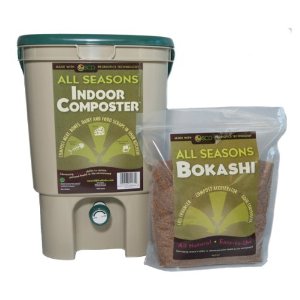
If the only place you have to compost is under your sink, or if you think you need a way to compost meat or dairy, you might want to consider a Bokashi.  I don’t have any hands on experience with one (we toss any extra dairy or meat scarps to the chickens… except chicken, of course), but they are pretty ingenious.  They are small and air tight, so there is no smell and they use probiotics (the good micro organisms) to decompose what you put in there.  They don’t hold a ton, but they are efficient and get you compost tea quickly.

Tomorrow, I’m going to cover what to put in your compost (you know, “greens” and “browns” and all that), plus the difference between cool and hot composting.

Since I do all of our composting outside, I’d love to hear your experiences and thoughts on vermicompost and the Bokashi methods.  Tell me, tell me!

Categories: Compost, Sustainability, Urban Homesteading | Tags: , , , , , , , | 8 Comments

2012 Independence Days Challenge

Last week, Sharon Astyk announced that she’d be bringing back her Independence Days Challenge.  Whew!  I was excited about it!  If you’ve read my blog for more than a year, you know, I’ve participated in her challenge since 2010.

The challenge is to make small steps, every week, every day if you can, towards food independence.  And then record them.  There is no lamenting what you haven’t done, and in contrast to challenges where doing as much as you can takes the stage, the Independence Days challenge shows that small things do add up and everyone can do something.

The steps are recorded in several categories…

Plant Something: Planting isn’t done just once a year when you are looking to be independent.  Sharon tries to plant everyday from February to October.  Think seed starting, cold frames, season extension if you can.  February is a bit early for us, but we already have potatoes chitting so we can be ready to go in just a few weeks.

Harvest Something: From your garden, your nest boxes, the finished compost, foraging.  It all counts.

Preserve Something: In lots of parts of the country you can’t plant and harvest year round, including here in Colorado.  So you better put up what you can for the dark days of winter!  Canning and jamming, yes, but also drying, smoking, freezing, etc.

Waste Not:  Scraps given to the animals and/or compost pile fit here.  Also mending things instead of throwing them out.  Creating less garbage, making sure things don’t go to waste.

Want Not: Building up your long and short-term food storage falls into this category.  We bought a case of peanut butter, for example, or buying bulk grains goes here.  Also, I’ve put things like cloth diapers or second-hand clothes in this category.  Things that last and will need our needs over time.

Eat the Food: It’s tough to break the habit of buying a full menu’s worth of meals at the grocery store.  You have to think and make an effort to use up the book you have stored.  Eating from your pantry and your freezer, making full use of what you have.  Trying new recipes falls here too.  Eat what you’ve worked hard to grow and save!

Build Community Food Systems: Sharon sums it up like this: “What have you done to help other people have better food access or to make your local food system more resilient?”  I include things here like gardening with the neighbors, giving talks about gardening, CSAs, farmer’s markets, sharing food with people in an effort to get them to take their own steps towards self-reliance.

And a new category (I’m so excited about this one)

Skill Up: from big things like building a beehive or cold frame, to smaller things like starting seeds or researching new ideas.  Record in this category what you’ve done to add to your own arsenal of skills.

Over the last two years, I have recorded our steps in a weekly blog post (see them all here).  But this year, I’m thinking of recording them a little differently.  Look to the right, over there in my side bar.  I’ve decided to keep a running total over there.  I’ll still post Independence Days updates, but probably less regularly than weekly.  We’ll see how it goes.  I’m flexible.  But I like the idea of watching it all add up in one place.

I’d love it if you decide to join the challenge too.  I really like seeing the small things add up.

For more info on the Independence Days Challenge, make sure to read Sharon’s post.

Categories: Food, Independence Days | Tags: , , | 10 Comments

Boot Camp Bonus: A Well Stocked Pantry

Yesterday I mentioned keeping a reasonably well stocked pantry in order to allow for some flexibility in my meal planning.  I got to thinking about what a well stocked pantry looks like.  It will probably different for every household, and it varies for us as well, depending on season, tastes, moods, how well we stocked up last year, etc.

In general, this is what I came up with for our version of a well stocked pantry (in no particular order).

  1. Oats – I keep a half gallon to gallon size container of oats on hand at all times.  Sometimes I switch between steel cut oats and rolled oats, but I have found that rolled oats are more versatile.   These whole grains make oatmeal, of course, but they can be added to desserts (cookies, crisps), muffins, breads, and are the base for home made granola.  They are insanely less expensive than boxed cereals, and better for you too.
  2. Rice – I use both white and brown rice, and at times I’ve kept quinoa on hand instead.  Rice is a great belly filler, another whole grain, and it keeps.  Good with stir-fries, in soups and stews, as a side dish, the star of risotto, and Rick even eats it for breakfast with butter and cinnamon.
  3. Canned beans – the hero of emergency meals.  Dried beans are far cheaper, and we keep them on hand too, but canned beans can be used instantly with no soaking or hours of cooking.  We add them to up the protein on pasta dishes and soups, sprinkle them over salads, as easy finger-food lunches for the kids, we let them star in vegetarian meals.  Keeping beans on hand saves the day if I forget to defrost meat for dinner.
  4. Olive oil & balsamic vinegar – Together, they make an easy, delicious and cheap salad dressing.  Separately, olive oil can be used for nearly everything we cook.  I do keep other oils on hand too, but if I had to keep only one, olive oil would be it.  The balsamic can be used in other ways too.  A friend brought over a dessert once of mascarpone cheese spread on sugar cookies, topped with sliced strawberries and drizzled with balsamic reduction (heaven).  I use balsamic as a secret ingredient in certain soups and other dishes.
  5. Broth – you can’t really make risotto without it and it makes soups super fast.  It’s a decent substitute for white wine in a pinch.  It’s a fast way to up your flavor without much effort.
  6. Canned tomatoes – if I’m crunched for time or feeling lazy, you can bet I’m reaching for a jar or can of tomatoes.  They can become anything.  I use them for enchilada sauce, pasta sauce, pizza sauce, soup, stew, chilli, roasted with other veggies, you name it.  This is a true staple for us.
  7. Onions and/or garlic – the other day I told Rick, “We’re out of onions.  I can’t make anything without an onion!”  I know, strictly speaking, onions and garlic are perishable, probably not really “pantry” food, but stored well, they last a long time and I really feel like I can make anything taste good if I have an onion or garlic.  This makes my mom laugh.  When I was a kid, I “hated” onions, I even gave my mom a homemade citation for using too many – her punishment was to not be allowed to use them for a whole week.  She was a good sport and went along.  I pray my children don’t ever punish me this way.  You can make rice and beans delicious with a little onion and garlic.  If times are tough, and your cupboard is nearly bare, you better have an onion.
  8. Dried herbs/spices – I love me some spices.  I can’t understand how people cook with nothing but salt and pepper.  An average spice rack should at least include thyme, rosemary, oregano, parsley, dill, red pepper flakes, bay leaves, savory, and cumin powder.  Mine better have extra red pepper flakes and Chimayo chili powder too.  You don’t have broth?  Make some with your meat, an onion, a bay leaf and some thyme, parsley, and savory.  Chili?  You need that cumin and those ground chilies.  Rosemary will make your plain ol’ rice and chicken amazing.  A bit of dried herbs go a long way, and they can make the most basic of meals delicious.
  9. Pasta – Another go-to for us.  It’s versatile, cheap, it keeps forever and I can buy it in bulk.  Sometimes I feel like the number of pasta dishes is limitless.
  10. Soy Sauce & rice vinegar – If you get tired of tomato based dishes, the cure is soy sauce and white vinegar.  The combo makes the best fried rice, and you can use them to make many Asian sauces.  Soup, Thai, stir fry, peanut sauce, marinade, jerky,  the list goes on.  Practice using the pair and you can impress anyone.

Obviously this list doesn’t cover baking basics like flour, which I almost added to the list.  But I’m curious how your pantry matches up to mine.  Is it similar?  Very different?  Did I miss something or surprise you?  Does your region or culture affect your list?  Tell me what is on your list of pantry staples.

Categories: Food, Simple Living, Top 5, Urban Homesteading | Tags: , , , , , , | 18 Comments

Blog at WordPress.com.