Sustainability

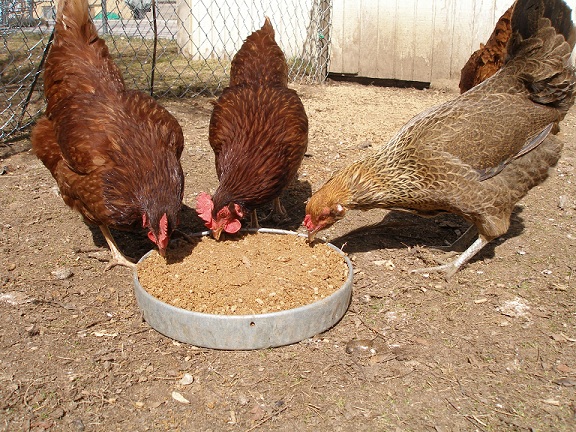
Free the Chickens!

As promised, here is the video that we participated in making to help get Denver’s laws changed to allow chickens.  Sadly the editor misspelled our name, but I think the point is still there.  😉  Please share with your friends to help raise awareness on this issue.

To learn more about how you can help, go to www.freethechickens.com

Categories: Chickens, Community, Food, Simple Living, Sustainability, Urban Homesteading | Tags: , , , , , , | 8 Comments

Inaugural Chicken Coop Tour

This weekend is a kick-off for the first annual Denver Botanic Gardens/Denver Urban Homesteading Chicken Coop Tour.  Think Parade of Homes, but for chicken coops.  There are 15 coops throughout Denver and the metro area participating in the tour.  We are coop number seven.

We are so excited to be participating.  By “we” of course I mean me and the chickens, since Rick is not really excited about 100 + people tromping through our yard and garden to see the digs.  😉  But it’s all in the name of raising awareness about urban agriculture.  And besides that, they wrote some nice stuff about us on the tour map…

“A coop from original design by Anisa, five chickens, bees, and a gorgeous front yard garden that the family has had for the last seven years is what makes this site a perfect example of backyard agriculture and livestock keeping.  Little Henry will show with pride his tomato plants, chickens and eggs.”

Seriously!?!?  How cool is that!  There has been a bit of media promoting the tour in the last few days.  Check out the piece FOX 31 did about the tour.  James Bertini with Denver Urban Homesteading is featured in the story.

ABC 7 News also reported on the tour, as well as making it into the Denver Post’s September 29th Food Calendar.  The WestWord comic section even poked a bit of fun at us.

Tho tour is tomorrow, October 2nd, from 11am to 4pm.  Maps can be purchased in person at the Botanic Gardens for $20 per group of four.  There is still time to purchase a map for the tour.  Contact Denver Botanic Gardens or Denver Urban Homesteading for details!

Categories: Beekeeping, Chickens, Community, Food, Sustainability | 6 Comments

The Impact of Eating Organic

A sustainable dinner - organic beans and squash, bakery made bread with organic butter, organic meat raised on pasture and wild brush - all local within 100 miles.

This past Tuesday, I came across a video interview of Michael Pollan with MSNBC, talking about eating organically as an investment (you can watch the video here).  He included some great tips for getting affordable sustainable meat, keeping hormones out of your diet and reasons to eat organically/sustainably.  Additionally he talked about the difference between animal products from grass-fed or pastured animals, and ones that are fed on a feed lot, even an organic feed lot.

Then, this morning, I noticed on the side of my Organic Valley half and half a note stating that by “using a quart of organic half and half [in lieu of conventional], every week for a year, you help to keep 6.2 lbs. of synthetic nitrogen fertilizer and 1.3 oz. of toxic pesticides from being used.”  They said they offered a calculator on their website so you could see the impact you are having by consuming their organic dairy products.

I don’t eat strictly from this brand, but I wanted to see what impact my dairy dollars are having on the environment each year.  In a typical week our family consumes two gallons of milk, one quart of half and half, one and a half pounds of butter and one pound of cheese.  They calculate that buying these items organically instead of conventionally saves the environment from 65.9 lbs. of synthetic nitrogen fertilizer and 14.3 ounces toxic pesticides and herbicides per year. That’s just our family’s dairy purchases, let alone meat and produce!

Additionally, the Organic Valley site states that  “public health costs associated with pesticide-related acute poisonings and cancer alone add up to an estimated $1.1 billion dollars per year.*”  Below are listed some of the other impacts of pesticides on children.

“Impacts on Children

Pesticide exposure poses special concerns for children because of their high metabolisms and low body weights.

  • More than 1 million children between the ages of 1 and 5 ingest at least 15 pesticides every day from fruits and vegetables.
  • More than 600,000 of these children eat a dose of organophosphate insecticides that the federal government considers unsafe.
  • 61,000 eat doses that exceed “unsafe” levels by a factor of 10 or more.5

“Prenatal Exposure

Most babies today are born with persistent pesticides and other chemicals already in their bodies, passed from mother to child during fetal development. 21 different pesticides have been found in umbilical cord blood, suggesting tremendous potential damage at a critical developmental time. Since a baby’s organs and systems are rapidly developing, they are often more vulnerable to damage from chemical exposure.  The immature, porous blood-brain barrier allows greater chemical exposures to the developing brain.6″

Wow – that’s pretty huge motivation to eat organic foods!  But they can be a bit more expensive.  Which brings me back to the Michael Pollan interview.

Organic foods are more expensive because there is a greater demand for them than there is supply.  In America, we vote with our dollars.  The more we demand organically grown and produced foods, the more farmers and companies out there will be motivated to switch to using organic practices, adding more organic foods to the supply chain.  the more food suppliers producing organic products, the more competition.  The more competition, the lower the prices.  the way we demand products is to buy them.  So, if you want organic food at competitive prices, start buying it and watch the price drop.

There are a lot of options out there.  Buying locally will be the least expensive and have the biggest impact on protecting the environment and the local economy.  Check out http://www.localharvest.org/ for local farmers, markets and CSAs near you.  There you can find not only produce, but local meat processors and restaurants who use local and organic products (you are still effecting the supply and demand of how food is produced when you eat out).

To read more about the impacts of synthetic pesticides, synthetic fertilizers, GMOs, hormones and antibiotics, check out Organic Valley’s website.

* “Promoting Sustainable Food Systems through Organic Agriculture: Past, Present and Future,” Christine McCullum-Gomez, C., and Riddle, J. HEN Post: Hunger and Environmental Nutrition Practice Group of the American Dietetic Association, Spring 2009. www.hendpg.org

Categories: CSA, Food, Sustainability | Tags: , , | 5 Comments

Independence Days: Week 19

The update:

Plant something – nothing planted

Harvest something – eggs, turnips, onions, cucumbers, sour cherries (destined for the dehydrator – and maybe a pie), zucchini.

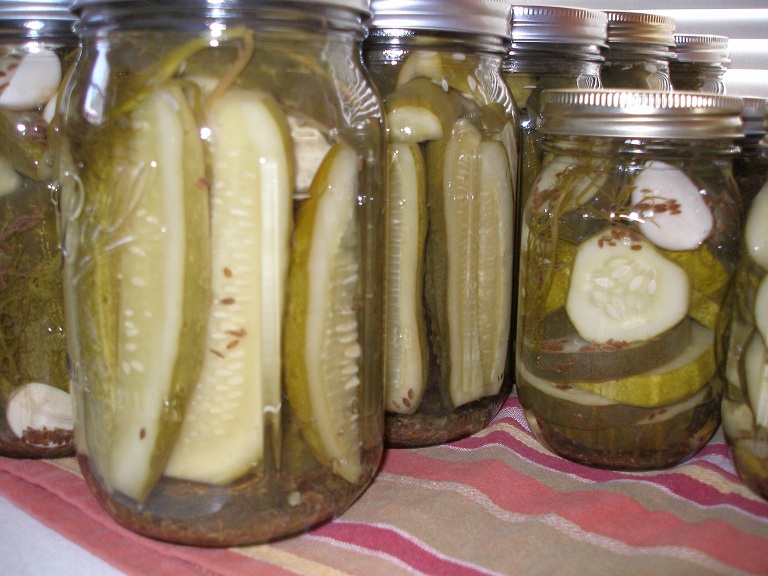
Preserve something – Finally!  Made 10 quarts and 8 pints of dill pickles, and 7 half-pints of pickled garlic!

Waste Not – compost and recycling, of course, scraps to chickens, etc.  We usually have about half of a bag of trash per week – how’s that for not wasting??

Want Not – I feel like I’m really getting better at this food storage bit – what with the elk and getting things in bulk.  Looking for someone to split a bag of quinoa with…

Build Community Food Systems – my friend took me to pick the cherries this week – a tree at her church was just FULL of them – big and plump.  Can’t believe the birds had not eaten them.

Eat the Food – my favorite thing this week:

Chili-Basil Elk and Broccoli over Coconut Rice

1.25 cups jasmine rice
1 can (13.5 oz) coconut milk plus 3/4 cup water
pinch of salt to taste
1-2 TBS olive oil
1 small onion, diced
3-4 green chiles, chopped
1 head of broccoli, chopped
1 big handful of green beans, trimmed (and cut if you like)
1-1.5 lbs thinly sliced elk (can subsitute beef)
2 tsp dried or 3 TBS fresh basil
1 TBS fish sauce
2 TBS plus 2 tsp low sodium soy sauce
1-2 tsp sesame oil
2-3 cloves of garlic, crushed or minced

In a medium sauce pan, combine the rice, coconut milk, water and salt.  Cover, bring to a boil, reduce to simmer for 25 minutes.  Combine the fish sauce, soy sauce, sesame oil and garlic in a small dish and set aside.  Meanwhile, in a wok or large skillet heat oil over high and add onions and green chiles.  Saute for 3-4 minutes, and then add broccoli and green beans.  As soon as the veggies start to brighten in color, add the meat and the basil.  Stir often.  Just before the meat is browned completely and not quite cooked through, add the sauce mixture.  Keep stirring for 30 seconds to a minute, until it is fragrant, the meat is done to your liking and the veggies are bright green, but not over cooked.  Serve in a bowl over the coconut rice.

Categories: Canning and Food Preservation, Food, Garden, Independence Days, Recipes, Sustainability | 4 Comments

Independence Days 2010: Week 15

Short one this week.  Have had some other weird issues going on.  Anybody who was in my email address book already knows my email and facebook accounts were hacked while we were on vacation.  Alas, I found out that they also have had other personal information since April, and, well.. it’s getting a bit messy.  Hopefully not too messy, but a pain regardless.

Plant something – we intended to plant quinoa and radishes, but to no avail this week.  Maybe next week, eh?

Harvest something – eggs, spinach, radishes, turnip greens, strawberries (I forgot to mention these last week too),

Preserve something – nada

Waste Not – compost and recycling, of course, scraps to chickens, etc.

Want Not – got a decent price on chicken at the store so we bought a few packs and froze them.

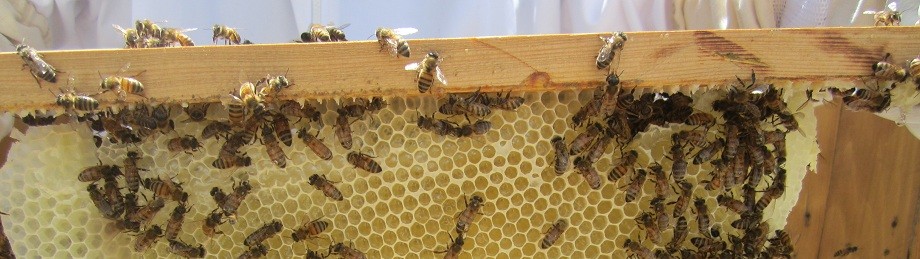
Build Community Food Systems – our friends came over to help us with the bees – not that this is us building the community, but we are participating in it!

Eat the Food – quinoa, turnip greens, radishes, spinach…

Categories: Food, Garden, Independence Days, Sustainability, Urban Homesteading | 1 Comment

On Hunting…

Lookout, I’ve pulled out the soapbox.

Recently, I’ve come upon more than a few people who are expressing a general dislike for hunters and hunting.  It gets my hackles up right away, of course, being married to a very responsible, passionate hunter.  The arguments I hear are usually quite uninformed, and unfairly prejudiced.

Over the last month, I’ve heard about how *all* hunters are supposedly only after trophies, running around willy-nilly with machine guns, madly through the woods killing Bambi and any other living creature that crosses their paths with no respect or remorse, tromping over sacred wilderness destroying all that is in their paths.

Wow.

Many people are unaware that hunting is a highly regulated division of wildlife management.  Yes, management.  Hunters pay a fee to apply for a license in a specific area of the state.  Apply.  As in, they may not get the license they are applying for.  But the Division of Wildlife gets that fee no matter what.  The DOW gives out so many licenses per area (all the applications go into a drawing).  So many licenses are for males, and so many are for females.  How many?  Well, the DOW actually keeps tabs on the herds in all the areas of the state.  They determine how many animals can thrive on the land (all this counting, as well as the land management itself, is mostly paid for by those application fees from hunters).  The DOW  keeps track of how many licenses were filled the previous year, and how many weren’t.  They keep track of how hard the previous seasons were – was there too much snow for all the animals to find food? Was the summer too dry and the vegetation low?  They make sure that there are not more licenses given for an area than the herds in the area can afford to lose.

For example, in years past, Rick and his brothers and uncles and grandfather would all get licenses, usually at least one deer and one elk license each, for the area they hunt near Kremmling.  But last year (2008) hardly anyone had a license.  One person in their whole group had a deer license, and every one else got either one elk license or nothing.   The total number of animals killed last year for the family: zero.

This year, the herds had increased (due to the break they got last year).  Rick had two elk tags and a deer tag.  He filled his deer tag, and so did two other hunters in his group.  But a friend of ours, who hunts a neighboring area, got no licenses at all this year.  But he paid all the fees.

Also as with other applications in this country, you have to give information about yourself.  You have to give your personal information (like SSN, proof of residency, etc.), prove that you’ve taken and passed a two-day hunter safety course.  You can’t be a felon, and the types of guns/calibers used for hunting are regulated.  Not every one can just shoot a deer.

I encourage anyone to visit their states DOW website (here’s Colorado’s) and view the many rules and regulations surrounding hunting.

It is illegal to kill an animal without a license.  It’s illegal to kill a different animal than you have a license for.  It’s illegal to kill an animal outside of the season determined by the DOW (the seasons are one to two weeks long).  That is called poaching.   Hunters truly detest poachers.  Poachers steal and/or waste the meat, hurt populations, destroy habitat, and make hunters look bad.  They are generally selfish and hurtful to the image of hunters.  They are the ones people think of, running willy-nilly through the woods, shooting whatever they feel entitled to.

Poachers are not punished with a  simple wrist slap.  When they are caught, generally their guns are confiscated, their hunting privileges revoked for life, and they are saddled with huge fines and sometimes jail time.  My friend’s father (an avid hunter) helped catch someone poaching a bear near his home in Allenspark this summer.  The DOW awarded him $500 (he could have chosen instead to have Preference Points – points that give him an advantage in next years license drawing).

So what about trophies?  One of the recent argue-ers (unsolicited at a bookstore, after I made H put a video of  Disney’s Bambi back on the shelf) informed me of how terrible hunters were because they always took the biggest and the best animals, only hungry for trophies.  Well, as you can see with the license system, it’s harder to pull a tag for a male deer or elk than just wanting it.  And most “trophy worthy” animals (the ones with the big antlers) are older.   They’ve been around for a few years, spread their seed, and yes, hunters often look for them.  They have more meat because they are bigger. And killing the old male, and passing over younger fork-horns, will let those young bucks grow their own big antlers, and give them a chance to start their own herd.  The young ones are the ones that you don’t want to see on the table… like with beef, you kill the older, fully grown steer, and let the yearling grow up a bit.

But many hunters are a bit more like Rick.  They view the animal they killed to feed their family as the trophy.  The meat in the freezer is the prize after a few days hunting.  It doesn’t matter how big the antlers were (or if they even had any).  Having kids with full bellies all year-long is trophy enough for them.

Besides all of this, hunting is spiritual, sustainable, organic, natural, and an important tradition for many families.  Rick says ‘thank you’ to each animal whose life he has taken to sustain our own.  When he shot the grouse with H, we taught H how the grouse died so we could eat.  How to treat it with respect, and how the grace said at dinner means something…

The animals on a hunters table is free-range, organic, and healthier than anything commercially raised.  It’s sustainably “produced” by nature.  And thankfully most of America has overcome the greed that decimated the bison on this country.  Most hunters are conservationists.  Rick’s uncle loves to hunt ducks.  So he belongs to clubs and organizations that preserve duck habitat.  The DOW works with land owners to preserve and maintain wildlife habitat, as well as conduct outreach and education for the public, such as Georgetown’s Big Horn Sheep festival in November and youth hunter mentoring.  And, by the way, Rick is a volunteer for the DOW for these kind of programs.

There was a great short series of articles called Thoughts on Eating Venison posted on Field & Stream’s blog yesterday:

The Obligation
The Ritual
The Manifesto
The Plea
The Tribute

The blogs, along with the comments, can be quite enlightening as to how hunters around this country think.

For me, I sleep easier knowing that my food never placed a hoof in a feed lot.  There are no antibiotics or hormones to contend with.  I know it was slaughtered humanely, and processed in a clean facility.  And it’s quite tasty too.

What about you?  Thoughts on hunting?  Personal experiences?
Categories: Food, Hunting, Sustainability | 13 Comments

Sustainable Food Budget Challenge Wrap Up

susbudgetWow!  This challenge certainly has been an eye-opener for our family!  It has been a lot of fun for me, and good for us all. 

For the month, our total is $398.56. This includes the trip to the farmer’s market and a smoothie from Whole Foods Saturday, two trips to Chick-Fil-A (although Rick packs his lunch, he just can’t seem to keep away –it’s addicting!), and I took a friend to coffee at a local shop (but the coffee was only $2.50 for the both of us).  We count as a family of four, since I’m pregnant, but that is even under the family of 3 limit. We still have $64.44 (if we counted as three) to spend for the month, and that is good, since I know we will need milk, some greens, and some lunch stuff before the week’s over. But I don’t expect to surpass the limit. 

Crunchy Chicken didn’t have the success she expected on this challenge, and from the looks of the comments on her wrap up, neither did most of her readers, though most remained optimistic that it was possible.  One of the readers at Crunchy Chicken’s blog commented:

I admit, I find the “you can do it but we didn’t” message a little troubling in this particular challenge. Most people who have to live on food stamp budgets don’t really have the option of going over – if you hit the limits, you eat what’s in the pantry (or you don’t eat much) for the rest of the month.

I don’t mean to give you a hard time, but I guess asking people to live like they live on food stamps, to prove something to the people there, and then really disregarding the limits, while still asserting the validity of the challenge – “sure, you can do it” seems a little troubling to me.

There is so much truth there. We are not on food stamps, but our budget is such that we can NOT go over on our grocery budget each month. If we run out of money, we eat the rice in the back of the pantry.  We took the challenge quite seriously. 

I don’t know if this would actually be possible on food stamps because the majority of our savings came from food saved from the CSA last summer, the hog we bought whole last fall, things we saved our money up for so that we could have a year of sustainable eating on our tight budget. That and two years of practice at cutting the grocery bill each week a bit more, while still making fresh meals for my family.  Things like eating out, coffee shops, and convenience foods have not been in the budget for a long time (though, I’ve seen the Chick-Fil-A receipts creep in this month). 

Dollars wise, it does work.  But I don’t know that anyone raising a hog accepts food stamps for meat and processing (though they should if they don’t).

Bottom line… I enjoyed this challenge.  It got me thinking about ways that we could eat more sustainably, and even prompted discussion of not buying bananas (or at least not so many).  🙂  And it illustrated to my husband that we really do have a tight and good grocery budget.  I was even surprised that we spend less than what is alloted for food stamps. 

I was disappointed to see the results of so many unsuccessful at this challenge.  But I think to jump into this kind of lifestyle without practice or preparation is not really setting yourself up for success.  I was really pleased with the outcome our family had.  I greened up more of our purchases without going over our budget, made extra effort to get to the one farmer’s market that was open in April around here, and even crossed things off the grocery list that we’re there in the store, at a good price, but were not local. 

Can it be done?  Yes.  Does it take practice and preparation?  YES!  Should that keep you from trying it?  Please, no!  It’s a great feeling knowing where your food comes from, supporting local farmers, and saving money!

Categories: CSA, Food, Garden, Recommended Reading, Sustainability, Thrift, Urban Homesteading | 2 Comments

Sustainable Food Budget Challege Update!

susbudgetSo has anyone been participating in the Sustainable Food Budget Challenge?  Here’s an update on how our family has done for the last two weeks.

The week of Easter, we did really well.  It helped that we were only hosting dessert for my mom and Manuel, and that they brought the carrot cake.  I did make a ham with an orange glaze, but the ham was from the hog we bought in November.  It was probably around 5 pounds, so it was pretty inexpensive.  That week we ate, Super Spaghetti (spaghetti with spinach, cheese and egg all added to the sauce), pork chops with summer squash & potatoes (veggies from the freezer), antelope steak with green beans and corn bread, tilapia with escarole and tomato pasta, leek, spinach & mushroom quiche, and that Friday we also had a pizza night with a couple of friends (I made sausage and mushroom pizza on whole wheat crust).  Rick also made some zucchini bread from frozen zucchini.

So, the grocery receipt was $69.02, plus the stuff from the freezer (squash, potatoes, onions, tomatoes, zucchini, ham and antelope).  It’s SO hard for me to estimate the cost of those stock-piled items.  We’ll put the pork at $2/pound.  So that’s $10.  The antelope… we paid $59 for the whole animal… I think there was about 40 pounds of meat total, so that’s $1.48/pound.  Including the left overs for Rick’s lunch, we probably ate about a pound, before cooking, give or take.  Also, $1.97 for the sausage for the pizza.  For the veggies, probably a pound of potatoes, two big tomatoes, a whole squash and 4 cups shredded zucchini.  Geeze.  I can’t remember what those seeds cost, or how to figure the cost of those in.  Maybe they’re freebies??? Is that cheating? 

Well, for the groceries and meat, my total for week two is about: $82.47
Week two’s sustainability?  Well, the meat is, of course, and the veggies from the freezer.  Rick went to the store that week, so I can’t testify to everything he bought.  But I know he got local milk and eggs, and probably about half the veggies he bought were organic.  We got sparkling lemonade as a treat for Easter, and that was made locally.  And the non-organic mushrooms were locally grown as well.  Otherwise, I think we’re not so sustainable on the juices, tilapia and pasta. 

For week three, we spent quite a bit more.  $92.76 at the store and another $4.76 at Chick-Fil-A (Rick just couldn’t resist, and I don’t blame him).  🙂  So, that’s $97.52.  We ate ham & egg fried rice (the ham was left over from Easter) with bok choy (not organic), Glorious Mac & Cheese (from Glorius One Pot Meals: it has tons of veggies), spinach & pinto bean salad with biscuits, and antelope chili.  Tonight we’re supposed to have pork scalopinni with mushrooms, tomorrow is tortilla soup with black beans, and Wednesday is supposed to be a spinach & cheddar omelet.  But I’ll probably nix the omelet, since we have lots of left over chili.  The only things coming from the freezer for week three is the pork for the scalopinni, pork from yesterday’s biscuits and gravy for breakfast, the antelope meat, and some corn and green chiles.  So that’s another $6.90.

Provided Rick doesn’t eat lunch out until Wednesday, week three’s total is $104.42.  Most everything made it into one sustainable category or another, except the pineapple, pasta, lemons, and cherry tomatoes I bought (I know… tomatoes!).  A vast improvement, but the bill was higher.  Though I did buy two boxes of cereal (we usually don’t eat cereal), and some snacky foods at Rick’s request.  So that contributed to the higher price as well. 

In week one, I originally reported us at spending $88.63, but we ended up with another $11 on misc. things (a trip to Einstein’s and I ran to Whole Foods for pizza dough and a bottle of Naked Juice on Friday, since the day got away from me and I didn’t make my dough ahead of time).  So that brings week one up to $99.63. 

For the month so far we’re at $286.52.  I expect two more trips to the store this month, though I might try to make just one instead if I can.  We’re still within budget, but as I shared on the first update from the Crunchy Chicken, I am finding the hardest part of the challenge is the sustainability part… I thought I had that down, but when I look at some of the things that end up in my cart, I am surprised.

I was really wanted to make the trek up to the Boulder Farmer’s market this past Saturday, but with all the snow, I chickened out.  Hopefully we can get up there this weekend, and nail the sustainability portion of this challenge in the last week.

Categories: Food, Garden, Sustainability, Thrift, Urban Homesteading | 1 Comment

Create a free website or blog at WordPress.com.