Food

New Nest Boxes

Lately we’ve been getting a lot of broken eggs in the nest box.  We have five hens sharing one box and I think it was just too crowded.  At least we hope that’s what’s going on and not that we have an egg eater.

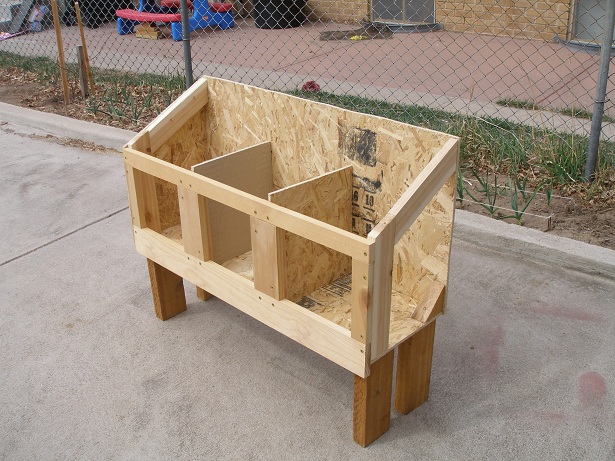
We decided to build a new nest box for them.  It’s a free-standing box that holds three nests.  It took me most of Saturday to build with Rick’s help, but I think it turned out pretty well.

I started with a 1x3x8, a 4′ x 8′ piece of plywood that had an exterior finish on one side, some scrap lumber we had around the garage.

Rick was picking up more stone, so I drew the pieces I needed up on the plywood and cut them out with the jigsaw.  We miraculously got the camera to work, but no one was around to take pictures of me with the jigsaw.  My lines weren’t perfectly straight, but I figured the chickens wouldn’t notice.

I used some scrap pieces of 2×4 for the legs and attached them to the base.

By then the boys and I needed lunch and Rick came back with a load of stone, so I took a break.  After the stone was on the ground and everyone had been fed I went back to work cutting the pieces for the interior of the box.

I was glad to have Rick around for the assembly.  Some things would have been really difficult to manage by myself.  Here’s the basic construction nearly complete.  Just needs the last side and the roof.

I really tried hard not to over-engineer this project, as I tend to usually do.  When we took down the old nest box from the side of the coop, Rick commented that it was a virtual bomb shelter for the hens.  Haha.  Well, this one  is sturdy and I hope will be functional. See my sketch?  Not too over-engineered, right?

When we originally built the coop, we placed it next to the house.  And since our house is white with cream-colored trim, we left it cream-colored.  But since we were remodeling the coop a bit and it’s been moved to another part of the yard now, I really wanted to paint the nest box and the chicken coop some cute colors.

While I was painting the roof and in between coats on the nest box, Rick went after some too-long screws along the inside of the box with his Dremel tool.

After the roof was attached and the second coat of paint was drying, our neighbors came home.  They had left in the morning as I was setting out the plywood on the saw horses.  They were amazed that I had built the box!

We set the box in the chicken yard and immediately one of the hens took notice.  She tried to jump up and hit her head on the roof, which was overhanging a bit too far.  Rick trimmed it back a bit and then they were able to get in without much trouble.

We intentionally made it lower to the ground so the boys could help collect eggs. The chickens are getting used to it.  I was afraid at first that we’d have a revolt or that I made it entirely too small (the boxes are a cozy 11″ x 12″), but on Sunday they all hopped in (for some it took a couple tries) and took a turn.  We are probably going to locate it a bit differently than it is in the picture so they can have a bit more privacy, but so far so good.  Now I’m chomping at the bit to repaint the coop to match.

Did you complete any projects this weekend?


This post was part of the Food Soil Thread blog party!

Categories: Chickens, DIY | Tags: , , , , , | 9 Comments

Why I Blog and How I Became an Urban Homesteader

Four years ago, at the beginning of March, I started this blog.  At first I began tentatively, not sure who would ever read what I had to say, unsure of if I even had anything to say at all.  Unsure of what my blog was about (I hadn’t even really read other blogs), I titled it “Journeys and Adventures” and just sort of typed whatever came to mind, the latest happenings in our lives, reviews of articles I read or documentaries I watched.

I quickly noticed a theme.  I wanted to be a farmer.  But I lived (live!) in a city.  During my first month of writing I covered the garden or buying our first chicks in at least every-other post.  I did not know anything about “urban homesteading” or that people called themselves this or that other people we like me at all – playing farmer on little patches of earth, where ever their feet had landed them in life.

There were lots of Monday morning posts chronicling the progress of our garden over the weekend or the construction of our chicken coop.  And I began to understand that this was therapy – the gardening, the chickens, and the writing about it.  I took more pictures, I squeezed more into the dirt we had.  I found more dirt and eeked out more spaces to grow things.  I dreamed of a bee hive.  But this space remained a sort or personal journal.

One day, as Rick was reading, he asked why I didn’t make the blog public, since only friends and family had access to it at this point.  I thought about it for a while and decided I was afraid to put myself out in the open to any and everyone.  But he encouraged me to do it, convinced that people would like what I had to say, and enjoy reading about our crazy adventures in playing at urban farming.  So I did, and I decided to change the name of the blog too, so that it would reflect more of what it was now about.

I thought about the name change for a long time, mulling over terms like green, dirt, crunchy, city, suburbs, farming, etc.  Through lots of reading, I discovered the term urban homesteading and found it described what we were doing.  I still thought we virtually were alone in doing it, but I knew the phrase was the right one for our family and our journey.

A search engine led a writer for the Denver Post to my blog, and he contacted me, wanting an interview for a story he was doing on urban homesteaders.  Because I was skeptical (hey! I didn’t know this guy), I refused to be interviewed without Rick home, so I missed my chance.  Timing was off and he couldn’t come on the day Rick could be here.  But I was so excited when the article came out.  I discovered we were NOT alone.  There were people in my own neighborhood doing this.  People all over Denver!

Now look:

There is a reason I’m taking the time to write this trip down memory lane.  It’s not because it was my blog-iversary. It’s because today is the third Day of Action for Urban Homesteaders across the internet.

Back in February of this year the Dervaes family of Pasadena, CA trademarked the terms “urban homestead” and “urban homesteading.”  I am not linking to who the Dervaes family is, but in short, they are a father and three grown children growing lots of food in a small area in California.  They are a family church, with the father being the pastor and to my knowledge, the children are the members.  A church of what is pretty unclear.  From what little I know of them, they’ve done a lot with their space and many in the urban homesteading community admired them.  I never really read much about them until now.

So the big deal?  They sent out cease and desist letters to bloggers, businesses and organizations (even a library) who were using the two trademarked terms.  They want credit with links every time the phrases are typed.  I’ve seen the letters.  They sent one to Denver Urban Homesteading, our local indoor farmers market, and had their Facebook page (and main marketing tool) shut down.  Problem is they don’t have the legal grounds to do this.  They didn’t invent the phrases, nor were they the first to use them.  And their trademark does not give them the right to restrict the use of the English language in the way they claim.  I know this because I know the owner of Denver Urban Homesteading.  James, the person I worked with on Denver’s inaugural chicken coop tour (with the Denver Botanic Garden’s) last year, and the one I helped to make the Free the Chickens video with, also just happens to be a lawyer.  Apparently the Derveas picked on the wrong homesteader.

Bloggers and urban homesteaders across the country have been outraged by the actions of people who were supposed to be leaders within our community.  A Facebook page was created and quickly grew to over 6000 fans supporting the canceling of the trademarks and begging the Dervaes family to, at the very least, help us understand.  There have even been claims that the Dervaes’ are plagiarizing others‘ work (some of it used to support their claim to the trademarked phrases?).  But the D-family closed all the comments on their many blogs.  They temporarily took down their facebook page.  They refused to answer email and letters.  The only communication was denial of any wrong doing and to claim they were being persecuted, they were under attack.  They did not (and still don’t) approve of the fact their letters were put out in the open.  A quick Google search will lead you to the letter if you want to read it.

Through all of this, over the last month-plus, I’ve stayed silent.  All this uproar literally struck fear into my heart.  I called my mom, nearly in tears.  I told my BFF.  I temporarily changed my blog name.  I followed fellow bloggers as they posted and united in two previous Days of Action (read my favorite post on all of this here, from Northwest Edible Life).  But I was afraid.  This blog holds my heart.  Like I said it is my therapy.  And it’s my personal journal.  And it holds videos of my boys’ first steps and first words.  I don’t want to loose any of it.  Not over words.

But I’ve collected my thoughts.  I’ve decided I can’t be silent because all of this is too important to me.

So, today, on this Urban Homesteader’s third Day of Action, I’m asking for your help.  Please go to Change.org and sign the online petition to Cancel Trademarks on Urban Homestead and Urban Homesteading.

This petition is addressed to Jules Dervaes, and despite fears that he won’t listen to this community, the petition can be used to help support our cause in other ways.  It is a petition, a protest, and a plea to the Dervaes family.  Whether or not they listen, legal actions are also being taken.  Because like all the others, I too, am an Urban Homesteader.  Thanks.

Categories: Beekeeping, Chickens, Community, Food, Garden, Independence Days, Simple Living, Sustainability, Urban Homesteading | Tags: , , , , , , | 5 Comments

Three Cheers for Volunteers!

Last week we went out to the garden and found THIS!  Volunteer spinach!  Hooray!

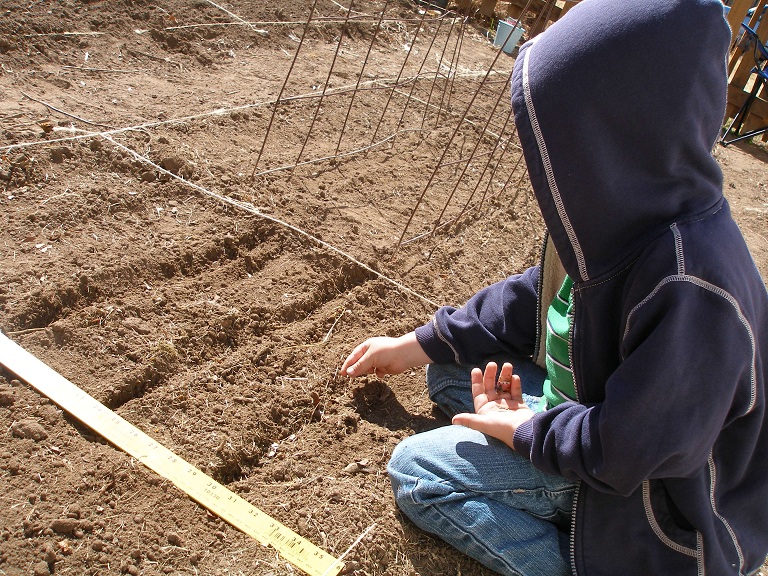
We decided to take advantage of the nice weather by getting a bit of garden prep done and putting a few seeds into the ground.  Rick also helped the neighbor get more ready on his garden by digging out three tree stumps and getting some major tilling and composting into the beds.

Our neighbor is cracking me up.  When he first wanted to do the garden he gave me free license for garden design as long as it included corn and potatoes.  Now he’s got definite ideas about what he wants and doesn’t want, so we are modifying the plans I made all winter a bit.  I’m actually really glad, since it tells me he’s a lot more excited about his space than he is letting on.  We’re adding carrots and onions.  He’s from Indiana and missed the corn fields, so we are planting four long rows for him to walk through.  I talked him into beans with the corn, though he thinks he “won’t like how it looks,” he’s willing to let me try it since I keep telling him the beans will help feed the corn.  But corn and beans are still a few month off.  This is what we actually planted this weekend:

Plant something – spinach, lettuce (four kinds), radishes, and peas.

Harvest something – eggs, compost and a leaf or two of that volunteer spinach.

Preserve something – Ah – TAMALES!  My friend, Jen, came over on Saturday and while Rick and the boys kept busy digging out tree stumps, we made a triple batch of corn and poblano tamales.  We ended up with 90!  Jen took about 30 of them home and let me keep the rest.  She was super generous and I’m very grateful!  We put away enough for five meals in the freezer, and kept out enough for Saturday’s dinner and lunch on Sunday.  And – OH were they delicious.

We also learned about making lard – we rendered pork fat both last year and this year.  But we learned a bit more this time around.  We ended up coming up short, so we added bacon grease.  I knew I was keeping that around for something!

Waste Not – compost and recycling

Want Not – Sunday we bought a few new baby chicks.  I really want a hen that will go broody so we can have her raise future chicken generations, so we’re hoping the Buff Orpington will provide on that front.  We added another Araucana, because I really love getting colored eggs,  and I’ve been thinking of actually, finally, selling some eggs, just to recover the cost of the feed, so we added a third – a Black Star.  Wouldn’t it be great if one of them liked to lay double-yolked eggs?  We had one pullet in the last batch that laid them nearly every day like a champ, but she was killed by a fox attack.

Build Community Food Systems – Well – already mentioned the tamales and the neighbor’s garden.  That’s it for this week.

Eat the Food – lots of items from the pantry.  Nothing special.

Categories: Chickens, Food, Garden, Independence Days, Recipes, Urban Homesteading | Tags: , , , , , | 2 Comments

Happy Chickens Lay the Best Eggs

LOOK what we got this week!

Plant something – not yet… this weekend if it doesn’t snow though!

Harvest something – eggs! Even old Mayzie girl laid eggs and she’s four this year!  We’re so happy to be back in eggs from out own girls.

Preserve something – two quiches and a bag of soup went into the freezer – I’m trying to get some meals frozen for when the baby comes.

Waste Not – compost and recycling, scraps to chickens, etc.  And I’m seven weeks straight on planning meals!

Want Not – We scored some twin beds for the boys from craigslist.  They are a really nice set that can be bunked or not.  We’ve already set up H’s and he LOVES it.  We’ll be saving his other bed for the new baby when they are older.

Build Community Food Systems – shared some frozen green chiles and grape jam with my sis & bro-in-law.

Eat the Food – Duck was on the menu this week.  I usually have a harder time using our game birds than the elk or venison, but I am making a point to do it.  And I LOVE duck!  Served up two zucchini-green chile quiches using veggies from the freezer at brunch.

This is my favorite duck recipe: Doug’s Grilled Duck Breasts from Field and Stream Magazine.  So yum!

Categories: Chickens, Garden, Independence Days, Recipes | Tags: , | 1 Comment

Saying No to GMO

So we finally got our seeds ordered this week for the garden.  I’m excited, since it means spring is around the corner.  And, because it’s the first time we’ve ordered seeds.  We usually go to the local garden center, but their selection of organic, non-GMO seeds has been pretty limited in the last few years.  And beyond organic, non-GMO is very important to us.

There has been a lot of buzz recently about GMOs.  President Obama approved Monsanto’s GMO alfalfa, Round Up Ready sugar beets and a new biotech corn for ethanol production.  This is sad and scary news for all of us. Many of my readers know about GMOs and why they would want to avoid them, but I know there are quite a few people who don’t know anything about this issue.  So I thought I’d shed some light and share my knowledge of the subject, which contributes to the reasons for many of our own food choices.

GMO stands for Genetically Modified Organism, and companies like Monsanto have produced and patented these organisms, mainly seeds.  The seeds have been genetically modified to be able to withstand harsh herbicides like Round Up, so that fields can be sprayed with the chemicals which will then kill the weeds but not the crop.  Sounds like a plan, right.  Except they are seeds.

Let’s set aside the health effects of eating foods and food products made with these GMOs for just a minute and look at the idea of patented seeds.   Currently there are patents on certain GMO grain crops like corn, canola, and soy.  Think for a minute what that means – when these crops grow up, mother nature does to these seeds what she does to all seeds – throws them to the wind, feeds them to the birds, and mice, and squirrels.  She doesn’t know these seeds are patented.

So Farmer A is growing patented GMO corn.  And when his corn is ripe, a few birds come and pick at his corn, eating some.  And they fly a few miles away, and poop out the seeds.  Seeds that have been genetically modified, and those modification carry through the generation of seeds.  But they poop on Farmer B’s land, he doesn’t know, and he hasn’t paid for GMO seeds.

The next spring, Farmer B tills his land and plants his non-GMO crop of corn from seeds he saved for generations.  But those seeds the birds pooped out spring up too.  The company that Farmer A uses to get his corn from, knows Farmer B is down the road.  So they send out someone to take a sample of  Farmer B’s crop (without his permission) and sure enough, his crop turns up as GM positive – their genetically modified corn is growing right there, in his field.  He didn’t buy it from them – he must have stolen it.  And then they sue the pants off Farmer B and win because they own the rights to that seed – to that genetic strain- and he literally loses the farm.  Farmer A is not allowed to save seed, and Farmer B can’t steal it.  The company owns all rights to that seed and it’s future generations.

This is not far-fetched.  It’s happening today, in America.  The problem with patented seeds is that we humans can’t control everything.  Wind and birds and all of nature happens.  For more info on this check out fooddemocracynow.org or watch the documentary, The Future of Food.

So back to health, and how this affects you, the consumer, the eater.  Well, you can just read labels, right?  No.  Sorry.  The USDA and FDA doesn’t require that foods containing GMOs be labeled as such.  You’ve probably been eating GMOs for a long time now.  But it’s not like you sit around munching nothing but corn all day, right?  Well maybe, or maybe not.  In this case, you can check the label – corn and soy are in everything these days.  Really.

According to the USDA, in 2009, 93% of soy, 93% of cotton, and 86% of corn grown in the U.S. were GMO. It is estimated that over 90% of canola grown is GMO, and there are also commercially produced GM varieties of sugar beets, squash and Hawaiian Papaya. As a result, it is estimated that GMOs are now present in more than 80% of packaged products in the average U.S. or Canadian grocery store.*

GMOs are used to feed cattle, to make soda, in your cereal, your bread… you name it.  If it has high fructose corn syrup (and many other ingredients I can’t type or pronounce) it’s made from corn.  So a fast food meal – the burger, the coke, the fries cooked in canola oil, all corn and probably all GMO at that.

With Obama’s recent approval of alfalfa and sugar beets, two crops along with corn, that feed the majority of America’s commercially produced meat animals, we are in for more trouble.  And try keeping alfalfa seeds contained in a Kansas windstorm.  Yikes!

Ok, ok, they are hard to avoid, right.  But are GMOs safe?  Well the Non-GMO Project web site states:

In 30 other countries around the world, including Australia, Japan, and all of the countries in the European Union, there are significant restrictions or outright bans on the production of GMOs, because they are not considered proven safe. In the U.S. on the other hand, the FDA approved commercial production of GMOs based on studies conducted by the companies who created them and profit from their sale.

A few independent studies have been done on the subject.  Generally independent studies have been blocked by Monsanto and other producers of GMOs, but what has been found leads to questions over GMO safety.  Here’s a link studying  The Effects of Diets containing GM potatoes on Rats done in 1999, as well as an article siting many more recent studies that have been done.

It is possible to avoid GMOs, but it takes some research and planning and sometimes giving up a favorite snack.  Especially helpful is the True Food Shoppers Guide (a download-able iPhone app or printable guide).

Here is an article that I found very helpful as well, concerning ways to avoid GMO foods.  “Making My Family GO GMO Free”.  One of the simplest steps is to buy organic, or direct from a local farmer, whom you can ask what he’s growing.  You can also look for labels certifying that products are GMO free.

A while back I was told that the PLU codes on produce were used to indicate organic, conventional and GMO foods, however this is not exactly true, since using the five digit codes are optional.  (see PLU Codes Don’t Indicate GMO Produce and The Myth of PLU Codes and GMO Foods).

If you grow your own garden, like us, please be aware that Monsanto recently purchased a number of seed companies, so you’ll want to know what to look for when buying the seeds you’ll use this spring.  I found this resource most helpful: http://inspirationgreen.com/

I know this post is a bit preachy for me – but it’s a subject that I’ve been very concerned about for a while, and I couldn’t think how to share this info another way.  I hope you look further into this subject and take action (write a letter or sign a petition to help ban GMOs in America).

For more ways to take action go to:

http://www.fooddemocracynow.org/  and
http://www.nongmoproject.org/
Also check out http://truefoodnow.org/

*from http://www.nongmoproject.org/
Categories: Community, Food, Garden, Recommended Reading, Sustainability, Urban Homesteading | Tags: , , , , , | 5 Comments

Getting Back on the Menu Planning Wagon

Ack – the day is almost over (at least nap time is almost over) and I’m just now sitting down to post for the week!  So it’s a simple and short one.

One of my other goals for 2011 is to get back on that menu planning wagon again.  I’ve written about planning menus many-a-time before, and it really does save time, money and sanity, as well as usually results in healthier and tastier meals for the family.  I don’t know exactly why I stopped planning menus last year.  Or when, for that matter.  BUT I have seen our budget take a hit.  Usually in the summer we have so much food around that much goes to waste if we’re not careful to plan what to eat and what to store.  But in the winter, I’m often lazy and forget to get things down from the freezer or wait to go shopping until our house is mistaken for Old Mother Hubbard’s.

This week, as I was helping Rick make the grocery list (he’s been shopping AND cooking while I’ve been gestating), I realized that I was finally sick of the “what’s for dinner tonight” question that one or both of us asks every night.   This week’s menu is pretty simple.  I used some example menus from one of the magazines I subscribe to.  But it’s not cheating.  It’s just getting the ball rolling again.  Here’s what’s on the docket for the week:

Tonight: Spicy Black Bean Soup
Tomorrow: Potato-onion Frittata
Wednesday: Mushroom and Black Bean Tortilla Casserole
Thursday:  Butternut Squash Pasta Bake
Friday: Orechetti with Spicy Bacon-Tomato Sauce
Saturday: Pheasant Noodle Soup

On Sunday, we are celebrating Rick’s thirtieth birthday by going out for barbecue and bowling with friends.  I’m excited about this, since it’ll be a fun night out.  For my birthday, my mom is taking me to see Riders in the Sky on Friday.  I can not contain my excitement!  I’ve been a fan since I was a kid!  Yee-Haw!

Categories: Food, Menu Planning, Simple Living | Tags: , , | 1 Comment

Free the Chickens!

As promised, here is the video that we participated in making to help get Denver’s laws changed to allow chickens.  Sadly the editor misspelled our name, but I think the point is still there.  😉  Please share with your friends to help raise awareness on this issue.

To learn more about how you can help, go to www.freethechickens.com

Categories: Chickens, Community, Food, Simple Living, Sustainability, Urban Homesteading | Tags: , , , , , , | 8 Comments

How NOT to Make Cheese – in Pictures

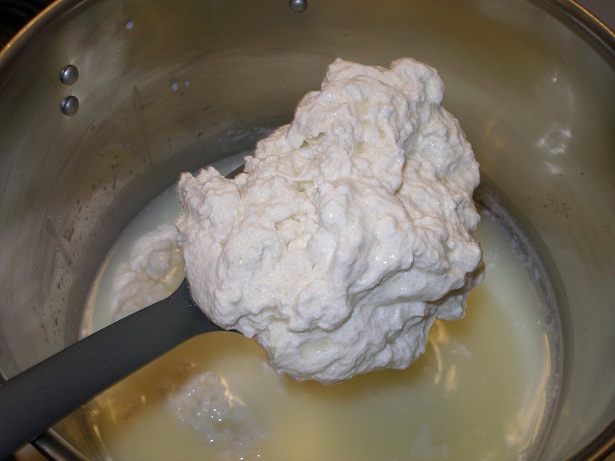
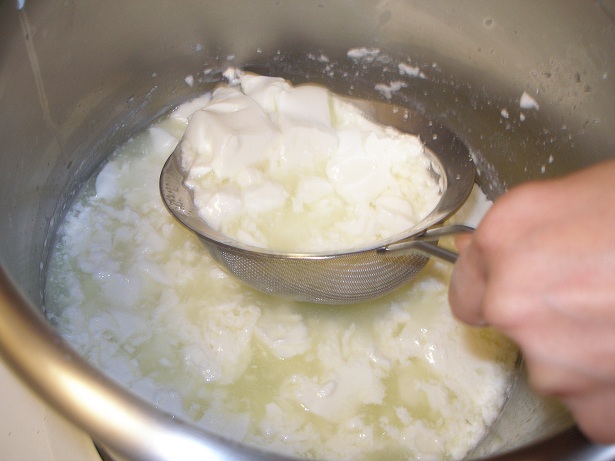
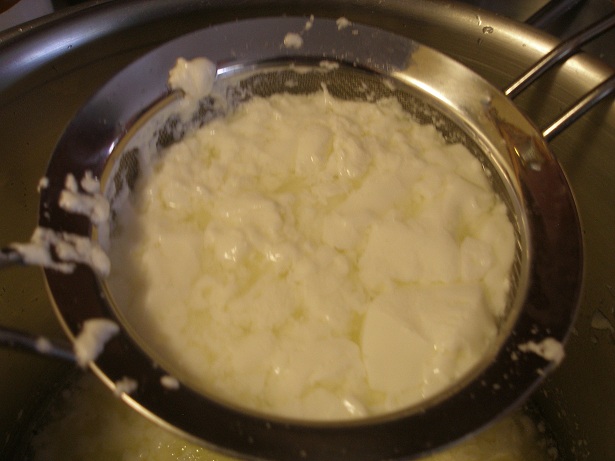
In the last couple of weeks, I have tried and failed twice to make mozzarella cheese in my kitchen.  It’s supposed to be easy.  They say you can do it in 30 minutes with a microwave, or slightly longer without.  Here is a photo journal of my two attempts at cheese making.  The first attempt actually went a bit better than my second.  The pictures of my second try are in the thumbnails.

So without further ado, “How Not to Make Cheese” in pictures.

Step one: bike to local home brew store to buy rennet.  I bought vegetable rennet tablets as that was all they had at the time.  They do stock animal rennet, but were all out.

Step two: back at home, gather supplies including milk that has not been ultrapasturized.

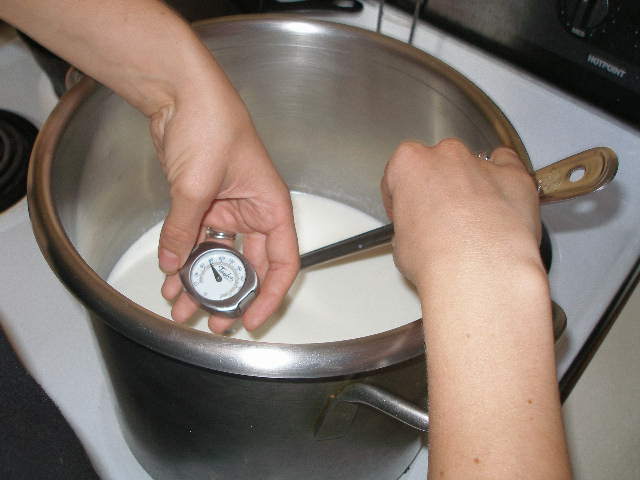
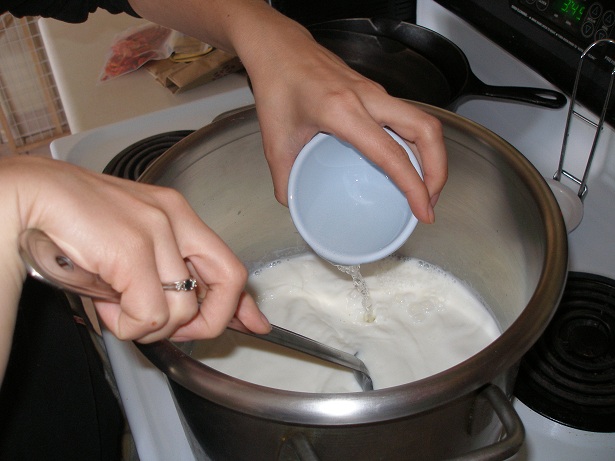
Step three: heat milk to 55 degrees and add citric acid.

Step four: at 88 degrees, add rennet stirring with an up and down motion.

Step five: bring milk up to just over 100 degrees (some say 103 and some say 105).

Step six: Check that the curds and whey have separated.  The whey should not still be milky, and if it is, let it heat a while longer.  Note that the instructions for my first attempt did not include letting the curds and whey sit for 3-5 minutes, then cutting the curds with a knife.  I tried this on my second attempt though.

Step seven: scoop curds out into a bowl.

Step eight: drain as much whey as possible back into the pot.

Step nine: press the cheese into a ball.  Heat the whey and return the curds to the pot to heat.  On my second attempt, the curds were too soft.  I thought I’d try using some cheese cloth to keep them together while they were reheated.  It didn’t work.

Step ten: knead the hot curds.  Reheat as needed.  Eventually the curds will hold together and get elastic.  If they are crumbly, reheat some more.  This is where my second attempt ended, with super hard, dried out curds that would not hold together at all.

Step eleven: admit defeat.  After a hopeful beginning on my first attempt, the curds got all hard and dry and unworkable.  Not sure what went wrong.  On the second try, as I already mentioned, they got to this point MUCH more quickly.

Step twelve: feed the gross hard curds to the chickens along with the whey – they liked it all at least.

After my spectacular double failure, I was planning to give up cheese making completely, but Rick says I need to try again.  If I do, I will try using animal rennet instead.  Anyone have any ideas or suggestions for me on what the heck went wrong??

Categories: Canning and Food Preservation, DIY, Food | Tags: , | 12 Comments

Blog at WordPress.com.