Monthly Archives: November 2011

Getting Kids to Eat Their Veggies

This weekend our boys, once again, amazed friends by eating vegetables.  And it wasn’t even pizza. They ate winter squash, green beans, salad (with garlic, cilantro and cabbage), sliced kolhrabi, beets…

We always get comments on this, apparent, oddity.  Our five-year old and two-year old beg us for carrots and green beans.  I’ve been known to complain to my sister that H ate all  the carrots and now I don’t have enough for tonight’s dinner.  And I’ve had to hide tomatoes from them.
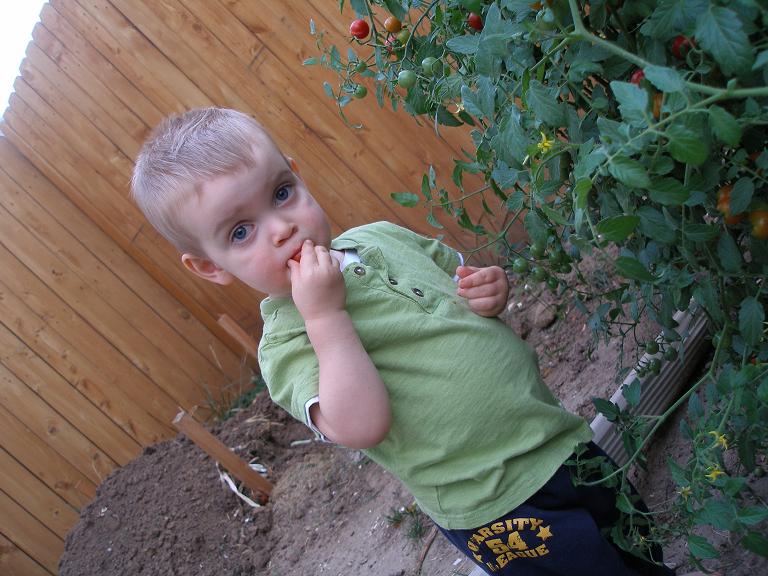
People always ask how we got them to be this way.  My number one rule is that I’m not a short order cook.  What I make for dinner is what we all eat together.  No exceptions.  Besides that, here are my tips on how to get your kids to eat their vegetables:

  1. Grow Veggies.  It is cool to see something go from seed to plant to fruit to table.  Let them plant.  Let them water.  Let them harvest.  I betcha they’ll eat it.  If I ask H which vegetables taste the best, the ones from the garden or those from the store, his answer is not surprising… the garden!
  2. Let Them Shop.  After the garden, H likes vegetables in this order:  “The Farm” (our CSA), the farmer’s market, then the store.  He loves knowing where his food comes from.  Our dinner conversation typically involves some, “where is this from” Q & A.  He is more invested in the farm vegetables, because he has seen the ground it was grown in.  The farm is fun.  He like the farmers market because we talk it up, and because he usually gets to pick something out to take home.  But even at the grocery store, he gets to weigh in on choices.  “Would you rather have kale or broccoli for dinner this week?”  Making a choice, gives them an investment in eating the vegetable later.
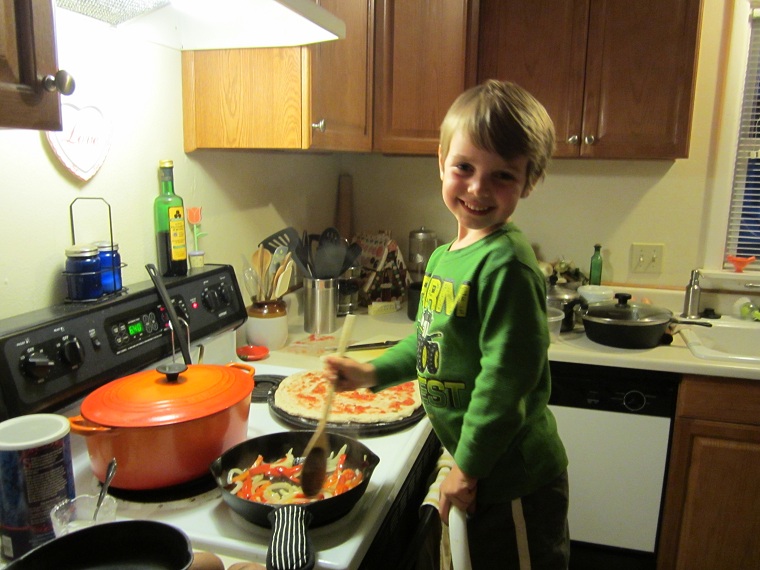
  3. Let them cook. Even little kids can pull up a step stool and wash carrots and potatoes.  Older kids can stir the onions as they sauté.  If they’ve helped make it, they are more likely to want to help eat it.  Putting work into it makes it more appealing.
  4. Eat YOUR Veggies.  Kids don’t buy the “do as I say, not as I do” garbage.  They will do what you do.  If I hear my kids saying something I don’t like, chances are they heard it from me first.  Same goes for food.  If you don’t like something, only eat a bite or two.  But eat some, and eat it with a happy face.  This applies to your partner too.  If Dad doesn’t want to eat the green stuff, you kids probably won’t either.
  5. Offer Veggies.  I know that I’ve already grown tired of hearing “Can we have a snack?”  But I know I can grab the bag of green beans from the ice box and they can go to town.  This is because I say, “Sure, would you guys like green beans or carrots?”  They usually say yes to both.  If I offered green beans or bunny crackers, they’re going to pick the crackers.  So I don’t offer the crackers.
  6. Remember, Tastes Change. Remind them of that too.  Just because they didn’t like it last time, doesn’t mean they won’t like it this time.  Babies and children need to try foods several times before they really know if they like them or not.  At every meal, they have to at least try every thing that is served.  This is good practice as adults too, and it’s great for teaching good manners as a dinner guest – just because you don’t like Mom’s potato salad, doesn’t mean you won’t like Mrs. Dickinson’s.  You need to at least try a bite.  It’s polite, and you might be surprised.
  7. Don’t Buy Junk.  Just don’t.  If potato chips aren’t available, they’ll eat an apple instead.  You will too.  😉

The recurring theme here is investment.  The more work they put into their food, the more they will want to get out of it.  And you can’t argue with delicious results.  We don’t draw battle lines with food, but we do negotiate.  This summer, the only vegetable H really didn’t like was zucchini.  That was tough at first.  I still made lots of zucchini.  But at every meal, I told him, he didn’t have to eat all of it, but he had to try it.  By the end of the summer, he had no problem with it.  It still wasn’t his favorite.  I put one into a late ratatouille, and when he asked for seconds, he said, “but no zucchini, please.”  I’m ok with him picking it out, especially on seconds.   Especially because he ate some with his first serving.

It’s not automatic.  We still have to remind them to try things.  Sometimes although I offer two veggies, they ask for crackers.  But generally, it works.  You too can amaze your friends!  😉

Moms, what are your tips for getting the greens into your kids?

Categories: CSA, Food, Garden, Top 5 | Tags: , , , , , | 8 Comments

Top Five Reasons We Hunt

Rick is home from 10 days straight of hunting in the Uncompahgre national forest, north of the San Juan mountains with his uncle.  When he planned this trip, I sort of imagined that since I’d be alone in the evenings, after the kids went to bed, I’d have plenty of quiet, uninterrupted time to sit and write blog posts.  Boy was I wrong.  By the time I got dinner made (and to tell the truth I ordered both a pizza and Chinese take-out this week), got the boys in bed and the dishes done each night, I was wiped out.  I played single mom to three kids, and I don’t know how the military wives and real single mothers do it.  Hats off to all of you!

I had started this post before Rick left, and since this trip concludes four straight weekends of hunting for our family, I had planned to do some hunting themed posts.  I wanted to give updates on Rick’s trip as it happened, our hopes for the year’s meat and what strategies he used on the mountain.  But in all honesty I didn’t have the gumption to get on the computer and type.

Now that Rick’s home, I hope to get back on track.  You might even get some hunting morsels here and there as we process the game this week, if I can organize my thoughts to type it.  In the mean time, here are the top five reasons (in no particular order) our family chooses game meat.

  1. Sustainability.  In comparison to conventionally raised meat, wild game and the way it is harvested has very little impact on the earth.  You don’t get venison or elk from a CAFO.  Game is not polluting the land and waterways.  It is unlawful to hunt with lead bullets, so there is not a concern of lead in the meat or on the land from hunters.  Of course, it uses some gasoline to get up in the mountains, and we use plastic and paper or aluminum foil to package the meat in the freezer, but all of this is pretty much nothing compared to what it takes in those resources to get the same amount of commercially raised meat.
  2. Health.  Game meat is lean and high in protein.  It is antibiotic and hormone free.  It’s organic and needs no certification.  We know where it came from, how it was processed, what went into the sausage.  Plus it’s tasty.
  3. Cost.  Where else can you get 400 – 600 pounds of organic, grass-fed meat for the cost of a license, a tank of gas and two .30/06 bullets?  We can eat very well for a year from one successful hunting trip.  Butchering the meat ourselves saves us even more, and we get the cuts we want.
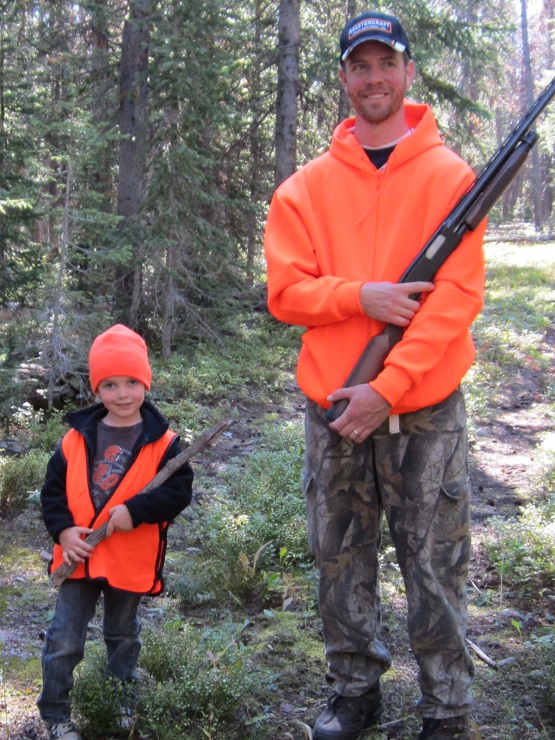
  4. Tradition.  Rick and his brothers were taught to hunt by his grandfather and his uncles.  He learned how to walk in the woods.  How to track a deer.  How to handle is gun safely.  How to shoot an animal so he wouldn’t ruin the meat.  How to skin it and butcher it.  And he is teaching these things to his own sons.
  5. Connection.  With the animal we’re consuming, the food chain, the earth, our creator, and each other. When we hike in the mountains, we feel a spiritual connection to the earth and God.  As we walk logging roads looking for Dusky grouse with our boys, or when they watch us cut an elk into steaks, they understand where our food comes from.  When Rick sits in a duck blind with his uncle or hikes a mountain with his brother, they grow closer. 

There are more reasons.  Rick would probably modify this list, but this is what is important to me.  Do you hunt?  Why or why not?  What value do you see in it?

Categories: Food, Hunting, Top 5 | Tags: , , , | 11 Comments

reCAP Mason Jar Caps

Sorry for the lack of posts this week and only minimal last week.  We’ve been ridiculously busy between hunting and H’s birthday and such.  I’ve got a couple of posts in the works that should hopefully be up soon.  But in the mean time, I had to share this.  Thanks to Erica for pointing me in this direction.

I had to share about this project – the reCAP Mason Jar Cap and the cool site, kickstarter.com, that is helping the reCAP’s inventor get funding.

The reCAP is a BPA free, recyclable, reusable plastic screw top cap to fit regular mason jars.  It’s a one piece design, great for pouring.  And it’s inventor is getting funding through people’s online donations on the site kickstarter.com.  I believe she has already reached her funding goal of $10,000 by November 8th, but people can still back her project  (as little as a dollar or up to $350) if they are interested.  I did, and in return I’ll get to try one of the reCAPs as soon as they are made (projected to be January).

I had to share this because I think both the reCAP and the kickstarter site are great ideas.

Check them out here:  http://www.kickstarter.com/projects/1917107415/recap-mason-jar-caps

If you are an entrepreneur, check out the kickstart site.  The site collects pledges for you and if your goal is not met, nobody looses out, but if it is, you get the money you need to get started.  Fabulous!  So much better than a loan!

I can’t wait to try my reCAP!

Categories: Canning and Food Preservation, Community, Recommended Reading | Tags: | 6 Comments

Create a free website or blog at WordPress.com.