Simple Living

Thrifty Thursday: Cloth Diapers

fuzziSo, as the number of days get smaller until I have this new baby, I am looking for some creative money saving tips for children.  For the next few weeks, I’ll be focusing my Thrifty Thursdays on kids.  This one may not be for everyone, but it is something that has saved our family hundreds, if not thousands of dollars.  Cloth Diapers. 

When I was pregnant with Henry, I never really considered cloth diapers seriously.  I pictured the lumpy, dumpy prefolds with pins and plastic pants.  They seemed messy and a lot of work, and well, frankly, I didn’t know sh… er, um, BEANS, about cloth diapers.

Thankfully, my friend, who had moved to Texas with her military husband (and was thus meeting new people with new ideas) sent me a list she had one of her new friends make for me of baby essentials.  On the list was Fuzzi Bunz cloth diapers.  I had to check them out. 

Fuzzi Bunz are really cool.  Like no cloth diaper I had ever seen before.  They are a pocket diaper, meaning they have a soft, cloth exterior with snaps that are waterproof, a fleece lining to wick moisture away from baby’s bum, and a pocket in between where you stuff an absorbent micro-terry (or hemp or whatever else you choose) insert to absorb the pee.  The idea of cloth diapering with these appealed to me.  I mean it is greener and they say kids potty train earlier.  And disposables stink and are expensive.  You put them on like a disposable, except with snaps instead of tape, and you just wash both the diaper and the insert in the washer.  Seemed easy. And, they come in fun colors (I’m a sucker for colorful things).

I stared doing research and found there are tons of alternative cloth diapers out there: Bumkins, Fuzzi Bunz, Bummis… there’s a long list actually.  Some are called All In Ones (AIO), some are pocket diapers like the Fuzi Bunz, and there are still some traditional pre-folds and plastic (or wool in some circles) covers.  There really aren’t pins any more though.

Cloth diapers are an investment.  Like buying meat in bulk or joining a CSA, the cost is upfront, but the saving over the lifetime is HUGE.  When we bought Henry’s Fuzzi Bunz were about $14 per diaper.  We did a lot of research to figure out what kind of cloth diaper we wanted to use, and where we could get them for the least amount of money.  The cheapest we’ve found them new is at fuzzibunzstore.com.  They have a registry. 

So we registered for a package called the “Everything You Need to Cloth Diaper Special” for about $385.  This included cloth wipes, detergent, two diaper pail liners, a wet bag (travel tote for dirty cloth diapers), and 18 Fuzzi Bunz with inserts.  There were a few other accessories in there too.. just can’t remember them all. 

We got a couple gift certificates at baby showers towards this, and Rick and I ponied up the rest.  We ordered 15 of our 18 diapers in size small, and three in size medium.  Then, when Henry moved up to mediums at 5 months old, we bought 18 more, used, on ebay for $10 each.  When he needed the larges at his first birthday, my mom bought half for us, and we bought the other half, all new.

In all, we spent $736.49 on diapering Henry from birth until potty training.  He still wears his size large Fuzzi Bunz to bed at night (with plenty of room to grow if needed).  But wait… we sold the size mediums.  I bought them for $10 each on ebay, and sold them for $10 each on Craigslist when Henry out grew them (I didn’t love the colors and decided if we had another baby, I’d get new mediums then). So I can deduct $180 from that.  So the total for diapering our first born is $556.49.

Now, I know that doesn’t factor in water usage in washing them and flushing the toilet a few extra times for the poopiest of diapers.  Yes, I’m sure our water bill is slightly higher due to running the machine a few more times a week.  But I can’t give an accurate picture of what that cost is, since the diaper washing started at the same time as all the newborn-spit-up-on-clothes-and-sheets-and-blankets washing did too.

But, for only $556.49 (which doesinclude detergent, since I bought special detergent from the FuzziBunzStore for the diapers only) I diapered not only Henry for two plus years, but I saved the size smalls and the larges (which, as mentioned, still get nightly use).  So those will carry over to the new baby. 

How many disposable diapers could you get for $560?  How long would they last you? 
On diapers.com (the site I understand to be the money saver in disposable diapers??) you can get a case of 4 Seventh Generation diapers for $43.99.  So if you bought them all at once, you’d get 12 cases.  Depending on the size of diaper, that’s 176 newborn diapers per case, or 104 size 5.  The price difference for Huggies and Pampers is with a dollar or two.  A newborn goes through about 8-12 diapers per day.  For easy math, I will say 10.  So one case will get you through 17.5 days. This does not include buying any wipes.

I’ll leave the exact math to you, but Mary McCarthy of NaturalFamilyOnline.com estimates that a child goes through 8,000 – 10,000 diaper changes before potty training. Based on an average cost of .35 per diaper (since no baby stays either a newborn or 20lbs forever), that comes to $2,800-$3,500 per child, not including wipes and trips to the store or sales tax if not bought online.  I’ve seen other averages as low as $1850 and as high as $4500 as well.  For one baby. 

Don’t even get me started on the environmental impacts of all of this. 

So what about the second baby?  Well, I need new wipes and a new wet bag (the wipes are so dead by now, you don’t even want to know).  And we need to buy the size mediums.  The price is a bit higher now than it was in 2006.  But I expect to sell all of my diapers for about $10/each after our second is potty trained.  I should have around 45 or 50 total diapers by then.  That will bring a big chunk of the investment back. 

All in all, cloth diapering is a very affordable choice.  And there are lots of options.  We chose Fuzzi Bunz because despite their higher initial investment cost , they had a high resale value as well.  The potential for recovery there was the greatest.  But if you are less worried about resale value, there are even more affordable cloth diapering options.  Check them out.  You might find a brand that is the perfect fit.

Look for more Thrifty Thursday tips with Katie Jean.

Categories: Thrift, Urban Homesteading | 4 Comments

Sustainable Food Budget Challege Update!

susbudgetSo has anyone been participating in the Sustainable Food Budget Challenge?  Here’s an update on how our family has done for the last two weeks.

The week of Easter, we did really well.  It helped that we were only hosting dessert for my mom and Manuel, and that they brought the carrot cake.  I did make a ham with an orange glaze, but the ham was from the hog we bought in November.  It was probably around 5 pounds, so it was pretty inexpensive.  That week we ate, Super Spaghetti (spaghetti with spinach, cheese and egg all added to the sauce), pork chops with summer squash & potatoes (veggies from the freezer), antelope steak with green beans and corn bread, tilapia with escarole and tomato pasta, leek, spinach & mushroom quiche, and that Friday we also had a pizza night with a couple of friends (I made sausage and mushroom pizza on whole wheat crust).  Rick also made some zucchini bread from frozen zucchini.

So, the grocery receipt was $69.02, plus the stuff from the freezer (squash, potatoes, onions, tomatoes, zucchini, ham and antelope).  It’s SO hard for me to estimate the cost of those stock-piled items.  We’ll put the pork at $2/pound.  So that’s $10.  The antelope… we paid $59 for the whole animal… I think there was about 40 pounds of meat total, so that’s $1.48/pound.  Including the left overs for Rick’s lunch, we probably ate about a pound, before cooking, give or take.  Also, $1.97 for the sausage for the pizza.  For the veggies, probably a pound of potatoes, two big tomatoes, a whole squash and 4 cups shredded zucchini.  Geeze.  I can’t remember what those seeds cost, or how to figure the cost of those in.  Maybe they’re freebies??? Is that cheating? 

Well, for the groceries and meat, my total for week two is about: $82.47
Week two’s sustainability?  Well, the meat is, of course, and the veggies from the freezer.  Rick went to the store that week, so I can’t testify to everything he bought.  But I know he got local milk and eggs, and probably about half the veggies he bought were organic.  We got sparkling lemonade as a treat for Easter, and that was made locally.  And the non-organic mushrooms were locally grown as well.  Otherwise, I think we’re not so sustainable on the juices, tilapia and pasta. 

For week three, we spent quite a bit more.  $92.76 at the store and another $4.76 at Chick-Fil-A (Rick just couldn’t resist, and I don’t blame him).  🙂  So, that’s $97.52.  We ate ham & egg fried rice (the ham was left over from Easter) with bok choy (not organic), Glorious Mac & Cheese (from Glorius One Pot Meals: it has tons of veggies), spinach & pinto bean salad with biscuits, and antelope chili.  Tonight we’re supposed to have pork scalopinni with mushrooms, tomorrow is tortilla soup with black beans, and Wednesday is supposed to be a spinach & cheddar omelet.  But I’ll probably nix the omelet, since we have lots of left over chili.  The only things coming from the freezer for week three is the pork for the scalopinni, pork from yesterday’s biscuits and gravy for breakfast, the antelope meat, and some corn and green chiles.  So that’s another $6.90.

Provided Rick doesn’t eat lunch out until Wednesday, week three’s total is $104.42.  Most everything made it into one sustainable category or another, except the pineapple, pasta, lemons, and cherry tomatoes I bought (I know… tomatoes!).  A vast improvement, but the bill was higher.  Though I did buy two boxes of cereal (we usually don’t eat cereal), and some snacky foods at Rick’s request.  So that contributed to the higher price as well. 

In week one, I originally reported us at spending $88.63, but we ended up with another $11 on misc. things (a trip to Einstein’s and I ran to Whole Foods for pizza dough and a bottle of Naked Juice on Friday, since the day got away from me and I didn’t make my dough ahead of time).  So that brings week one up to $99.63. 

For the month so far we’re at $286.52.  I expect two more trips to the store this month, though I might try to make just one instead if I can.  We’re still within budget, but as I shared on the first update from the Crunchy Chicken, I am finding the hardest part of the challenge is the sustainability part… I thought I had that down, but when I look at some of the things that end up in my cart, I am surprised.

I was really wanted to make the trek up to the Boulder Farmer’s market this past Saturday, but with all the snow, I chickened out.  Hopefully we can get up there this weekend, and nail the sustainability portion of this challenge in the last week.

Categories: Food, Garden, Sustainability, Thrift, Urban Homesteading | 1 Comment

Thrifty Thursday: Seed Saving & Sharing

Let me start off by admitting: this week’s tip is not something I know a lot about.  But I do think it would be very, very Thrifty indeed.  Each year, Rick and I spend quite a bit on our garden.  We buy some things as small plants and transplant them (tomatoes and peppers, in particular).  Other things, we start ourselves from seeds. 

This is one fact I know for sure: seeds are WAY cheaper to buy than plants.  WAY WAY WAY cheaper.  For this reason, we try to plant as many things as possible from seed.  Each year, we’ve gotten a bit bolder in trying to plant this or that, starting earlier, saving left over seeds, etc. in order to cut the cost of the garden down even further. 

We have spent $28.37 on the garden so far this year.  All on seeds.  We had some seed left from previous years, but we still had to buy quite a lot.  Thankfully we had a gift certificate for this!  But regardless, it’s safe to say that even seeds aren’t free.  That is, unless you are harvesting them yourself. 

I do know you can’t save seed from hybrid plants.  But you can from heirloom and open-pollinated plants.  The trick is find seeds that are these two to plant instead of the hybrids.  🙂

One of my big garden goals this year is to harvest and save seeds from our plants this year to try to replant them next year.  I don’t know a lot about harvesting seeds, but I am learning.  Even with buying seeds and plants, home gardens are very affordable.  But this is just another way that we can cut a bit more of the cost.  

Last year, our dear friends shared some home-grown concord grapes with us.  I saved quite a few of the seeds before making the grapes into a pie.  I’m hoping for success at starting my own grapevine this year.  What a great way to get a new fruit of veggie into your own garden… seed sharing!   A gift from a friend that keeps on giving! 

Since I don’t know a lot about these subjects, I’m posting a few links that I’ve been using to educate myself. 

Seed Saving Basics
International Seed Saving Institute
The Growing Challenge: From Seed to Seed
Seedsofchange.com

Do you have any tips for me??  What have you done or tried that has and has not worked? 

Happy growing!

Categories: Garden, Thrift | 2 Comments

Frugal Friday: Composting

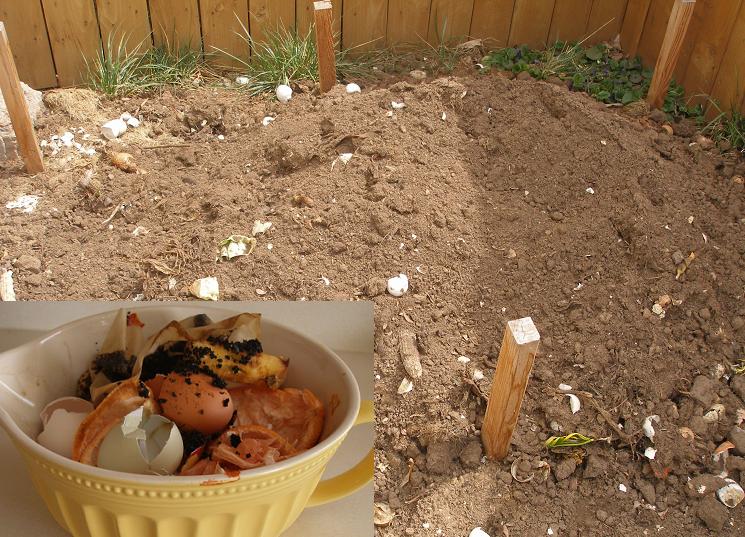
YUCK!  What is that??

compost

It’s my compost.  That’s the bowl on my counter, super-imposed over the pile outside.  🙂

Week two of my Gardening  Thrifty Thursday Frugal Friday tips (sorry, I just didn’t feel like writing yesterday) is about composting.

I was actually lobbying for a compost pile for a long time before we got one.  A couple of years.  Rick grew up thinking that they were smelly heaps of rotting food that attracted neighborhood cats, and provided little benefit, except for those hippies.  He also grew up dusting baby tomato plants with pesticides and dousing them with chemical fertilizers.

I had to change his thinking!  I wanted to compost to reduce the need for those pesticides and fertilizers.  I wanted to foster a garden that could support and sustain it’s self!  And, my dad was a “worm grower” (throwing coffee grounds and eggs shells in the garden, to grow big, fat, night crawlers to use for fishing bait), so I knew the compost bin/pile needn’t be complicated or smelly.

In order to compost, you need only a few basic things:
– Green material (like veggie scraps, coffee grounds, etc.)
– Brown Material (dried leaves, straw, dried grass clippings, etc.)
– Water
– Somewhere to let it do it’s thing (a bin or pile)

After showing Rick some of the facts about composting, and pointing out to him that he had been doing it every fall all along (digging holes and filling then with layers of leaves, dirt and water, and then leaving the to rot through the winter to improve the soil in the veggie garden), he did a little research of his own and jumped in with both feet.

Rick  decided to save money by building his own bins, following a plan we found online, just by Googling it.  So far, he has the layout done, and we’ve been composting without walls for the last year or so.  He will eventually put in walls around the pile, where the steaks are, so we can transfer from one side to the other easily.

But why should you start composting?  I mean, who wants a pile of rotting organic matter sitting around the outside of their house?  Really?  Here are a few reasons why (from earth911.com)….

Benefits of Using Compost

  • Improves the soil structure, porosity, and density, thus creating a better plant root environment.
  • Increases moisture infiltration and permeability of heavy soils, thus reducing erosion and runoff.
  • Improves water-holding capacity, thus reducing water loss and leaching in sandy soils.
  • Supplies a variety of macro and micronutrients.
  • May control or suppress certain soil-borne plant pathogens.
  • Supplies significant quantities of organic matter.
  • Improves cation exchange capacity (CEC) of soils and growing media, thus improving their ability to hold nutrients for plant use.
  • Supplies beneficial micro-organisms to soils and growing media.
  • Improves and stabilizes soil pH.
  • Can bind and degrade specific pollutants.


In other words, it’s good for your garden, your plants, and the Earth!  This short list doesn’t even mention that the EPA estimates that 24% of what ends up in landfills is made up of yard trimmings and food residuals.  All of which can go into your home compost pile/bin and be used to enhance your own soil for your own veggie and flower gardens.

Wait… I thought this was supposed to be a tip about saving money.  How does composting do that?  Well those points up there basically equate to this:  Using compost reduces the amount of water, fertilizer, pesticides, and soil modification needed to grow a great garden.  It also reduces the amount of garbage you send off to the landfill, and combined with diligent recycling, that could even lead to eliminating the trash bill  completely!  So what, exactly, is the savings?  Well, I don’t have that broken down.  It all depends on what you grow, and what you need to make it grow.  But I can tell you this.  We don’t need to buy fertilizer, peat moss (for soil modification), manure, or pesticides any more.  We haven’t bought those things in a long time.  🙂

It’s easy to do.  We just keep a bowl on the kitchen counter to collect our food scraps, egg shells, coffee grounds & filters, veggie peeling, etc.  We dump that into the pile when ever we fill it up (once or twice a week).  This accounts for most of the “green matter” in the pile.  We add grass trimmings and dried leaves, the used pine shavings from the chicken house and paper from our shredder to account for the “brown materials.”  The only other things needed are water and time.

Be sure to check out these helpful sites for more reasons to compost, details on what should and should not be composted, compost uses, and methods of composting:
U.S. Environment Protection Agency
Earth911.com
Washington State University County Extension

Also, before I wrap this up I wanted to share a link to KGI’s post about the Obama’s first planting in their new garden!  Check it out! http://www.kitchengardeners.org/

Be sure to check around for other Thrifty Thursday tips this week. Katie Jean posted about the Value of Memberships! Check also with  Tracy, Crystal and Genny(though I know Genny is taking a break to prepare for the home birth of their baby!, and some of the others have been busy with other life things as well).  🙂

Categories: Compost, Food, Garden, Sustainability, Thrift, Urban Homesteading | 3 Comments

Thrifty Thursday: Joining a CSA Farm

main_logo2_600_221

Monroe's Logo, click to visit their blog!

One of the biggest money savers Rick and I did last year was joining a local CSA farm.  CSA stands for Community Supported Agriculture (see my March 2008 post,  “CSA – And it Tastes Good Too” for more info on how CSA’s work and where to find one in your area).  Like buying your meat in bulk or using cloth diapers, the upfront cost of a CSA membership is a lot to shell out at once, but the savings over time is incredible!

At Monroe’s farm (the CSA we belong to) the fee is split into two parts:  a Membership fee, which is set for all members, though it is reduced if you chose to be a working member; and a Produce fee, which is based on the size of share you are purchasing (single, half or full).

When we joined Monroe in 2008, we signed up for a working membership.  To figure out if this would be worth wile for us, we sat down with our grocery store receipts from the months past, and added up just what we spent on produce alone.  Then we figured out the mileage to drive to Monroe in Kersey, CO once a week, and what that would cost us in gas.  The fuel costs combined with the membership & produce fees from Monroe were still FAR, and I mean FAR, less than what we’d been paying at the grocery store for often times non-organic, shipped across the country, under ripe produce for the previous summer.

About a week after we signed up (before things were really started for members on the farm), I got a call from another member who also lived South of Denver and was interested in car-pooling to the farm each week.  That meant our fuel cost was cut in half from what we calculated it would be.

For the whole summer’s worth of produce, including fuel costs, this is what we spent in 2008 (when gas prices were through the roof, remember??).  And, it should be noted that we froze, stored and canned some of this produce and have been eating it all winter too (we still have onions, tomatoes, potatoes, green chiles and corn)!

Membership Fee (working member):  $100
Produce Fee (half share):  $135
Fuel (we got aprox. 20 miles/gallon):  $497.07/2 = $248.54
Total for the summer:  $483.54

That amount divided by the number of weeks we received produce from the farm (approx. 24) is $20.14/week on about 20-25lbs of local, fresh, organic produce.  This does not count the 2 flats of strawberries, asparagus, and 4 bushels of roasted green chiles which were “pick your own” that I brought home in addition to the share, or factor in all the stuff we stock-piled for the winter.

You have to remember that this number could change based on how far you drive to the farm (assuming you’re a working member), car pooling with more or less people, fuel costs, and how bountiful the harvest is.  Or, it could change if you are a non-working member as well.

The produce is so incredibly fresh.  As in, picked just that morning!  The half share was plenty for our family.  We ate most of it in a week, and were able to store what was left.  However, for 2009, we uped our share to a full size with plans to store/can/freeze much of the excess in order to ensure our grocery bills for winter produce are further reduced.

Check out Monroe’s website and their brand new blog to see what we do at the farm.  And make sure to check into a CSA in your area!  The saving is incredible!  And the food is out of this world!

It should also be said, that we got a lot more out of the CSA last year then produce as well.  We made new friends, Rick has a new hunting partner, Henry got to play in the dirt all summer, eat melons warm from the sun, pick strawberries… it was very very cool.

Categories: CSA, Food, Garden, Thrift, Urban Homesteading | 3 Comments

Sustainable Food Budget Challenge

susbudgetHow many times have you thought about eating organic and locally grown food, only to convince yourself it’s too expensive?  Or maybe you do eat locally and organically grown food, and try to convert your friends, but you can’t seem to get them to believe it’s something they can afford. 

For the month of April, The Crunchy Chicken is issuing the Sustainable Food Budget Challenge

I hear so many times, from many friends that “they just can’t afford to eat natural/organic.”  This way of thinking really discourages me.  Rick and I have a very tight grocery budget.  We do not spend our whole paycheck at Whole Foods, nor do we think anyone should.  Yes, our grocery shopping is supplemented with our garden and hunting, but those things aren’t free either, and take lots of work.  Not counting the garden, the CSA, and hunting, we spend between $60-100/week on groceries during the winter, and only $30-60/week during the summer.  I will calculate out the cost of meat, as well as garden & CSA veggies to add into that later, to give you an accurate reflection of what we truly spend per month to eat locally, organic, sustainable food. 

But first, the details on the challenge:  The idea here is to feed yourself and your family on sustainable food sources while staying within a set, tight budget (more on this below).   So what is “sustainable food?”   To me, it is food that has the least impact on the environment, while having the most impact on your health.  Locally grown organic veggies are at the very tip top of this list.  For example, a tomato from your garden, grown without fertilizers or pesticides, using grey water or a drip system, has a very low impact on the environment (no fossil fuels were used to get it to you!) and you get all the health benefits of an organic tomato.

So besides a garden, where do you find this stuff?  Start at the farmer’s market, food co-op, U-pick farm stands and local food stores.  Then move  on to the grocery chains and big-box last.  Local food store will often carry more locally grown food then the bigger chains and big-box stores.  And, usually at cheaper prices.  You will need to weigh the benefits of buying locally (but maybe not organic) versus buying organic produce flown half-way around the world to your local Wal-Mart.   Crunchy Chicken has a follow up post here about what sustainable means as well.  This is a helpful clarification since many of us live in areas where the farmer’s markets aren’t yet open. 

Crunchy Chicken raises the question: “is it possible…?” as well as lays out the rules for the challenge:

So, the question remains… is it possible to eat an organic or sustainably grown diet on a budget? A few years ago, there was the argument that those individuals who received food assistance from the government didn’t receive enough money to be able to afford healthy food. Some took it further and argued that poor Americans really were excluded from being able to eat sustainably strictly because of the higher costs. There are a number of factors at play here, the majority of which have to do with food availability such as the fact that not many supermarkets remain in some inner city areas and it’s difficult to travel out to the suburbs to shop at stores that sell the kinds of foods we are talking about here.

But, for the rest of us, can it be done? For those of us who live in areas where ample farmers markets, farms and grocery stores selling sustainably grown food exist, is it affordable?

I’d like to challenge us all to see if we can eat sustainably using the Food Stamp Allotment Program guidelines. It will take a lot of careful planning, but the end result is that we can save a lot of money on our food budget by trying to spend within this framework for a month.

Challenge Guidelines
So, here’s the skinny. Based on the following allotment chart, you are to stick to the corresponding amount for food for the month of April. The challenge is that you must buy according to the following guidelines (from Locavores). Do not include non-food items or home grown items into your budget, but do include seeds and plants which produce food for the household to eat. Make sure you include all the food costs from eating out, trips to coffee shops, etc.


These are fairly loose rules, but the goal is to buy sustainably grown food:

1. If not LOCALLY PRODUCED, then Organic.
2. If not ORGANIC, then Family farm.
3. If not FAMILY FARM, then Local business.
4. If not a LOCAL BUSINESS, then Terroir: purchase foods famous for the region they are grown in.
5. Hit the farmers market before the supermarket.


Household Maximum Monthly Allotment Chart:
1 person – $176
2 people – $323
3 people – $463
4 people – $588
5 people – $698
6 people – $838
7 people – $926
8 people – $1,058
Each additional person – $132
 

Here is the break down of where Rick and I are starting from, as well as a receipt info from today’s shopping trip on April 1st. 

Today I spent $84.51 at Sunflower Farmers Market (a local grocery chain) for food items for the week.  We plan on having Buttermilk Baked Chicken, Mediterranean Salad, Homemade pizzas, Elk chili, Chicken Satay, Mediterranean Chicken Packets, and Broccoli Tomato Stromboli’s this week.  The chicken I bought at the store was not organic or local (normally I buy organic chicken only once a month from Costco, where it is cheaper), but I refuse to pay $16.00 for one Rosie chicken (read the Omnivore’s Dilemma by Pollan and you will too!).  I bought salami from who-knows-where, and I’m certain it’s not organic either, but it was the only kind they had.  Nearly all the produce I bought, as well as the beans and flour were organic, though not local.  But the eggs and milk were Colorado proud, and hormone free.  The bread was both local and organic. 

The pizzas will have pork sausage, the cost of which is approx. $1.97.  We bought a whole local 4-H hog last fall for less than two bucks a pound.  The elk meat for the chili was given to us by a relative, harvested in Kremmling, CO.  Rick has not gotten an elk yet, but he’s applied for many a license, so the cost of that, to be fair would have been… well, whatever the heck $39 for a license plus the fuel cost to get to Kremmling, and the cost of one .306 bullet; divided by how ever many hundred pounds of meat an elk gives us… for one pound.  I’ll be extra  generous and say it was a $1.00.  Rick’s family processes their own meat, so that would have been free (just costs time, anyway).  We will also be using some frozen tomatoes left over from the farm last summer.  I am not going to figure out the cost of two or three tomatoes, but if we weren’t using those I would have bought a big can of Muier Glen Organic tomatoes for about $2.29, those in the freezer probably didn’t cost half that, but to be generous and fair again, we’ll say they were half: $1.15.

So, for this week:
-Grocery Store – mixed: $84.51
-Pork – local and sustainable: $1.97
-Elk – local and sustainable: $1.00
-Tomatoes – local and sustainable: $1.15
Total: $88.63

If we keep on track with this amount for the month, we’ll spend about $356 on groceries.  This is below the amount allotted for a family of three, and WAY below the amount allotted for a family of four (which we qualify as, since I’m pregnant) for Food Stamps.  Not too bad. Let’s see if we can pull it off! 

This month will bring a couple of exciting opportunities for us though as well.  Like the pick your own asparagus at the farm in a couple of weeks.  I can’t wait.  Look for more info on CSA’s in tomorrow’s Thrifty Thursday tip.  A lot of the produce we use (though, none planned for this week, besides those tomatoes) comes from there, and I will have cost breakdowns for that.

My goal for the challenge is to see just HOW sustainbly we can eat, for the least amount possible.  I have a feeling Rick will like this challenge.  He’s always complaining about the grocery bill! 

What about you?  Do you think you can do the challenge?  And if you’re already eating well on a budget, do you think you can stretch it further?  Will you join us???  Leave me a comment below with thoughts, questions, ideas, etc.!

Categories: CSA, Food, Garden, Recommended Reading, Sustainability, Thrift, Urban Homesteading | 3 Comments

Thrifty Thursday: What is a Home Garden Worth?

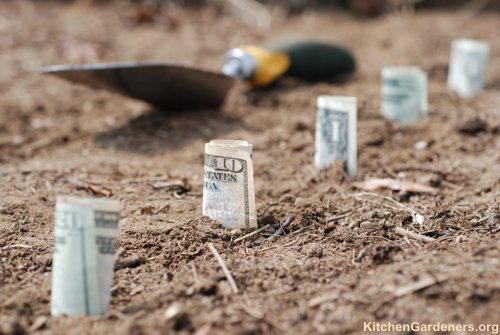
garden-worth

This Thrifty Thursday marks the beginning of one of my favorite money saving techniques: GARDENING!  I received this awesome write up from my March 2009 Kitchen Gardeners International newsletter by Roger Doiron. 

KGI is a non-profit that “empower individuals, families, and communities to achieve greater levels of food self-reliance through the promotion of kitchen gardening, home-cooking, and sustainable local food systems.”  I got connected with them when I signed the Eat The View petition asking the Obama’s to plant a victory garden on the White House lawn (and our petition was as success!  The Obama’s are going to plant 55 varieties of organic veggies!  WooHoo!)!

What’s a home garden worth? With the global economy spiraling downward and Mother Nature preparing to reach upward, it’s a good question to ask and a good time to ask it.

There isn’t one right answer, of course, but I’ll give you mine: $2149.15. Last year, my wife Jacqueline suggested to me that we calculate the total value of the produce coming out of our garden over the course of the growing season. Initially, the thought of doing that was about as appealing to me as a recreational root canal. I remember replying something like: “OK, so let me get this right: in addition to raising three busy boys, managing two careers, volunteering in a school garden, and growing most of our own produce, you’re proposing that we weigh every item that comes out of our garden, write it down in a log book, and spend a few leisurely evenings doing math?” Jacqueline, an economics major in college and a native French speaker, answered with a simple “oui” and so the project began.

There was a lot of work involved, mostly for Jacqueline, but as with gardening itself, it was work with a purpose. It didn’t take long for our log book to start filling up with dates and figures. Although we started eating our first garden salads in late April, we only began recording our harvests as of May 10th, starting first with greens and asparagus. Our last weighable harvest was two weeks ago in the form of a final cutting of Belgian endives forced from roots in our basement.

By the time we had finished weighing it all, we had grown 834 pounds and over six months worth of organic food (we’re still eating our own winter squash, onions, garlic, and frozen items like strawberries, green beans, and pesto cubes). Once we had the weights of the 35 main crops we grew, we then calculated what it would have cost us to buy the same items using three different sets of prices: conventional grocery store, farmers’ market and organic grocery store (Whole Foods, in our case). The total value came to $2196.50, $2431.15, and $2548.93 respectively. For the other economics majors and number crunchers among you, you can see our crunchy, raw data here.

There are things we didn’t include like the wild dandelion greens which we reaped but did not sow, the six or so carving pumpkins which we ultimately fed to our compost pile, and the countless snacks of strawberries, beans, peas, and tomatoes that never made it as far as our kitchen scale. There were also things we forgot to weigh like several pounds of grapes which turned into about 12 jars of jam. As with any growing season, there were hits and misses. The heaviest and most valuable crop was our tomatoes (158 lb/72 kg for a total value of $524). In terms of misses, our apple tree decided to take the year off and very few of our onions started from seed made it requiring me to buy some onion plants.

On the cost side, we had $130 for seeds and supplies, $12 for a soil test, and exceptional costs of $100 for some locally-made organic compost we bought for our “This Lawn is Your Lawn” frontyard garden (normally, we meet most of our soil fertility needs through our own composting). I don’t have a scientific calculation for water costs, but we don’t need to water much and, when we do, water is relatively cheap in Maine. Also, I mulch my beds pretty heavily to keep moisture in and weeds down.  Let’s say $40 in water.  So, if we consider that our out-of-pocket costs were $282 and the total value generated was $2431, that means we had a return on investment of 862%. The cost of our labor is not included because we enjoy gardening and the physical work involved. If I am to include my labor costs, I feel I should also include the gym membership fees, country club dues, or doctors’ bills I didn’t have.

If you really want to play around with the data, you can calculate how much a home garden like ours produces on a per acre basis. If you use the $2400 figure and consider that our garden is roughly 1/25th of an acre, it means that home gardens like ours can gross $60,000/acre. You can also calculate it on a square foot basis which in our case works out to be roughly $1.50/ft2. That would mean that a smaller garden of say 400ft2 would produce $600 of produce. Keep in mind that these are averages and that certain crops are more profitable and space efficient than others. A small garden planted primarily with salad greens and trellised tomatoes, for example, is going to produce more economic value per square foot more than one planted with potatoes and squash. We plant a bit of everything because that’s the way we like to garden and eat.

Clearly, this data is just for one family (of five), one yard (.3 acre), one garden (roughly 1600 square feet), and one climate (Maine, zone 5b/6), but it gives you some sense of what’s possible. If you consider that there are about 90 million households in the US that have some sort of yard, factor in the thousands of new community and school gardens we could be planting, this really could add up. Our savings allowed us to do different things including investing in some weatherization work for our house last fall that is making us a greener household in another way. Some might ask what this would mean for farmers to have more people growing their own food. The local farmers I know welcome it because they correctly believe that the more people discover what fresh, real food tastes like, the more they’ll want to taste. In our case, part of our savings helped us to buy better quality, sustainably-raised meat from a local CSA farmer.

The economics of home gardening may not be enough to convince President Obama or UK Prime Minister Gordon Brown to plant new gardens at the White House or 10 Downing Street, but the healthy savings their citizens could be making and then reinvesting in their local economies could.

In the end, it might come down to the language we use. Instead of saying “Honey, I’m going out to the garden to turn the compost pile”, perhaps we should say “Honey, I’m going outside to do a ‘green job’ and work on our ‘organic stimulus package.’”  I bet that would get the attention of a few economists, not mention a few psychologists.

Happy, healthy March
Roger Doiron

PS: Garden writers and bloggers: feel free to republish the text and photo above with a link back to KGI.  Thanks.

I loved the idea of seeing what a home garden is actually worth.  I think Rick and I may track our garden’s value this year!  Our garden is  around 560-600 square feet, not counting the strip along the driveway (maybe another 160-200 sf?).  And we use all that space pretty efficiently, though there’s always room for improvement.  We manage to squeeze more and more in each year, and this year should be no exception. 

If you’re thinking of planting your own garden, but not sure how to do it, there are some good websites with free garden planning out there.  Check out BHG.com and almanac.com, two of my favorites. 

Can’t wait to get into the “dirt” of gardening in this month’s Thrifty Thursdays!

See what ideas are growing with Tracy, Crystal & Katie Jean this week too!

Categories: Garden, Thrift | 4 Comments

Thrifty Thursday: Green Cleaners/Kitchen Staples Part 2

Cleaning toolsThis week’s Thrifty Thursday tip is focused on another kitchen staple:  Baking Soda.

I can clean almost everything in my home with baking soda, vinegar or lemon juice.  Baking soda is a great thing to add to laundry, clean the oven or scrub the sink with.  Here are a few of the many uses:

In laundry:

  • Use to clean and deorderize laundry.  I use about 1/4 to 1/2 cup in the washing machine to give my detergent a boost, or to get the stink out of my cloth diapers.   I’ve also washed lightly soiled clothes with just baking soda when I’ve run out of detergent.
  • For really stinky stuff, use it as a presoak.  Usually I do this in hot water with 1/2 cup or more, depending on the load size.
  • Apply a paste of equal amounts baking soda & water to stains to help break down grease. 
  • Use in the rinse cycle as a fabric softener.

Other cleaning tasks:

  • Deodorizing the refrigerator and freezer.
  • Cleaning the stove top, range or oven:  make a paste of 3 parts warm water to one part baking soda.  It will not scratch surfaces.  Other places to use it: counter tops, sinks, inside the refrigerator…. the list goes on.
  • Mix it with a mild dish washing liquid (like Ivory) until you have a thick paste to make a good bathroom cleaner. 

My laundry cupboardBaking soda can be bought in bulk at a store like Costco or Sam’s.  It’s so inexpensive!  Just don’t use it to with vinegar at the same time or they will cancel each other out.  The exception to this is to clean your kitchen sink drain:  put baking soda down the drain, followed by some white vinegar.  Quickly plug the sink and let sit.  This is like the volcano you made in grade school science class.  🙂  It will help remove any built up gunk in there. 

Another handy kitchen staple to have on hand is that mild dish washing liquid.  It can be used in a variety of ways as well, and combined with other things to make effective cleaners.  Eliminating the need for all the chemicals.  🙂

A great book on how to clean anything and every thing in your home is Martha Stewart’s Homekeeping Handbook.  She has lots of green and mild alternatives and always recommends starting witht the mildest before moving on to the harsher methods of cleaning.

What are some of your favorite ways to clean green?  Do you love a specific brand or tool?  Is there a kitchen staple that you use to clean with?

Categories: Recommended Reading, Thrift | 2 Comments

Create a free website or blog at WordPress.com.